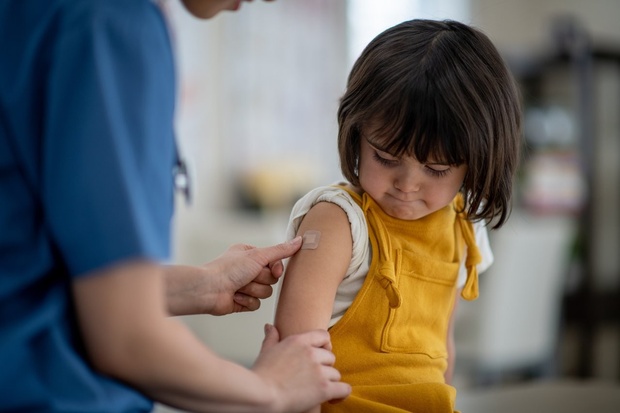
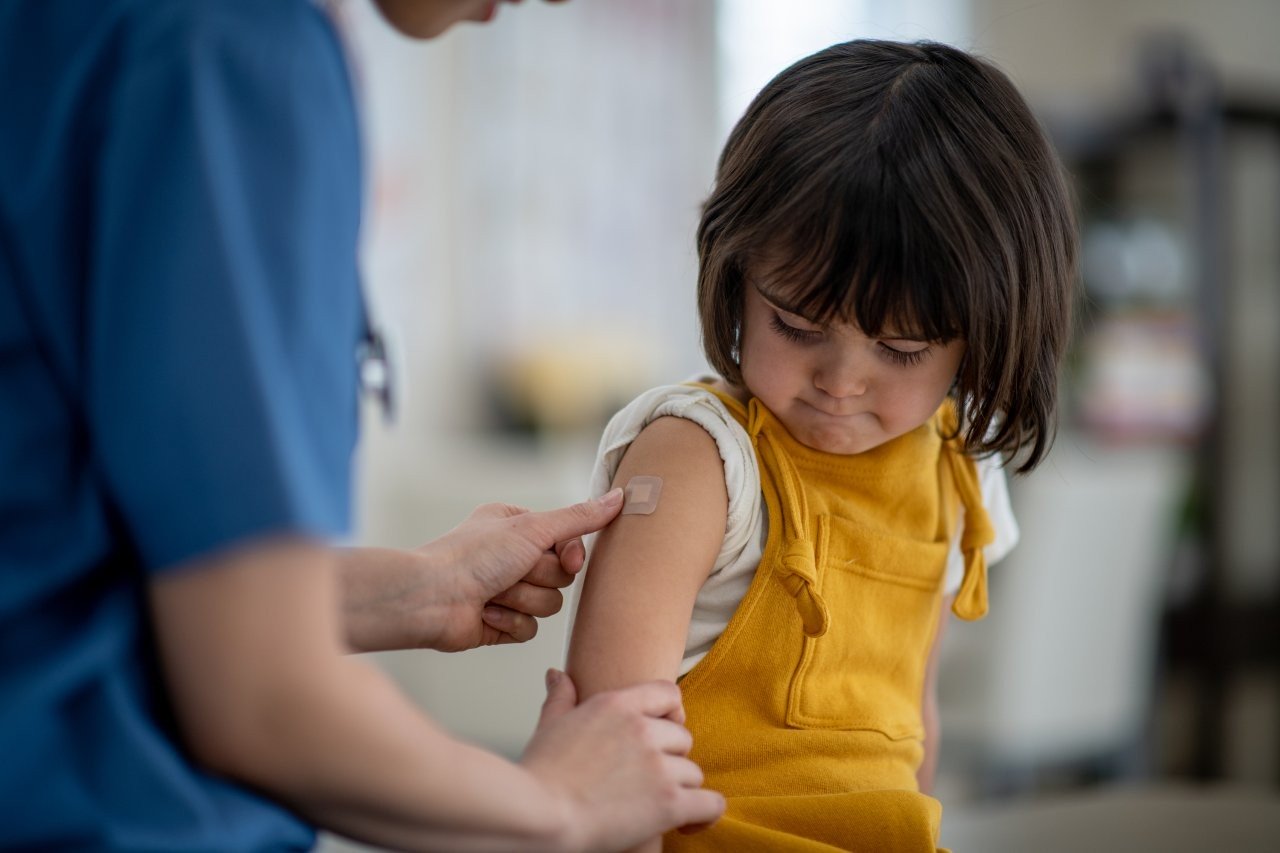
Australia’s Health 2026 report shows the number of children getting immunised has fallen in recent years, dropping from 95 per cent of one-year-olds in 2020 to 92 per cent in 2025.
Vaccination rates also fell for two-year-olds and five-year-olds.
“While Australia has long maintained high childhood immunisation rates, these recent declines are concerning, particularly given rising notifications rates for measles, diphtheria and whooping cough,” Australian Institute of Health and Welfare spokeswoman Louise Gates said in a statement.
In terms of education, in 2024, 16 per cent (3.2 million) of people aged 15-74 were currently studying. School attendance rates for Years 1-10 have declined, however Year 12 or equivalent attainment has increased from 72 per cent to 79 per cent between 2015 and 2024.
The number of apprentices and trainees has fluctuated in recent years. There were 334,000 apprentices and trainees in training at September 30, 2024, a decrease from 362,000 since the same time in 2023.
“Education plays a vital role in helping people navigate the transition to adulthood and the workforce,” Gates explained.
“Higher educational attainment is linked to greater employment prospects, higher incomes, improved health and better life satisfaction.”
Australia continues to fare well in terms of tertiary education attained by adults aged 25-64, ranking sixth highest out of 38 OECD countries.
The proportion of Australians aged 15–74 with a non-school qualification such as a university degree, certificate or diploma as of May 2024 has increased to 63 per cent, the same as 2023 but an increase from 59 per cent in 2015.
The report found around one third of the nation’s disease burden could be reduced through lifestyle choices.
Around 13.2 million adults (67 per cent) and 1.4 million children and adolescents (27 per cent) were living with overweight or obesity in 2022-24.

Apprentices and trainees in training decreased from 362,000 in September 2023 to 334,000 at the same time in 2024.
Around 1 in 5 young people (21 per cent) aged 18-24 reported using vapes in 2022-2023, and almost 1 in 10 (9.3 per cent) using vapes daily.
Updated data from the 2025 National Drug Strategy Household Survey will be released in tranches in 2026, with the first to include high level findings on tobacco, e-cigarette and nicotine use.
More than 60 per cent of people are living with at least one chronic condition, the shows, placing a growing burden on the health care system.
According to most recent data, published in 2022, 38 per cent of Australians were living with two or more chronic conditions, which include a wide range of medical issues such as mental illness, cancer, cardiovascular disease and musculoskeletal conditions.
Doctors say treating patients is becoming increasingly complicated as chronic conditions become more common.
Around 5.5 million people (21 per cent) of the Australian population had some form of disability in 2022, an increase from 4.4 million (18 per cent) in 2018.
“Several factors may have contributed to this rise, including an increase in prevalence of long-term conditions, an ageing population, a growing awareness of disability and changes in data collection methods,” Gates said.
The National Disability Insurance Scheme (NDIS) had around 693,000 active participants with approved plans at December 31, 2024, an increase from 467,000 at June 30, 2021.
The number of NDIS participants with a primary disability of autism has grown by 14 per cent in 2024, and 15 per cent over the previous year, compared with 7.2 per cent and 13 per cent annual growth rates in the same 2 years for the total number of NDIS participants.
The National Community Attitudes Survey shows that understanding of violence against women has reached its highest level to date, achieving a mean score of 69 out of 100, an increase from 62 in 2009.

Fewer young people aged 10-17 are under youth justice supervision than in previous years.
“Attitudes of and awareness towards violence against women are improving over time, however there is still considerable room for improvement,” Gates said.
One in five (20 per cent) adults had experienced physical and/or sexual family and domestic violence since the age of 15, equating to 2.7 million women and 1.1 million men in 2021–22.
Fewer young people aged 10-17 are under youth justice supervision than in previous years.
In 2023-24, around 4200 young people (or a rate of 12 per 10,000 people aged 10-17) were under youth justice supervision on an average day; a decrease from almost 5200 (or a rate of 16 per 10,000 people aged 10-17) in 2019–20.
Significantly, in 2001, 69 per cent of First Nations people were living in appropriately sized housing (not overcrowded). In 2021, that percentage has risen to 81per cent.
The proportion of First Nations people aged 25–34 who had completed a tertiary qualification as their highest educational attainment has more than doubled from 19 per cent in 2001 to 47 per cent in 2021.
More First Nations people aged 15-64 are also employed, an increase from 46 per cent in 2012-13 to 57 per cent in 2022–23.
In promising news, cancer survival rates have shot up dramatically, with 72 per cent of people diagnosed between 2017 and 2021 surviving at least five years, compared to just 50 per cent three decades earlier.
Meanwhile, dementia has overtaken coronary heart disease to become the leading cause of death in Australia.
The number of deaths from dementia rose 39 per cent between 2015 and 2024, driven largely by the ageing population.
The five disease groups causing the most years of healthy life lost due to illness and premature death in 2024 were cancer, mental health conditions and substance use disorders, musculoskeletal conditions, cardiovascular disease and neurological conditions.