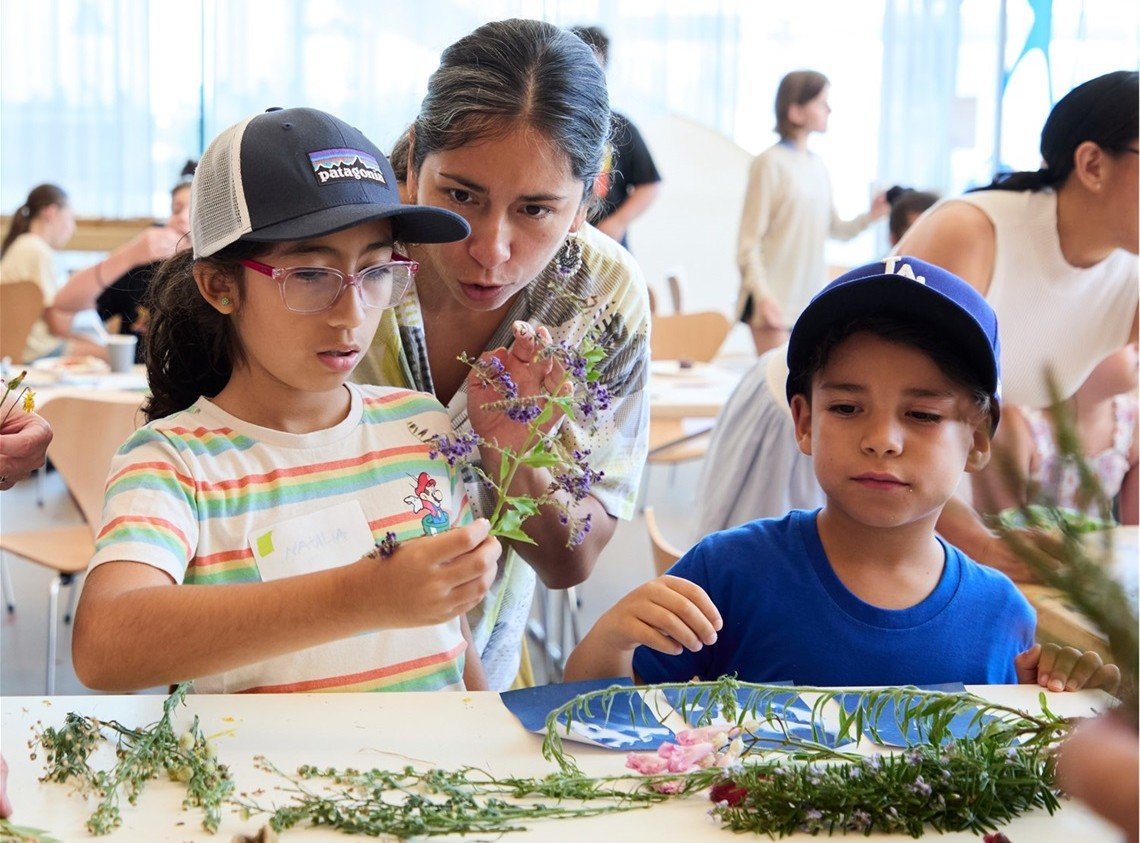
A unique and powerful program for children who experience mild anxiety, Culture Dose for Kids, is an eight-week program designed for children aged 9 to 12 who worry more than their peers, but have not been diagnosed with an anxiety disorder.
Through creative activities and guided art sessions, children in the program can express themselves, connect with others, and build resilience – all while having fun in a safe and supportive environment.
Developed through a partnership between the Black Dog Institute and the Art Gallery of NSW, it provides both children and parents/caregivers a unique opportunity to improve mental wellbeing by engaging in separate, parallel sessions designed to support each group’s needs.
Shoalhaven Regional Gallery at Nowra on the state’s south coast is hosting the program which uses art to help participants express their feelings and imagination, boost self-confidence, build social connections and improve mental health.
Gallery education and audience development officer, Dr Michele Barker, says while the gallery runs numerous programs for kids, most often that involves kids being dropped off and parents or carers leaving them to it.
“The difference with this program is that the kids have to come with a parent or carer and that parent or carer has to stay for both sessions each week and for the duration of the eight weeks.”
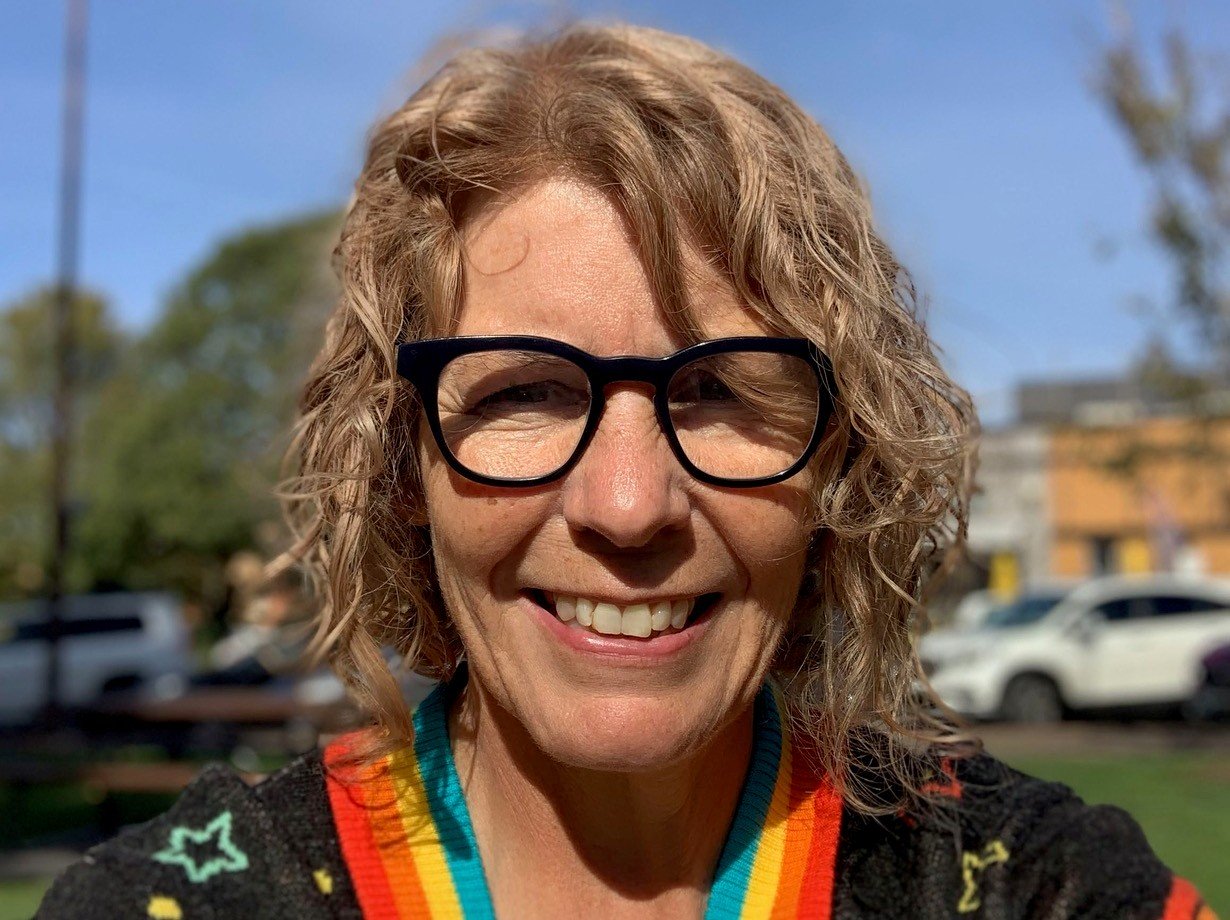
Having enjoyed a fulfilling and successful academic career, Dr Michele Barker is loving her time as Shoalhaven Regional Gallery’s education and audience development officer and says the Culture Dose for Kids program has had a wonderful impact on the region.
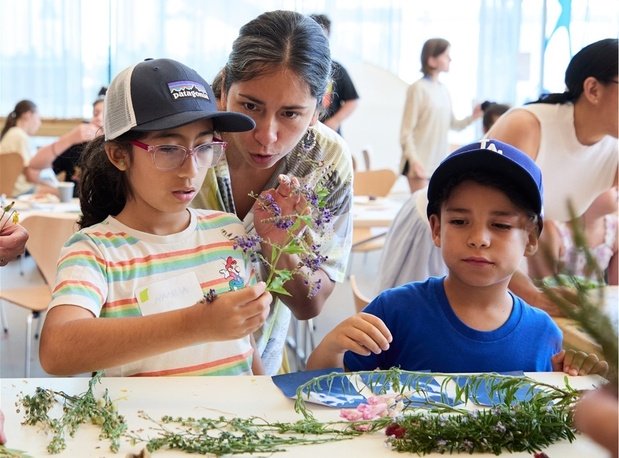
Supported by art educators and support staff, all of whom have received specialised training in this area, parents, caregivers and their children are provided with a safe, structured space to respond creatively to artworks in a small group setting.
During the first hour, adults are placed in one group and children in another, where they examine the same artworks but separately.
In the second hour, the groups join up and then work together to create art based on their interpretations of the pieces they have studied. This includes a large group artwork.
Participants learn mindfulness and relaxation techniques, expressive storytelling and collaboration.
“We actually start with a mindfulness meditation, just to settle the room, which is quite different to what we’d normally do in an art program, that’s for sure,” Barker says.
“It’s not art therapists coming into a space and working – it’s about finding a space where kids or adults can actually just sit still in front of an artwork and just go, ‘okay, well, how is this making you feel? What are you seeing when you look at this work?’,” Barker shares.
“We’re not looking at it from this complete art history or theory perspective. We’re like, ‘what do you feel when you see that this work has this field of poppies?’ or something like that, and get them to talk.
“And then what happens is it then creates a sense of recall or just something imaginative, and then kids will often just start to draw in the gallery.”
Shoalhaven Regional Gallery director Zanny Begg said separating the parents and children allows them to develop their own views and experience the works differently.
“They then come back together and share their creativity. They explore different mediums such as watercolours and screen printing. The children also get to take home their own artworks after each session,” Begg says.
She says parents and children have found it highly beneficial.
“Responding to art and creating art helps children to re-examine how they think about the world and find ways to alleviate stress,” she says.
“At first they are unsure and cautious but in time they become more comfortable engaging with each other and playful and positive when making art.”
Barkers says she’s noticed with the adults, they’ll often just start to talk and remember something from the past.
“And then when we go back into a space together for the second hour, it just becomes this really nice space to actually start creating, and to start thinking about the kind of experiences that we had in a gallery space.”
Prior to working at the gallery, Barker was a university lecturer for 20 years in digital arts, and remains a practicing artist.
She says while many teachers understand and advocate for a vibrant and engaging arts program in their school, it’s often a difficult challenge to find room in what is an increasingly crowded curriculum.
Barker says very often the arts are seen as something extra, an extra-curricular add-on.
“From my time as an academic, it’s obvious that STEM subjects get funded a lot more and they’re seen through multiple iterations of politicians as where kids should be going, but the reality is more kids want to go into arts-based programs,” Barker says.
“Sometimes what I’ve also found is that a lot want to actually go across both areas, so it’s not like you have to have one or the other, and, in fact, being able to be creative is excellent for a multitude of other areas and disciplines.
“It allows you to think, it allows you to problem solve, it allows you to express yourself in a different way and that ability to do those things completely translates into other disciplines.”
This is the second time Shoalhaven Regional Gallery has hosted Culture Dose for Kids. It was previously held in 2024.
Barker says the region, a massive area encompassing over 50 towns and villages, was particularly hard hit by the Black Summer fires of 2019-2020.
“… the effects of that are still rippling on, and it’s really affected the children in our region, and it was something that came up quite a bit when we ran the program the first time around,” she explains.
“There was one little boy in the program who for maybe the first three or four weeks, didn’t say a word, but he would sit there and he would draw and draw and draw.
“He would just go through multiple books, and then suddenly around the halfway mark, he actually just started talking.
“And his mother, who was the other person, the adult involved in the program, was quite shocked.
“And she said (not in front of him), ‘he never speaks like that. Not at school, not anywhere’. And he just became completely engaged. So that was just lovely.”
Culture Dose for Kids, supported by the Jibb Foundation and assistance from the Ottomin Foundation, runs from Sat, August 8 to Sat, September 26. It is free, with all art materials, equipment and afternoon tea provided. Each session runs for two hours, from 10am to 12pm. Register here. Registrations close on Sunday, July 19.