
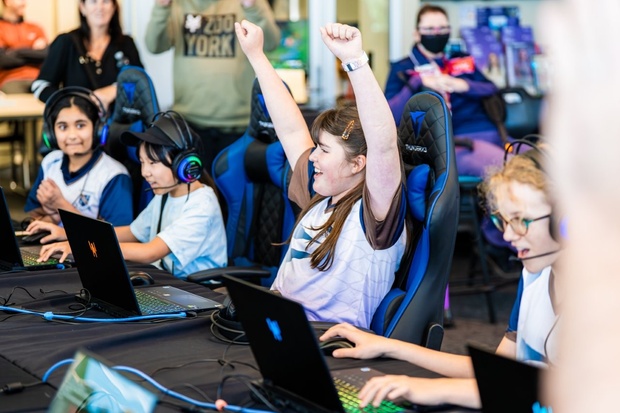
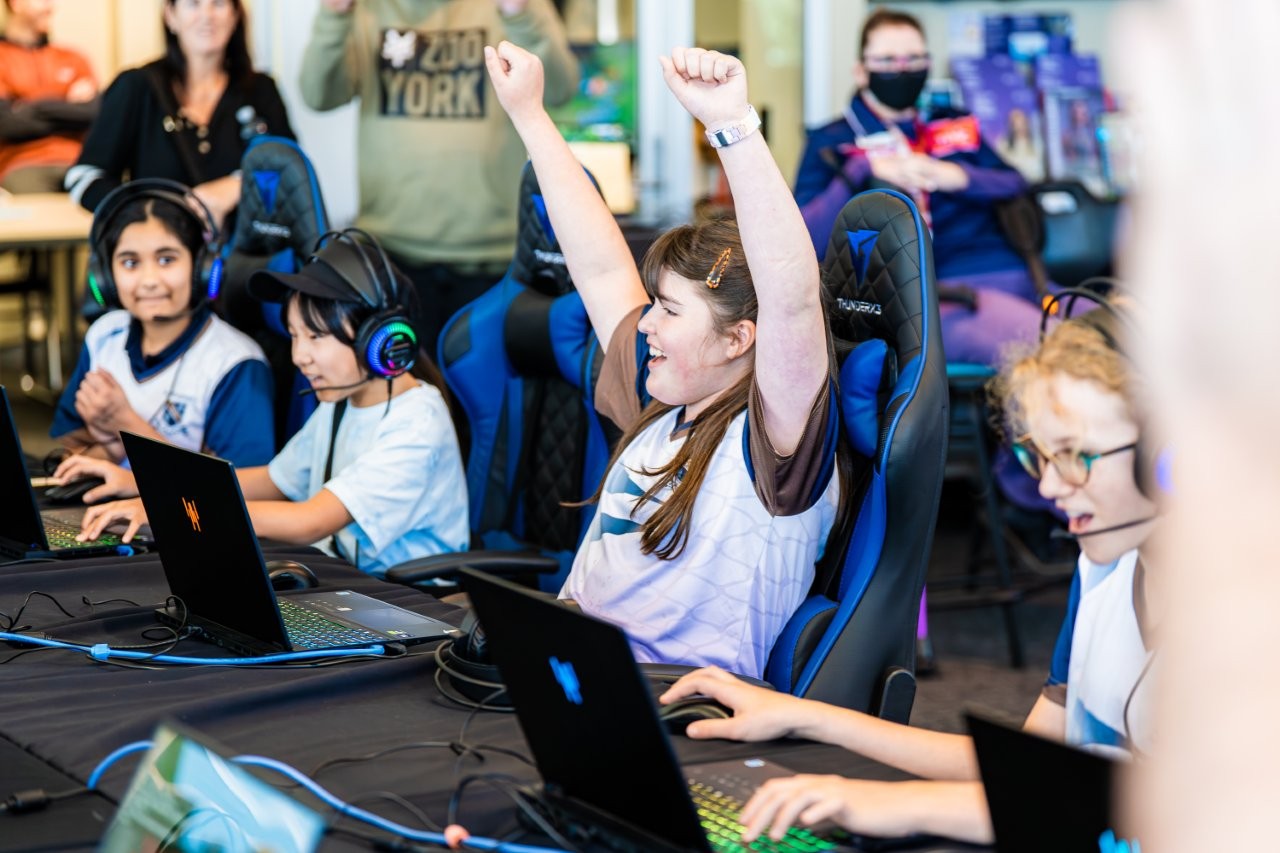
Held in St Margaret’s dedicated gaming hub, equipped with high-powered PCs and collaborative broadcasting technology, the tournament saw students compete in Minecraft: Capture the Flag and League of Legends, showcasing their skills in a supportive, inclusive, and supervised environment, with students providing live commentary or “casting”.
Tournament organiser, Kerry Daud, who’s also St Margaret’s Head of Faculty – Digital Innovation and Design, says the school is pioneering esports in girls’ education, and giving students a leading edge in pursuing careers in gaming, technology and STEM.
“Too many girls drop out of STEM because of culture, not capability,” Daud, who has just been announced as one of the Innovation in Teaching award winners at this year's TEACHX Awards, says.
“We’re giving them the opportunity and confidence to change that narrative.
“The tournament allowed the students to improve their skills and confidence in a safe, fun, all-girl environment and is also breaking down gender stereotypes.
“Most girls game, however, participation levels begin to drop off as they get older, in part to the male-dominated culture that can exist.”
For a self-confessed middle-aged non-gamer, who “can’t game to save herself”, it’s been a major learning curve for Daud and her students.
Having used games including Skyrim and Assassin’s Creed to help with engagement in her history classes, while already a little game savvy, it wasn’t until she was approached by students wanting to play games safely and competitively that she looked into the esports world.
Gaming, she says, is about teamwork, critical thinking, strategy, communication, and digital literacy – all skills widely applicable for future careers in our increasingly tech-oriented world.
Esports has grown at St Margaret’s from an extracurricular club with just four members in 2020, into a recognised school sport with 100 team members, and its own esports captain, Annie Chen, who says she hopes the tournament encourages more girls to take up the sport.
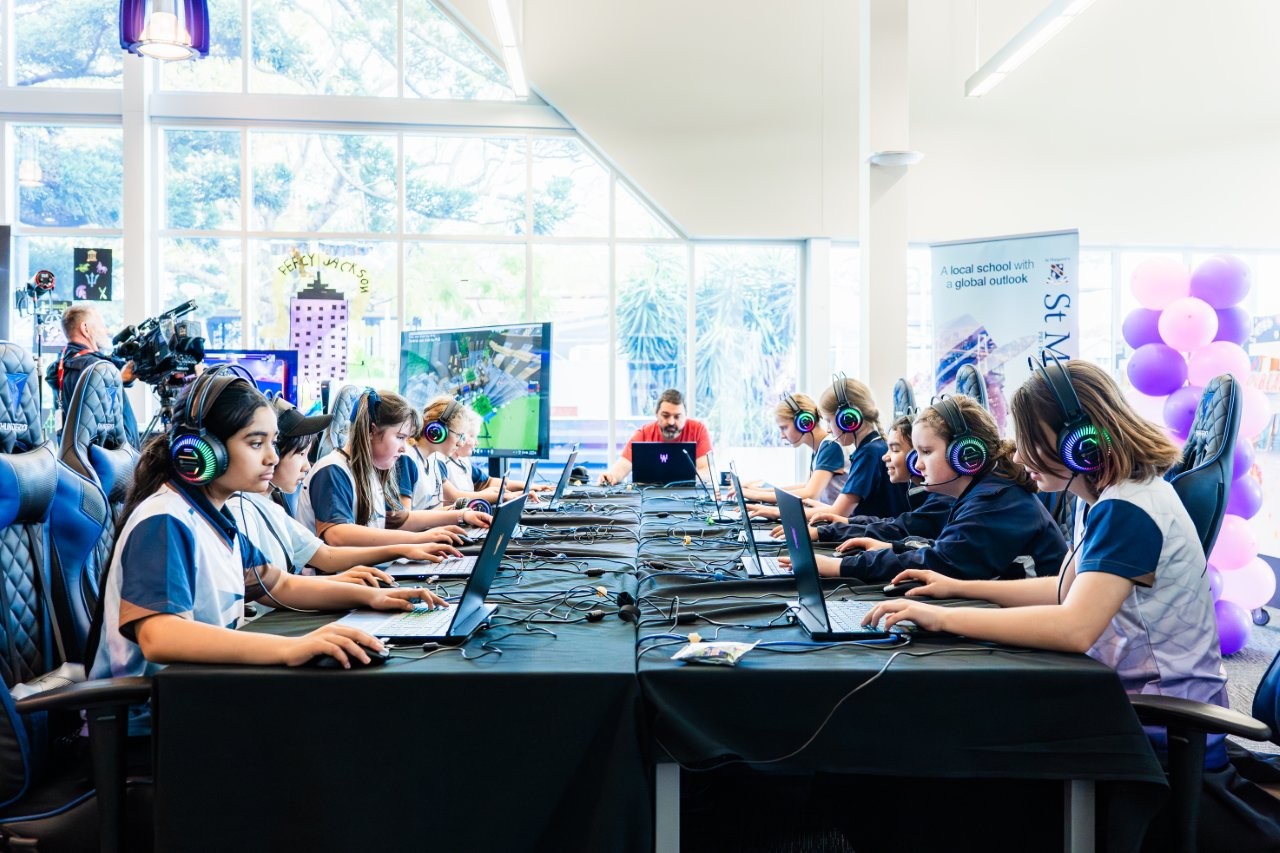
Next year, the Queensland Girls Secondary Schools Sports Association (QGSSSA) will introduce esports as a trial sport alongside traditional sports in school competition schedules.
The program has a major health and wellbeing focus to ensure the girls are eating well and being active and having good social and communication skills in the gaming space.
“Esports is just like netball, rowing or swimming at St Margaret’s. We receive specialist coaching, train multiple times a week and regularly compete against each other, and other schools,” Chen explains.
“I’m proud to be elevating the presence and visibility of esports throughout St Margaret’s and showing everyone we’re just as good, if not better than the boys, when it comes to gaming.”
Daud says the day itself was “fabulous”.
“It was exhausting, but it was so joyful because they absolutely loved it,” she tells EducationHQ.
“It’s that camaraderie. Some of our teams have played each other now a few times and you can see that they’re building those sort of competitive friendships across schools. And it’s really an encouraging and a healthy space for these kids.”
What Daud particularly loves about esports is that it brings students together.
“The way they have to problem-solve and actually use strategic thinking is incredible and it’s at such a fast and rapid rate,” she says.
“To watch these girls go through their strategy and then change it mid-game because things have happened and problem-solve among themselves and work as a team in doing that, is an incredible talent and skill that I know is going to definitely help them in the future.
“Because their future is changing so rapidly, they’re going to have to be thinking on their feet as emerging technology comes through.”
The online response to the tournament provided ample evidence of esports’ gender bias.
“We even saw that with some of the comments on social media after Channel 7’s coverage of the tournament, that it’s still incredibly male dominated,” Daud explains.
“But the event gives female students a really safe space to actually, during the foundation of building their skills, do it in a place where they feel safe and where they feel really supported.

Head of Digital Innovation and Design at St Margaret’s Kerry Daud says the school has been able to create partnerships with companies like Yabbr, who are looking at fostering digital technologies and STEM skills in girls at high school levels.
“It gives them the capacity to be able to actually become competitive before they have to start to try and break a few of those glass ceilings so that they can go into those other competitions with more confidence. And a good understanding of how they are supported in that space.”
Helping other schools is a real priority for Daud.
“There’s a couple of schools that are trying to match St Margaret’s program and are really working hard on getting there, in doing a great job,” she says.
“And there are others that are new to esports, so they’re really coming on and we’re helping them along the way.
“It’s why we offer it for free, to actually help female like teachers in other schools with their female teams to build their confidence and give these girls exposure to competitions in a way that’s really accessible.”
Not content with games competition alone, the school has seamlessly woven game design into its curriculum.
“We have a game design unit that’s part of our digital design curriculum in Grade 8,” Daud says.
“We also do a more in-depth game design on top of that that which follows through into Grade 9 - and we try and really focus on using industry-standard software as we do that.
“It’s a really interesting pathway for the girls, because they start to see how game design is not just about the coding, but it’s also about the digital storytelling, it’s the digital graphic arts, it’s digital music and composition.
“So they start to see the complexity of creating a digital game and start to understand that the industry is actually far more creative than they actually understood it to be.”
Daud says other schools shouldn’t hesitate to give it a go – especially young female competitors.
“It gives students that maybe are not likely to take a traditional sporting path, an opportunity to represent their school in a sport that is internationally recognised,” she says.
“And they are so proud when they get to do that. They find their tribe. They find that their skills are really valued in a place that they didn’t see that other people valued. So they can be celebrated in this space.”