

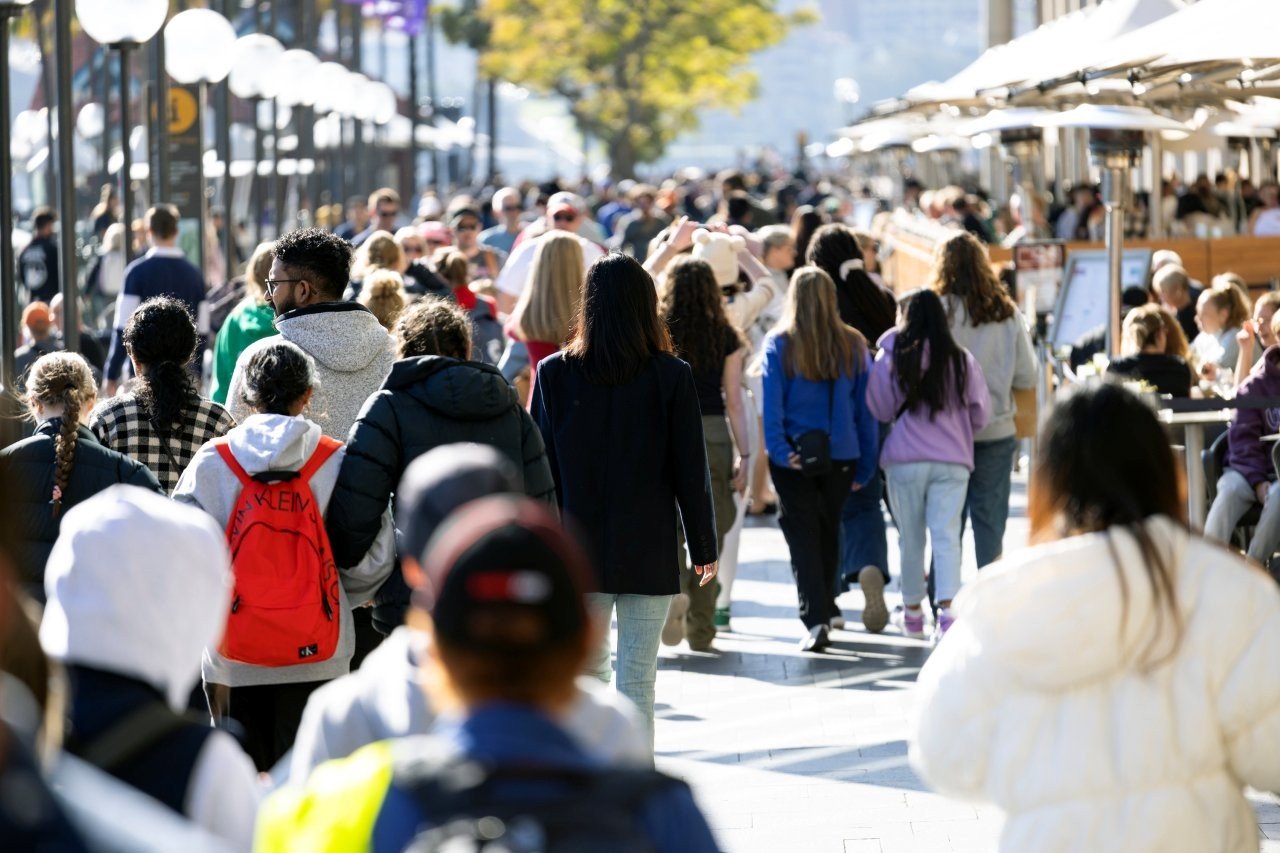
Young people today query whether they’ll ever be able to enter the housing market, why education inequality has been allowed to flourish, how they can ever hope to get ahead with the spiraling cost-of-living pressures and the ongoing rigid lock on social mobility – so is it any wonder they question whether opportunity is truly distributed equally across our community?
It’s a question Hunter Valley Grammar School Year 10 student Elsie Strahorn is posing to students across Australia in the form of a national survey – and she needs your help teachers and school leaders!*
Elsie’s big project idea came to her while undergoing a high-performing students program at Newcastle University, which allows high school kids to complete a first-year university course.
“It was 12 weeks of going to the uni once a week, and really doing the same work as the adults in the course,” she shares.
“...it was a really great experience, I think, just being exposed to what tertiary education looks like and the study habits and really independent learning.
“I think I can really bounce off that and thought it was a great experience.”
Elsie’s study area was sociology and specifically the concept of the fair go, and that was the spark that lit the fuse to get her research project going.
“We talked about it a lot and I ended up writing a big essay about it and diving into all the research and the statistics,” she says.
“It came out that although Australians would love to think that the fair go is real, in reality the data is pointing completely in the opposite direction.”
Desperate to uncover exactly what her fellow high schoolers think nationwide, Elsie decided on a research project incorporating success and achievement, equality of opportunity, social mobility, education and life chances and perceptions of fairness in Australian society.
“Diving into all the research and the statistics,” Elsie says, “it came out that although Australians would love to think that the fair go is real, in reality the data is pointing completely in the opposite direction”.
Her survey asks five straight-forward questions that allow students ample leverage to voice their opinions in detail or not.
The study is open to Australian secondary students in Years 9-12 from public, selective, independent and Catholic schools, and the project aims to capture a diverse range of student perspectives from different educational and geographic contexts.
“I’m really interested in it and I think a lot of people are, but it’s not really talked about too much,” she says.
“I think young people are often talked about when people discuss these things, but they’re not usually included in the conversations.”
If the response so far to her survey is any indication, its clear young people are keyed in to the issue.
“I assumed that people were maybe not going to put too much effort into their answers, but some of the sentences, people have really gone into a lot of detail, talked about how unfair certain things are, how they want things to change,” Elsie says.
“It seems like people are really passionate about certain aspects of this and I think that’s just further encouraged me, like this is something important and people are interested.”
The driven young student has reached out to the public, independent and Catholic sectors across the nation and says one state in particular so far has been super responsive.
“I think around 75 per cent of my responses are from Victoria, which is amazing,” Elsie shares.
The young go-getter was meticulous in ensuring a fair distribution across the states and also with different types of schools from different areas.
“It was really important to me to have everything quite equal...
“I’ve contacted 1400 schools and the schools that have got back to me, particularly from Victoria, were all very interested and some, even though they couldn’t for whatever reason hand out the survey, they were very encouraging.”
After gathering her data, Elsie will work with a professor she’s already studied under at Newcastle University to analyse the responses.
“I’ll then write a report, send it to local members, representatives, people in government, so that a more representative group can be considered when discussing these things in policymaking,” she says.
While having to deal with regular rejections in her approaches to schools, the enthusiastic expat Dutch student is far from deterred.
“I guess from this experience, I’ve just taken away, you’ve just got to try, you’re not going to lose anything, they don’t know who you are.
“And I think as it’s progressed, the responses that I am getting have been really, really positive.
“I’m not just doing it for my own learning or for what I’m interested in. It’s showing me that this is a real issue in society and I want to be part of the solution to it.”
The high performing student’s experience has fueled her keenness to complete Year 12 and get stuck into university as soon as possible.
“I’m doing the IB right now, so I’m hoping to go overseas,” she says.
“I’m really interested in international relations, public policy, humanitarian issues, so I think this project is really valuable [in] exposing me to those sort of issues and teaching me how to advocate for change, in a way.”
The Fair Go Study closes on Friday, October 23, 2026. If you’d like students in your school to take part, click here.
*Please note: participation is entirely voluntary, and the survey does not collect names, email addresses or identifying personal information and records responses anonymously. Responses will be analysed and reported only in aggregate form and individual participants and schools will not be identified.