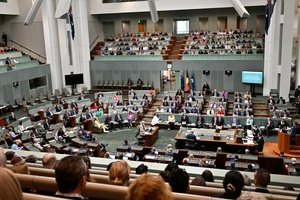


The peak bodies have raised concerns over the Education Standards and Registration Board Bill 2026 which was released with just five business days for consultation.
The IEU-QNT and the AEU NT have made a joint parliamentary submission outlining key concerns with the bill, and have also signed a collective parliamentary submission alongside the Association of Independent Schools Northern Territory (AISNT), Catholic Education Northern Territory (CENT), the Northern Territory Principals’ Association (NTPA) and the Professional Teachers Association of the Northern Territory (PTANT).
The bill seeks to combine the existing Teacher Registration Board and Board of Studies into one board composed of just seven handpicked ministerial appointees.
The move, the objectors says, would put a question mark around oversight of teacher registration and the investigation of disciplinary matters against teachers.
The Finocchiaro CLP Government says the reform aims to reduce red tape and duplication issues affecting teachers and educators.
Changes in the bill seek to implement all the recommendations of the Northern Territory Board of Studies and Teacher Registration Board review, which looked at opportunities to bolster governance and improve efficiency in education.
NT Minister for Education and Training Jo Hersey said the reforms would streamline the regulatory requirements for teachers and educators.
“In our year of growth, certainty and security, the CLP Government is delivering for Territory teachers and educators to reduce red tape and strengthen accountability,” Hersey said.
“We want teachers to be able to focus on delivering quality education in our classrooms and be supported by an efficient and effective regulatory system.
“The reforms will strengthen governance, improve administrative efficiency and support high-quality educational outcomes across the Territory.”

The IEU-QNT and AEU NT have made the unusual move of issuing a joint media statement calling out the NT Government's radical plan.
However, Terry Burke, branch secretary of IEU-QNT said the bill should be of concern to every parent of a school-aged child in the Territory.
“The organisations charged with the important duty of monitoring the quality of school staff will be operating with less oversight and fewer resources – that can only lead to a poorer education system,” Burke said.
“The Government has not adequately explained what was wrong with the existing two board structure where seats are provided to teacher, principal and parent representatives alongside other stakeholders.”
Burke said the removal of mandatory representation allows teachers to be silenced in favour of a board entirely disconnected from the reality of classrooms and schools.
“This is a plan with no purpose other than weakening a system in no need of fixing.
“And if it was such a well-devised plan, surely the Government would have allowed more than five days of scrutiny on the final bill.”
Brian Gray, AEU- NT branch president agreed and said the “radical changes” put the independence of the Teacher Registration Board at risk.
“They open up important decisions about children’s education to political interference,” he claimed.
“Every other state and territory in Australia has an independent board or a statutory authority to oversee matters as important as teacher registration.”
Gray said for 20 years, the representational structure of the board has guaranteed its independence and that the bill puts that at risk.
“There is no requirement under the bill for any practising teachers to be on the new board,” Gray said.
“This is a government take-over of what should be a professional body, run by teachers, funded by teachers’ registration fees, to regulate the teaching profession.
“To call this a move to a ‘skills-based’ board is an insult to the skilled and knowledgeable members of the board and the teacher, principal, parent and school organisations that have nominated them.”
Education system features such as teacher registration, child safety checks, Year 12 certification arrangements and curriculum functions will continue throughout the transition, operating under a new statutory board, the Government said.
Subject to the success of the bill, implementation of the new changes will take place on February 1, 2027.
The Northern Territory Board of Studies and the Teacher Registration Board will continue to operate and serve their statutory functions throughout the transition period.