
That’s according to Charles Sturt University PhD candidate and Head of Education and Skin Cancer Prevention, Simon Board, who has been busily putting together a workshops program that could revolutionise how we teach sun safety in this country.
Having taught for many years in secondary schools, and up until last year been Head of PDHPE at Kambala School in Sydney, Board is now an associate lecturer at CSU and has devised an innovative workshop series for schools on preventing sun-related skin damage during the pivotal adolescent years.
“There’s a number of issues that we have, and I don’t think we’re doing much well at all, to be honest,” Board tells EducationHQ when asked how our schools are going teaching the topic.
“From a childcare facility point of view, they’re really strong on their SunSmart schools, they’ve got their signs out the front and so on, but unfortunately that doesn’t translate to primary school, and it doesn’t translate to high school in any way.”
Recent research from Queensland involving 100 schools, revealed that just four of those schools are actually implementing and following through with their executives on school policy.
“So policy is often there, but it’s just not being implemented,” Board, whose PhD study is focusing on contemporary approaches to skin cancer education, says.
The research also suggests that policy’s also being incorrectly represented.
“So people will be saying, ‘oh, yeah, we wear hats’ – and when someone actually looks into it, they really don’t.
“That’s our big problem. Our primary schools are great with wearing hats – no hat, no play – because essentially, parents are in control, teachers are in control, but in high school, there’s that sense of independence and kids don’t want to wear hats. And they don’t. And then we don’t enforce it.
“Everyone seems a little bit precious about enforcing it. It’s almost like, ‘oh, we don’t want to impinge on them and make them self-conscious.”
Flexible preventative workshops
Board’s workshops are part of a comprehensive program of presentations and resources and have been carefully crafted by a team including highly regarded Sydney dermatologist Dr Philip Tong.
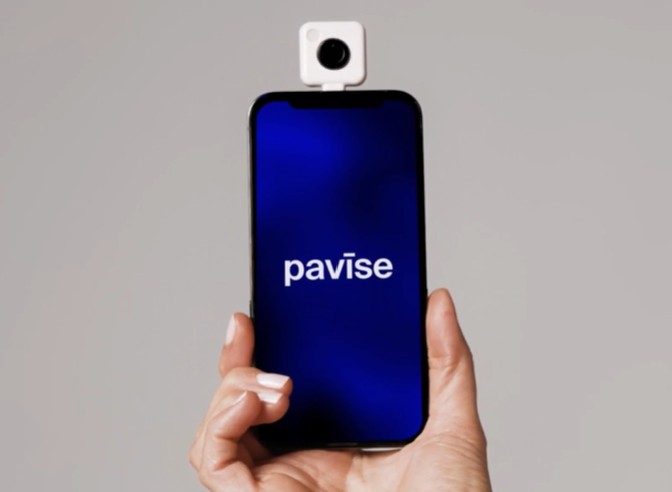
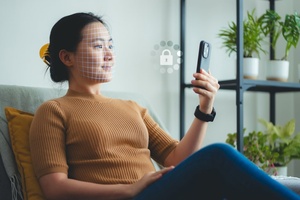
The PAVISE UV camera, connectable to iPhones, is a revolutionary, award-winning tool for checking when to reapply sunscreen, to visualise sunscreen coverage, and to detect underlying skin damage invisible to the naked eye.
The workshops are split into two sessions, the first covering social media myths, skin cancer types, skin structure, genetics and historical and cultural perspectives, and the second, a more hands-on session with a VISIA UV camera, participation in a skin care routine, trivia and an escape room challenge and sunscreen sampling. There’s also participation in a game-changing portable UV camera analysis that plugs into students’ phones.
“We decided that the only way we were going to get everyone on board was to not make it about sun safety and target all the education, because the knowledge and action is very disconnected,” Board shares.
“The research is showing that 80 per cent of kids have the knowledge, but they don’t enact it, so that knowledge gap is real.”
Trialling the workshops at Kambala three years ago, Board targeted Year 8s and drew on a core group of 20 volunteers for ideas and feedback for how to make the workshops interesting and engaging to their peers.
“We said to the kids, ‘what’s going to make a difference and they were saying, ‘it’s knowing the damage I do now will actually impact me later.”
The students wanted to know what actually happens to their skin, how predisposed are they genetically for skin-related issues, what are the myths and what are the facts.
“In the form of a competition, we asked ‘What’s your biggest concern in terms of caring for your skin and in terms of sun safety?’ We received 700 responses and Dr Tong responded to every single one of them. We use those now for our trivia challenge,” Board says.
Technology provides powerful learning tool
The workshops fit within the curriculum of all states and territories and Board says the most impacting is tech that makes things personal – where young participants can look microscopically at their own skin and see the often irreversible damage that’s already occurred.
The Canfield VISIA system reveals sub-surface UV damage that’s invisible to the naked eye. They can see right in front of them the consequences of sun exposure, which he says is a catalyst for lasting behavioural change.

Simon Board says the workshops bring together education, science and student engagement to address a significant gap in the curriculum. It’s a travesty, he says, that skin cancer prevention and sun safety are still not compulsory topics.
“It goes down into the deep layers and actually shows signs of wrinkles, and the machine can actually tell which are permanent, so they’re either a light or a darker green.
It also shows the melanocytes – skin cells that make pigment that gives skin its colour. Melanoma starts when melanocytes develop changes in their DNA.
“Essentially what the machine does is look down deep underneath the layer of the skin and show where the melanocytes have come through to try and protect the layer of skin.”
In the same way, the PAVISE portable UV camera, which can be used at a school oval or other outdoor setting or in a classroom – can instantly show students where sunscreen coverage has been missed.
Firsthand account by inspiring young survivor
The resource collection includes comprehensive online resources, accessible for all teachers, the option of a live in-person presentation on skin care and self esteem by Seven News reporter and melanoma survivor Kirstie Fitzpatrick, and a leadership module suitable for senior secondary students, based around a collaborative investigation or research project, including full lesson plans and health promotion resources.
From Canberra, at 19, Fitzpatrick discovered a melanoma – and has had 22 operations since.
“She’s just wonderful. She stands up in front of those kids and they just love everything she says. She can really relate to them,” Board says.
Interestingly, it’s not been PE teachers who’ve been engaging the workshops as much as those involved in pastoral care, “who’ve made that really close link between self-esteem and skincare”, he shares.
“I’m writing a policy document at the moment, with my thoughts on what governments should do, and we’ve met with government officials at Parliament House, and we’ve had some good discussions.
“But basically, it’s like, “well, we don’t have the money. We can’t, we’re not able to do anything.”
While most high schools students are well educated when it comes to climate change and sun safety, a range of reasons mean many are not being vigilant enough when caring for their skin.
Governments these days are notorious for their short-sightedness and keenness for vote-grabbing short term wins, but in terms of lack of skin attention in high school, it takes 15-20 years to see the damage.
Schools must act now
Board had his own skin cancer scare with a squamous cell carcinoma on his neck many years ago, and says it’s a matter of urgency that schools act now and that an already crowded curriculum somehow makes way for its inclusion.
“My concern is that with climate change, we are seeing that the world’s heating up in the next few years, that those changes are going to become more prominent – and we’re going to be in situations where schools and communities are going to be much more compromised in terms of the damage to our young people’s skin.”
“Given most of your lifetime skin damage occurs in this adolescent age group, 25 to 50 percent of your total exposure by the age of 60 occurs during childhood and adolescence – this is important stuff.”
For more information on the workshops, click here.