The Greens’ legislation will apply a temporary prohibition on bringing glasses and other wearable devices into the country that have the ability to secretly record, such as Meta and Anko glasses.
They often look like normal glasses and allow the wearer to record video and audio without the knowledge of people around them.
AI- and camera-enabled smart glasses present serious regulatory, safety, and academic challenges for Australian schools.
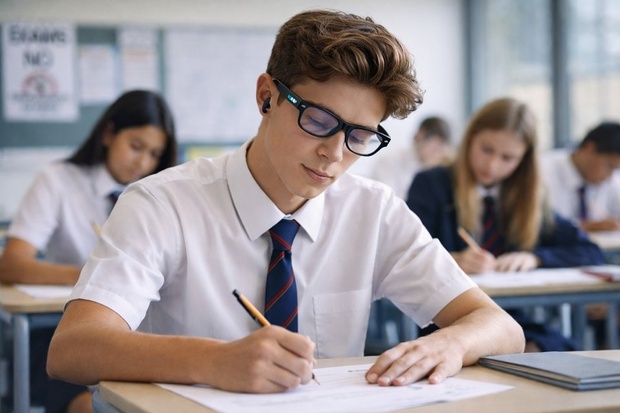
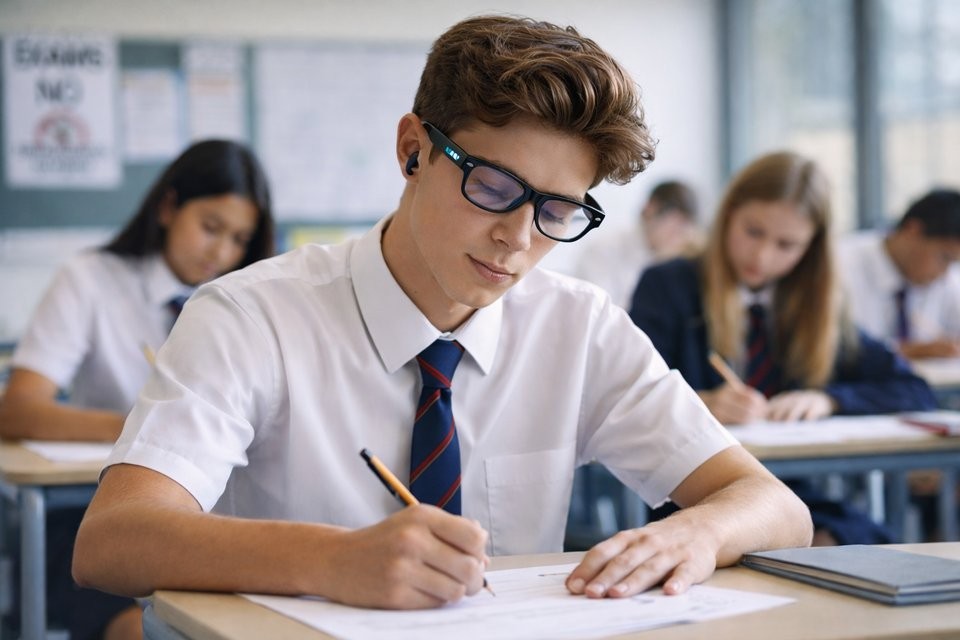
Because the devices look identical to everyday prescription eyewear, they bypass the visual cues of a standard smartphone with the implications for Australian educational institutions spanning across a range of critical areas.
In terms of privacy, students and staff can effortlessly photograph or film others at eye level without holding up a phone, and major concerns that hands-free, non-consensual filming can easily be undertaken in highly restricted school environments, such as changing rooms, school toilets, gyms, and swimming pools.
The technology provides a discreet method to capture raw footage for cyberbullying, livestreaming pranks, or generating non-consensual content and experts warn that covertly captured images can easily be weaponized into deepfakes or distributed on the “manosphere” and social media, disproportionately impacting female and gender-diverse students.
In terms of assessment, educational neuroscientists warn that these virtually undetectable devices render traditional, unsupervised testing ineffective, accelerating calls by state departments, like the NSW Government, to eliminate unsupervised take-home assessments.
CQUniversity’s Professor Ken Purnell has warned that the glasses make students “better cheats – but poorer learners”.
“Students can simply look at a question, have it processed by AI, and receive an answer almost instantly,” he says.
“From the outside, they are indistinguishable from prescription glasses – making them extremely difficult to detect, even in supervised exams.”
Teachers face a threat to their workplace safety, as students can covertly record classroom interactions to humiliate staff online.
These are just a few of the concerning implications.
Under the changes, the Privacy Act would be amended so filming, storing or sharing footage from these devices without consent is a clear breach of the law.
The Information Commissioner and eSafety Commissioner would also be given power to investigate complaints and issue penalties.
The minor party is expected to introduce the bill to parliament when it returns in September, with the support of independents.
The proposal is unlikely to move forward without support by the Federal Government.
Greens digital rights spokesman David Shoebridge said Australia’s laws needed to catch up and meet the moment.
“Australians are deeply concerned about this next potential avalanche, attacking their privacy these so-called smart glasses coming into the country in their thousands at low price points,” he told reporters in Sydney.
“Covert recording of us as we go about our daily lives in our gym, as we go shopping at the beach, we’re saying press pause.”
It’s unclear how many smart glasses are in circulation in Australia, but while higher-end tech can cost northwards of $500, cheaper glasses can be bought for less than $100 from stores and online.
Senator Shoebridge said a third of Australians wanted the devices banned outright, with a Monash University study finding a “disturbing” number of owners admitted to using them to secretly record people, including in change rooms, beaches and workplaces.
Schools have already banned the devices from classrooms over deepfake and live streaming risks, he said.
(with AAP)