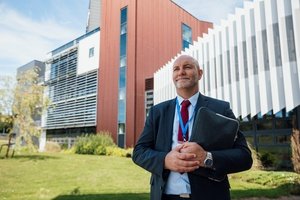


Speaking at the Australian School Improvement Summit in October, Manisha Gazula, principal at Marsden Road Public School in Sydney’s south-west, joined deputy principal Dr Greg Ashman from Ballarat Clarendon College and principal Sue Knight from Ararat West Primary School in Victoria, to identify what it takes to drive positive change at the whole-school level.
Having driven an explicit teaching and learning transformation at three primary schools previously rooted in constructivist, play-based, self-directed learning approaches, Knight warned that scrapping things from the calendar is often a necessity when starting out.
Primary schools especially can fall into the trap of celebrating too many special events and days throughout the term, Knight said.
“If de-implementation was easy, it would stand out to us what to take away.
“But many schools, particularly in Victoria … have so much in their calendar and it impacts teaching and learning time.
“And you mightn’t even think it’s a big deal. But it’s actually really hard to get kids to focus in that literacy block if it’s Crazy Hair Day.
“And if you do that with lots of different events and count that up over the year, that (lost) time on task has a massive impact…” Knight argued.
Weighing in on the discussion, host Dr Nathaniel Swain said that as a parent, various days of celebration and dress-up often feel like weekly events.
“It does feel like it’s weekly. And probably, less is more with regards to special [days] because they stop becoming special if they’re all the time,” he noted.
In Knight’s view, if your school’s data is not great then ‘everything single thing is on the table’.
And doubling down on lifting literacy and numeracy outcomes across the board often requires principals to get comfortable saying ‘no’ to well-intended offers and requests from their community, she said.
Shielding precious instructional time from other distractions is really your responsibility, she suggested.
“Sometimes that can make you a little bit unpopular, particularly in a country community where so many people from outside want you to, you know, ‘come to the show’ or have these people in speaking to you – and all of that is instructional time.
“So, sometimes you’re not the most popular person because you take things away.
“But if your data is not good, everything is up for discussion.”
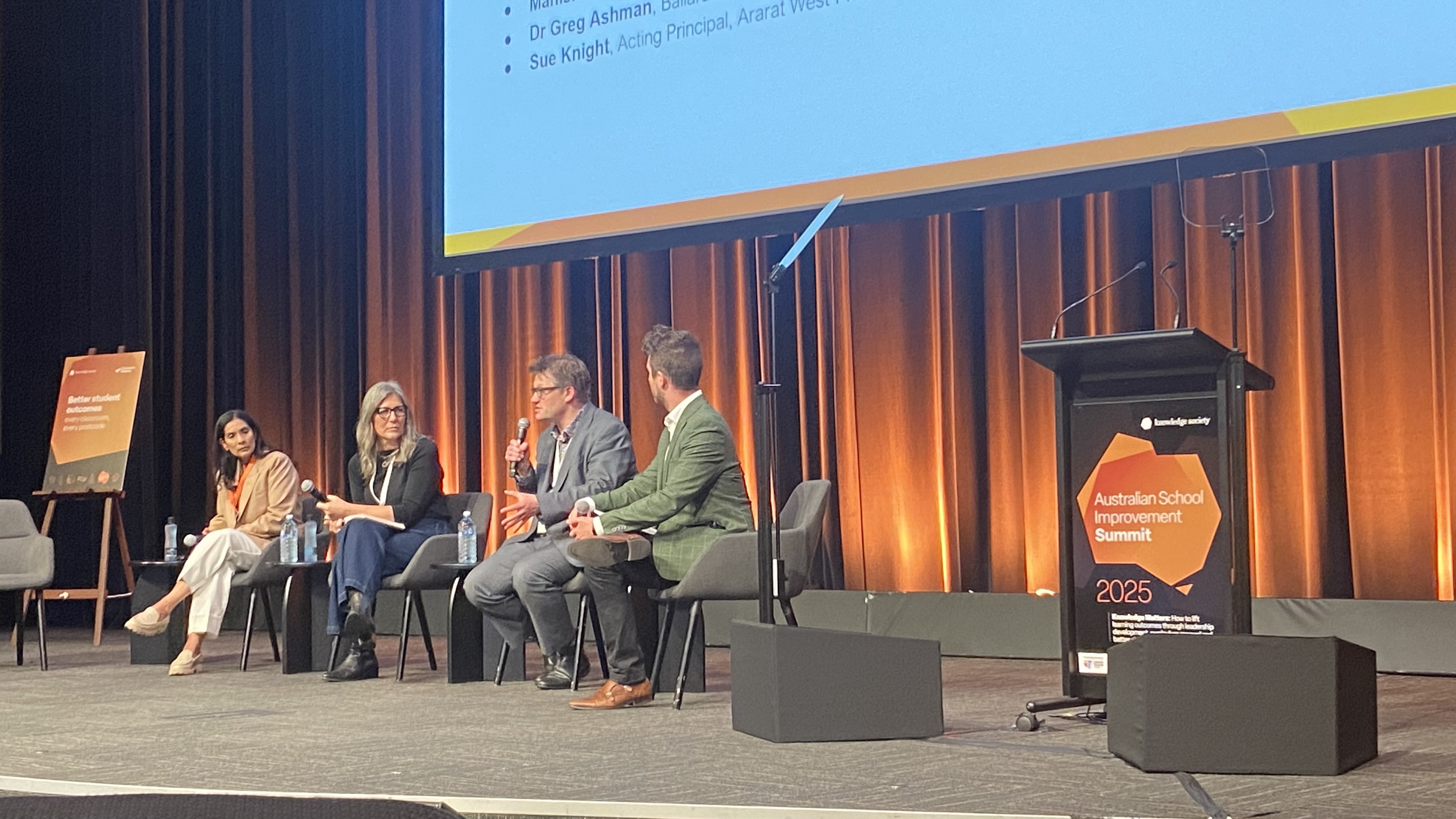
From left, Manisha Gazula, Sue Knight and Dr Greg Ashman outlined the best path to school improvement with host Dr Nathaniel Swain.
If leaders want to see improvement at scale that actually sticks, Gazula said having a school-wide, viable curriculum is “the first and foremost thing you need”.
“[It would be] content-rich, knowledge-rich curriculum that you can sustain from K to 6, year after year. And everybody should be aware of it,” she said.
Next, you should ensure that teachers’ pedagogy is aligned with the science of learning, Gazula noted.
“In our school ... we explicitly teach everything that we need to do, that’s the only way to teach new knowledge and skills to students.
“So [you need a] proper pedagogy across K to 6 and where all the teachers implement the same pedagogy and the same curriculum.”
Along with this should be a ‘relentless focus’ on literacy, the principal said.
“And when I say ‘relentless focus’, this means read more, write more, and read more. [Students need exposure to] really good, knowledge-rich texts.
“I said yesterday at a seminar that it’s good to read Andy Griffiths and Morris Gleitzman for fun, but really, they’re not knowledge-rich novels and books for students.
“We need (students) to read a lot of fiction and non-fiction books that are written for the content, and have structures and systems in place that actually support the teaching.”
Gazula’s approach to behaviour has been well-documented. Named ’The Marsden Way’, explicitly teaching good behaviour starts from day one at Marsden Road, thanks to a carefully sequenced civics and citizenship program the principal launched some seven years ago.
Impressed by what she saw at Michaela Community School in the UK, but not keen to start any kind of ’behaviour bootcamp’ for her primary students, Gazula and her team came up with their own version.
“It’s actually quite thorough,” Gazula previously told EducationHQ.
“We teach our children how to walk from one spot of the school to another spot in two lines.
“So, we don’t have kids running around and knocking each other over and getting into fights.
“Then we [teach them] how to greet a teacher – what is acceptable language and what is not.”
Children also learn how to best approach office staff, how to treat their peers with respect, and what correct etiquette looks like in social interactions.
“We teach from the time they are five years old, so they just know this is what is expected,” Gazula said.
Back to the summit...
Holding teachers to account is another element in the school improvement recipe that school leaders ought to include, Gazula told the audience.
“We [as a system] do not hold our teachers accountable for our student outcomes. And it is the only profession where, right from the principal to the teacher, no one is held accountable for performance.
“But at our school, we hold them accountable, but we do so in a supportive environment.
“And I think if you have those systems in place, then you will see school improvement happening,” she concluded.
Ashman endorsed this advice, adding that one of the barriers to school improvement is how change is introduced in Australian schools.
“When I was in the UK, many years ago, I was told that … to get a promotion I needed to develop an initiative that I’d implemented.
“And what this means is you have lots of ambitious people going back (into schools) and trying to implement initiatives – and they pile up on top of each other … and teachers can become very cynical about them,” he reflected.
This creates an unfortunate cycle in schools, Ashman said.
“You have a cycle where things are launched in January, by June they’re sort of wobbling.
“September, it’s kind of embarrassing to talk about them.”
Instead, school leaders should pilot initiatives and let them grow organically, Ashman said.
“If they’re a bad idea and you try and pilot them, they’ll die, which is a good thing.
“But if they’re a good idea, people will start to coalesce around them and you can build some momentum.
“And that’s how you get around the sort of grumpy people who don’t want to get involved.”
EducationHQ is a media partner of the Australian School Improvement Summit. Read more of our event coverage here and here and here.