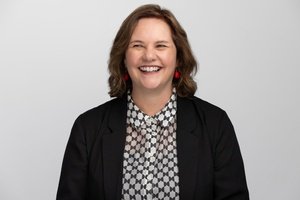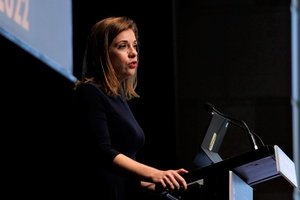
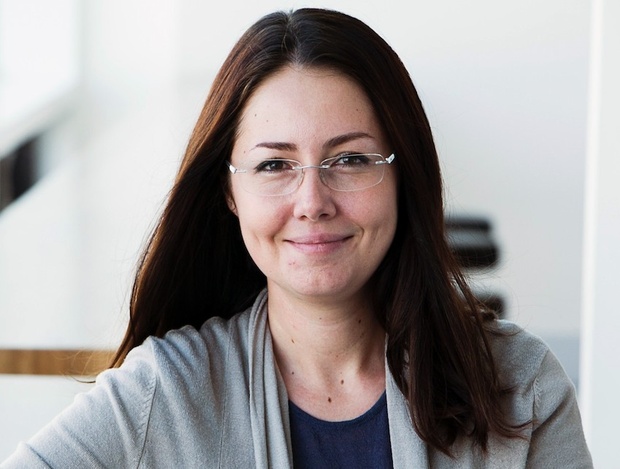
Millions of people struggle to confidently make informed decisions about saving, borrowing and managing financial risk, Professor Isabella Dobrescu, head of the School of Economics at UNSW Business School, says.
Dobrescu asserts that a lack of financial literacy can leave people more vulnerable to debt, financial stress and financial abuse, and less prepared for how changes in economic conditions can affect living costs or their personal circumstances.
“Financial literacy is not just an individual problem; it is a societal problem, and we need to start building the national capability on this,” she says.
Dobrescu says education has an important role in closing Australia’s financial literacy gap, and her keenness to help place the next gen on the right track has seen her involvement in STEP UP, UNSW’s economic and financial literacy outreach program for high school students.
STEP UP uses the Playconomics video game to teach economic and financial concepts through live experiences.
“Students can experiment with different choices, see their consequences and then go back and try again,” she says.
“They can see in real time how changing one decision can affect a whole range of outcomes.”
Through the simulated economy, students make decisions about budgeting and spending, how much to save and how much debt to take on, how to deal with taxes, whether to invest in private or public goods and how to respond to market cycles.
Dobrescu says the experience also helps them understand their appetite for risk and willingness to delay spending for a future benefit.
“It is like living your life on fast forward, but without the real-world consequences,” she tells EducationHQ.
“You can make mistakes, try again and learn how your decisions affect your financial position.”
The course is available for students nationwide.

“Inclusion is really important,” Professor Dobrescu says in reference to good financial literacy resources. “It’s not just talking about equity, diversity and inclusion – [it] is really important that everybody has access to good resources.”
“We’ve had about 10,000 high school kids go through the program so far.
“The schools can come over and over, so every year they can participate again, and everybody’s coming back…”
This is likely because the program is easy for teachers to utilise and tie into their classes.
“We should start teaching kids early and we should make it available to everyone,” Dobrescu says.
“Inclusion is really important. It’s not just talking about equity, diversity and inclusion – [it] is really important that everybody has access to good resources.”
Dobrescu says it comes down to a matter of a good resource design.
“If you want to make it accessible, you start from scratch, you start from zero, assume nothing, don’t put the burden on teachers to teach or on students to somehow have this miraculous information appearing in their brain.
“Make it really intuitive, make it second nature and then let them run with it.
“Some people will stop after two or three scenarios because they’re not really interested, but some other kids are just going to run with it up until understanding how to run a city with the costs and the benefits, how to treat opportunity, the cost of putting the park where a hospital might go, and the really, really complex things – and understanding when to tax and when to subsidise the market.
“If we ensure both schools and universities make this type of literacy available to everybody, I think we’re onto something.”
The economics expert says in primary and secondary schools early interventions are having a major impact.
“We need to change the culture. Whenever we say literacy, we mostly apply that to reading, right? But there is another dimension that I think nowadays with all the advice and the AI and the influencers and all the digital currencies is just as important – and that’s financial and economic literacy.”
At UNSW, the largest course in terms of students numbers is an economic and financial literacy course, which is taken by 10 per cent of economics students and 90 per cent from all the other faculties.
“People have caught up to the idea that even if you’re a doctor, you will need to know about budgeting, even if you’re an engineer or in IT or the performing arts, you will earn money, you will go to the job market, you will get a job, you will have to negotiate the salary, you will have to understand taxes and super and so on,” Dobrescu says.
It seems the Government is catching on too, with the launch in Canberra two weeks ago of the Parliamentary Friends of Financial Capability – a new non-partisan group aimed at building financial wellness, empowerment, resilience and health as a national priority.
Co-chaired by Senator Richard Dowling and Senator Jess Collins, the group brings together the many perspectives needed to progress an integrated approach.
Dowling says improving financial capability is an issue he is committed to advancing through the Parliament.
“Australia has built one of the world’s most sophisticated financial systems. We should aim to build the world’s most financially capable population to match it,” he says.
“Financial capability is about giving Australians more confidence, more choice and more control over their financial future.”
Ecstra Foundation CEO Caroline Stewart says money matters at every life stage and providing young people with practical financial education and confidence is essential.
“But financial wellbeing is also shaped by the systems people rely on. We need fair systems, trusted information, strong consumer protections and accessible support to make informed decisions in an increasingly complex financial environment,” she says.
“This is where the Parliamentary Friends group will have an essential role, providing a valuable forum for parliamentarians, regulators, educators, researchers, community organisations and industry to work together to increase awareness of the role financial capability plays in everyday decision making for Australians.”
Ecstra’s work in financial capability includes the national Talk Money financial education program in schools and the annual National Financial Wellbeing Summit.
Whether you’re ateacher or a school leader or a primary or high school student, Dobrescu is at pains to remind people that financial literacy requires ongoing attention as people’s circumstances and priorities shift.
“Financial literacy is not a destination. You have to keep checking the information available and learning because your circumstances change, the financial products available to you change, and the economy changes,” she says.
To access Ecstra’s Talk Money resources, click here.
To access UNSW’s STEP UP, click here, and Playcenomics.