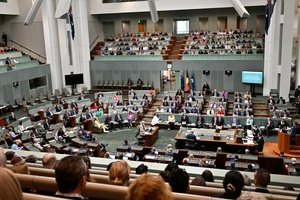
Flagrant violations of international law, a fraying social safety net and medieval attitudes towards justice were blasted at a Senate inquiry into youth incarceration on Friday.
“The definition of insanity is doing the same thing over and over again and expecting different results,” International Commission of Jurists vice president Greg McIntyre told the inquiry.
“That’s what’s been happening to the youth justice system for decades.”
Australia is violating five international agreements on the rights of children, Indigenous and disabled people, as well as on torture, UN youth representative Satara Uthayakumaran said.
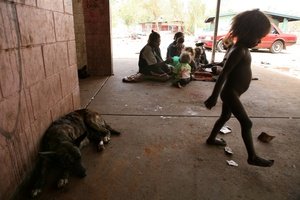
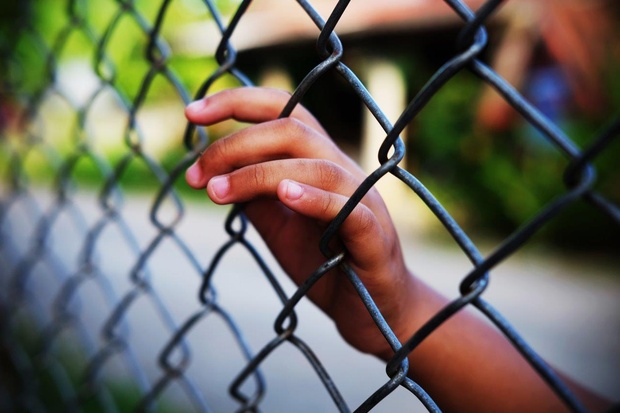
Indigenous children make up over 61 per cent of the daily youth detention population nationwide, despite comprising a small fraction of the general youth population.
“The promise of a fair Australia is our greatest lie,” she said.
“We are torturing children on Australian soil ... subjecting them to cruel, inhuman, and degrading treatment.”
She referred to spit hoods, placed over prisoners’ heads to prevent them spitting on officers, which pose a suffocation risk.
Their use has been pared back everywhere but the Northern Territory, but few states explicitly prohibit them.
Efforts to unwind punitive attitudes must respect the real victims of youth crime, Law Council of Australia president Tania Wolff said.
“Children can and do commit crimes, and we do not minimise the effects of those crimes on victims,” she told the committee.
“The policy responses being adopted are costly, and they are not working.”
Locking a child up costs more than $3300 a day - a $1 billion annual spend for taxpayers - according to research by the Productivity Commission.
It costs just $381 a day to supervise them in the community.
The massive funding fails to improve public safety, indeed approximately 85 per cent of children released from detention return to sentenced supervision within 12 months.
“Governments are turning to increasingly punitive measures ... incurring unacceptable costs, both in terms of funding and impact on vulnerable children’s lives,” Wolff said.
The number of incarcerated children in Australia on any given day has risen by almost nine per cent in the past five years, even though the total number of kids moving through justice system has decreased, according to figures from the Australian Institute of Health and Welfare.
Stricter laws passed in Victoria and Queensland in 2025 have lengthened the sentences available for youth offenders and removed out-of-jail penalties for certain crimes.
They include mandatory life sentences for children as young as 10 in Queensland for some violent offences.
That is the minimum age a child can be prosecuted in Australia except for in the ACT, where the threshold is 12.
Raising that threshold to 14 or 15 nationwide was strongly endorsed by those testifying to the inquiry.
“Since the Middle Ages, governments have been proceeding on the false logic that increasing penalties will reduce crime,” McIntyre said.
AAP