
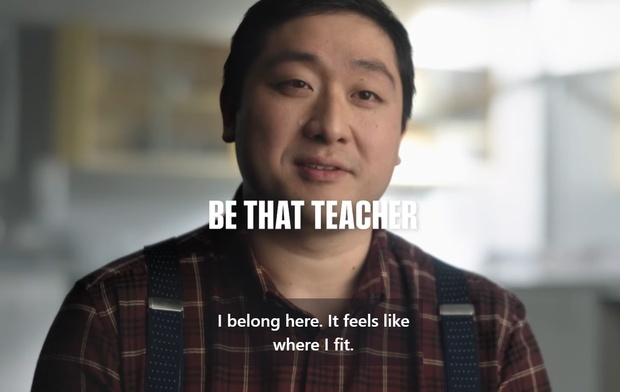
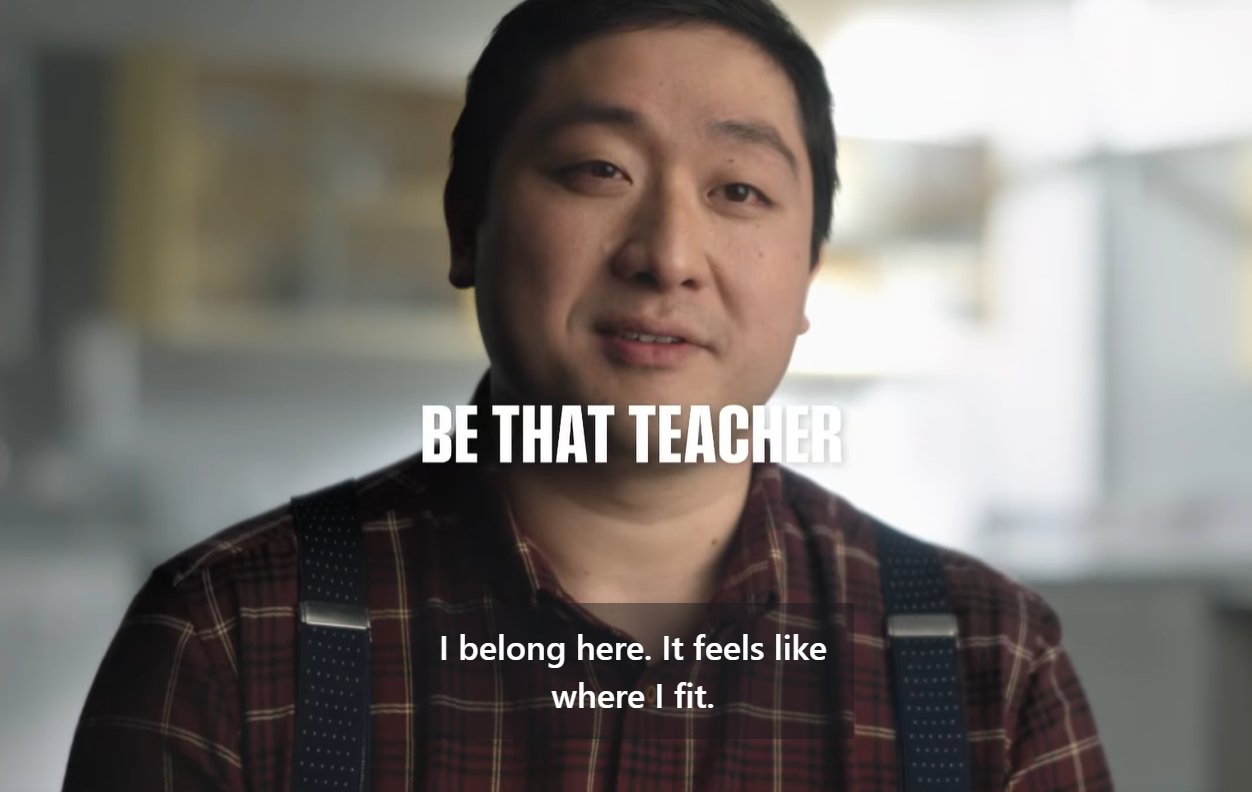
Launched in October 2023 as part of the Federal Government's National Teacher Workforce Action Plan, the campaign aimed to elevate teaching's status and inspire more people to enter the profession.
Researcher and former teacher Dr Saul Karnovsky, from Curtin University's School of Education, has led a study analysing the messages and themes within the advertising campaign. He says it actually risked worsening the problem it sought to address.
According to Karnovsky, the ads were inspiring in a saccharine way and clearly obscured the realities of the job. He says that inspiration should not be a policy response to what is a national workforce crisis.
And let's not get started on how the campaign landed with teachers themselves....
SD: Thanks for joining us, Saul. Why did you want to interrogate the Government’s ‘Be that Teacher’ campaign from a research perspective – what was it that sparked your interest?
SK: That's a great question. [My interest was piqued when] I first saw the campaign, which emerged quickly on the heels of what Jason Clare termed ‘a crisis’ in the teaching profession in terms of retention and attrition.
When he assumed the portfolio as Federal Education Minister, he pivoted to this position of ‘we want to listen to teachers, we want to understand what is going on in schools and what is difficult and challenging about the work at the moment’.
…and what was surprising to me was we haven't really seen anything like this before: a federally organised initiative to recruit teachers at a national level. That's quite unique in the country's history – and it stood out to me as a trained historian.
But [secondly], I think that the kind of slickness of it, the fact that [the ads] were very well produced, you could see a lot of money had been invested - they had earmarked $10 million [under] the national teacher workforce action plan…
So, this campaign launched. And when it did, and I watched the videos, and I saw the posters, and I looked at the website, I went, ‘I wonder what teachers would think about this’.
That's often the first port of call, is trying to understand as an ex-teacher myself as well, if I had seen [these ads] in my darkest days, when I was really struggling in a very hard to staff school and feeling burnt out, emotionally exhausted and wanting to leave and having intentions to leave the profession (which eventually I did) – what would I have thought of that?
I would have felt very cynical about it. And so I wanted to go a bit deeper.
You looked at what teachers were saying on Reddit about the campaign. What was the general sentiment?
I saw a bit of chatter … vitriolic is probably a kind word to apply to what was being said.
They said it missed the mark, they said ‘they've spent all this money, just help us with workload, invest in workload reduction and in giving me more time for all this administration work that I have to do and etc’.
And obviously, there’s been any number of pieces of research – many of which we cite in the paper – about workload conditions, about unsafe school environments, about teachers' wellbeing in terms of working long hours, etc., and stress and anxiety and depression, secondary traumatic stress. I mean, you can use a laundry list of things.
You looked at the emotive flavour of the campaign and how it pulled on our heartstrings, what did you find on this front?
The emotional or affective domain was really interesting. So, how are they making us feel about what teachers do? It was this notion of everyday heroes that bring us to tears.
And this is the [message] that Jason Clare [drew on] many times during the period of promotion.
It comes from the marketing playbook: you find a message that's strong and emotive, and you play those strings again and again and again.
So, one of the pieces that stood out to me, when he was on Sky News, it was all very gushy, mushy stuff.
It was, you know, ‘I cried’, and ‘you'll need to get the tissue boxes out’, he was saying to the presenter on Sky News. And this is very what we might call saccharine, mushy kind of [messaging].
One of the other interesting things, and I think it's worth [highlighting], is the website has been taken down, and it's been down for I'm not just talking a few months, like over a year.
So, they spend all this money, and then strangely, they took it down. And you think, ‘well, if you invested $10 million, which is a substantial amount of money for a recruitment campaign, would you not get the most bang for your buck, you know?’ Like, keep the website up. Keep that material going.

Dr Saul Karnovsky says the campaign gave prospective teachers 'fictive hope' about what they could expect in the profession.
Do you have any thoughts on why the campaign website has been taken down?
I couldn't really discuss it in the article, but something strange is going on there. Maybe they detected that it didn't land like they wanted it to. Maybe they got the message that teachers [had their bullshit meter alert wailing] and were saying, ‘hang on, this isn't right - we don't feel valued. In fact, this all seems a little bit like a waste of public funds’.
You found that the ads really shine a spotlight on the idea of one individual teacher making a huge difference. How problematic is this, if at all?
Our main argument is that, and this is a long story that we've told ourselves culturally, politically, around the ‘quality teacher’; this notion that the individual teacher makes the difference.
It's [this narrative about] the individual teacher and their dedication, ‘the saviour’ that can lift young people up and out of their situation or help them realise their dreams.
The tagline was, ‘who will you inspire?’ It was not ‘who will we inspire as a profession, because we're able to have that capacity because our working conditions are safe, manageable, and reasonable, and calibrated to the kind of expectations that one can achieve in a given structure’.
These sort of well-heeled emotional narratives that we tell about teachers are all in movies and popular culture … and what our article is trying to do is hold that up and say, ‘there's nothing inherently wrong with doing this, but if you don't then also have a conversation about what is going on in the profession: how is workload managed? What are the psychosocial hazards occurring for teachers right now? How are we treating teachers as a community? How are parents behaving towards teachers and school staff?'
If you don't quickly follow with that, at the end of the day, who will you inspire?
What you're doing is creating dangerous territory for people. When they enter the profession, they'll have an unrealistic picture of what's achievable given the current conditions.
The biggest danger is, that I say very bluntly, it sounds awful, but it’s that you're adding just more meat for the sausage grinder - you're chewing people up and they'll exit very quickly because they think, ‘well, either it's impossible or very difficult or it's not enough to keep me going, these kind of emotional rewards’, which is what the whole campaign is about.
It's like, ‘become a teacher and you get all of these emotional rewards. You'll feel great about making a difference for young people’, and ‘that young person really needed you’.
[And you see] teachers showing a certificate that some student made them, or a poem that they wrote for them, or some kind of other artifact - it's like this strange museum of teaching.
The whole campaign was just very weird.
There was a really strong line in your study where you say the campaign offers a ‘fictive hope’ to prospective teachers. Just how misleading was the campaign in your opinion?
There's always been a bit of that fictive hope and a sense of what teachers are able to achieve in certain conditions. And I feel given where we're at economically, socially, and the kinds of issues that are presenting in schools at the moment for teachers, in terms of those risks and psychosocial hazards, and workplace safety … this kind of fictive hope that the campaign offers is morally and ethically problematic, and it's misguided.
If the government were to run a different kind of teacher recruitment campaign, what sort of messaging or imagery do you think should run instead?
…What we're seeing now is an acknowledgement that workload and workplace safety and psychosocial hazards are part of the reason why teachers have poor wellbeing and have intentions to leave the profession or that are leading to attrition.
Now, that's a good thing. So, how do we have a more fuller and rounder conversation about what it means to be a teacher to prospective candidates?
The federal government feels like they've ticked their box, actually, with this campaign. They would probably say that it has been a success because teacher education enrolments in courses like at Curtin University have gone up over the last couple of years.
They’ve potentially made the job more appealing through this to people who may not be aware of some of the difficulties and challenges in the work.
I think what it's really important is telling people, ‘well, here are the rewards, but understand that these rewards are also part of a bigger picture of what it is to be a teacher’.
I do wonder about these kind of cultural, social narratives we tell about teachers, and it's time for a re-assessment. To be Miss Honey or Mr Keating from popular cultural products and films, is incredibly difficult.
And ultimately, the profession is about collective agency. It's about working in broader teams. As a teacher, yes, you might be with your students on any given day on your own, but ultimately teaching happens as a collective.
Instead of talking about the ‘quality teacher’, we need to talk about how do we structure a ‘quality profession’, so teachers can have the capacity to inspire and make a difference?
And they need the working conditions in order to do that effectively.
Is there anything else you would like to mention?
If Australia wants more people to become teachers, telling better stories about teaching could help.
Teaching is incredibly meaningful. And in fact, I have been a course coordinator at Curtin for a long time and I've just stepped down, but I would often tell students at Orientation that ‘you are undertaking something incredibly noble, and it has incredible rewards, but also it's incredibly challenging’.
But some of the greatest rewards come from our most challenging work that we do. And so, it's okay to tell people that the work is hard, the work is challenging. You can have really difficult days, but you are giving a service to the community, you are supporting young people when they often need teachers the most in their lives.
We have to tell those difficult truths in order to move forward. …You know, there's a conversation around toxic masculinity and what's going on there for our predominantly female workforce - they're confronting really, really unsafe workplaces because of this.
And so, we need to speak these truths, come together, find better ways of walking together: education researchers, policymakers, teachers, leaders, and find a better way of organising things so teachers can do the best work that they can.