And just as trees purify the air we breathe, provide shelter, and prevent erosion, so do poems, clearing what has been contaminated, offering shade, and binding the ground, so the self does not fall away.
Unlike many political leaders, salesmen, and online influencers, poets do not promise certainty, permanence or fixed solutions to life’s challenges. They offer the journey itself, and the hope that comes with it.
As the Nobel Prize-winning poet Joseph Brodsky warned, “By failing to read or listen to poets, society dooms itself to inferior modes of articulation, those of the politician, the salesman, or the charlatan”.
His warning feels especially urgent now, when social media, political messaging, marketing and online commentary compete for our attention. Much of this language is designed to provoke, persuade, simplify or sell, often through fear.
Poetry is not sloganeering. It is not advertising. It is an antidote, a remedy for the toxins that corrode thinking and imagination. Poems clear an atmosphere contaminated by political rhetoric and corrosive language, making space for words to recover their emotional force, psychological complexity and truth.
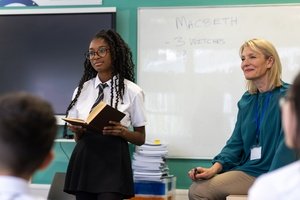
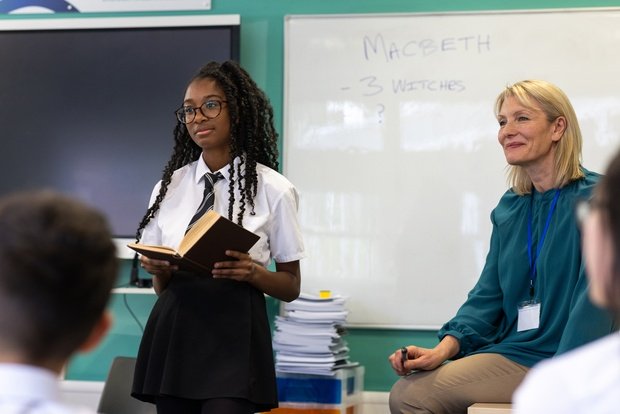
I've been especially thinking about the importance of poetry since I was asked to select a couple of poems for a poetry anthology compiled by the English department at the school where I teach.
My first choice was Shelley's Ozymandias. I selected this poem because it shows what becomes of the bloated self-regard of autocrats and tyrants.
The inscription on Ozymandias's statue reads:
“My name is Ozymandias, King of Kings:
Look on my Works, ye Mighty, and despair!”
This is precisely the kind of grandiose, self-promoting language Brodsky warns against. Shelley's poem doesn't merely expose the tyrant's political impotence and empty rhetoric. It survives the tyrant's own words, rendering the boast meaningless against the “lone and level sands”.
My second selection was C. P. Cavafy's Ithaca, which often resonates with students because its central image of a long and uncertain voyage remains relevant through contemporary retellings of The Odyssey. Meaning is found not at the destination but in what happens along the way.
I chose this poem because it echoes Robert Louis Stevenson's idea in his essay El Dorado: it is better to travel hopefully than to arrive.
As Cavafy reminds us, the more deeply we inhabit our own journey, the less vulnerable we become to fears imposed from without. To remain open to possibilities, whatever they may be, and to continue moving towards an uncertain destination is, in its own way, to become free. And freedom of this kind is what Brodsky's politicians, salesmen and charlatans can never sell us.
Other teachers chose poems by Wilfred Owen and Siegfried Sassoon. Although Dulce et Decorum Est and Suicide in the Trenches - poems that I was introduced to during my high school years - differ in style, form and subject matter from Ozymandias and Ithaca, they essentially do what all great poems do. They name the unnameable. Speak the unspeakable. Seize the ineffable.
And the poetry of the First World War is especially relevant at a time when online commentary and political rhetoric reduce the horror of war to a conflict akin to a sporting contest that is won or lost on the battlefield. Poets, by contrast, bear witness.
We see in Dulce et Decorum Est soldiers “marching asleep” through a landscape where “haunting flares” and the “hoot of gas-shells dropping softly” have replaced birdsong. Mud and sludge have supplanted green fields. A “thick green light” has replaced sunshine. The air itself is choked with gas.
In Sassoon’s Suicide in the Trenches, we are presented with a world in which “a simple soldier boy” who once “whistled early with the lark” ultimately “put a bullet through his brain”.
Yet from “the hell where youth and laughter go” emerges poetry of such devastating beauty and truth that it still moves us to this day.
The poet bears witness not only to suffering, but to our shared humanity. In doing so, poetry offers the possibility of hope; the kind of hope that Emily Dickinson speaks of in her poem, “Hope” is the thing with feathers.
The poem was included in the anthology for its faith in the undiminished human spirit, which survives “in the chillest land” and “on the strangest Sea”. An unending hope that “perches in the soul” and “sings the tune without the words”, asking nothing in return.
We see this too in another teacher's selection, T. S. Eliot's Preludes, where “sparrows in the gutters” are heard in a “blackened street” and “worlds revolve like ancient women / Gathering fuel in vacant lots”.
In W. H. Auden's Funeral Blues, we see a grief-stricken speaker turn his back on nature itself, asking us to “pour away the ocean and sweep up the wood; / For nothing now can ever come to any good”. Like the other poems in this collection, both find moments of beauty and meaning amid desolation.
From the ruins grows something unexpected. A poem, like a tree, takes root in damaged ground and reaches towards the light. As E. E. Cummings writes in i carry your heart with me (i carry it in), the anthology's final poem, it grows “higher than soul can hope or mind can hide”.
The poems English teachers choose will no doubt be very different from this selection. What matters is not the particular selection, but the belief that poetry still has something essential to offer young people.
The experience of selecting poems for the students I teach today took me back to my own primary school years, when teachers recited verses that ignited my interest in words, the fascination of simply placing one word beside another and producing whole worlds.
Poems from Lewis Carroll's Alice books, such as the humorous How Doth the Little Crocodile from Alice's Adventures in Wonderland, along with T. S. Eliot's Mr. Mistoffelees, William Blake's The Tyger, and Robert Louis Stevenson's My Shadow, were seedlings of creativity that took root in our young hearts and stretched our imaginations.
The 1970s were also a time when tree planting was encouraged through Victorian schools and community programs. I remember children at my primary school being given a small tubed wattle seedling, which we took home and planted in the backyard.
Many of these seedlings grew into tall trees, attracting birds, purifying the air and providing shade, much like the poems we were gifted by our teachers.
Decades later, they continue to shelter our imagination, deepen our humanity and orient us towards truth. In an age crowded with sensationalism, sloganeering and political expediency, those small seedlings of language still help us see clearly.
This peice was first published by Quadrant. Read the original article here.