

The interdisciplinary study from University of Sydney and published in Early Childhood Education Journal, found stronger pretend play ability among two- and three-year olds was associated with fewer emotional and behavioural difficulties at later ages.
The findings held after accounting for participants’ family’s socioeconomic position, mother’s mental health, language ability and the security of their relationship with their parents.
Led by Dr Fontini Vasilopoulos from the Matilda Centre for Research in Mental Health and Substance Use and the CREATE CENTRE, the researchers analysed data from more than 1400 Australian children taking part in the Longitudinal Study of Australian Children. Their pretend play ability was assessed by early childhood educators over a two-year period.
Mental health outcomes were measured using parent and educator reports, submitted when participants were aged between four and five and again between the ages of six and seven.
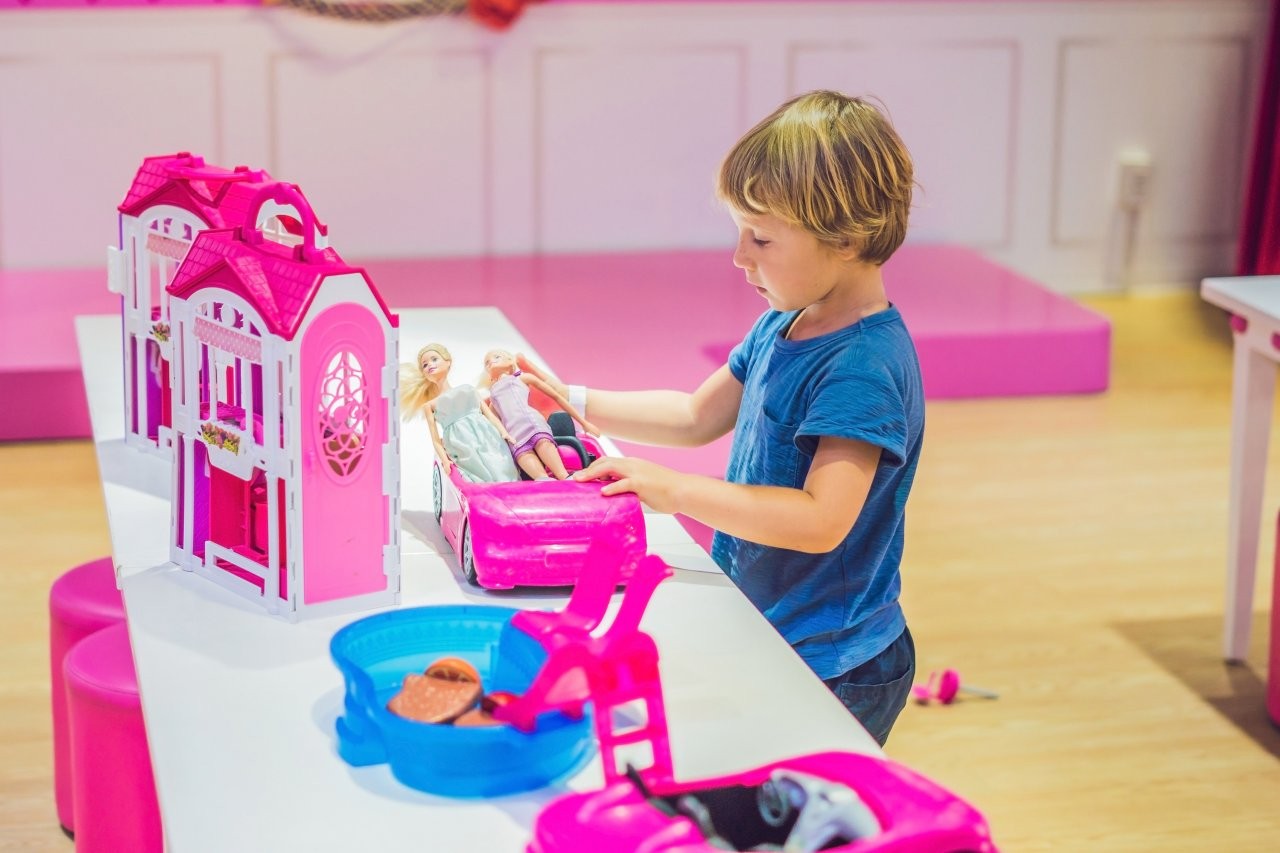
In pretend play, children act out imaginary situations. Often viewed as purely recreational, the findings suggest it may play a more important role in children’s mental health development than previously recognised.
“We found that differences in pretend play ability very early in life were linked to differences in mental health outcomes several years later,” Vasilopoulos says.
Mental health difficulties affect around one in seven Australian children, yet prevention efforts tend to focus on later childhood or adolescence.
The study shifts attention to the earliest years of life, when foundational developmental skills emerge rapidly and before many children begin formal schooling.
The researchers found emotional regulation did not explain the relationship between early pretend play ability and later mental health, challenging common assumptions about how play supports wellbeing.
Unlike previous studies, the research was based on a large, population-based Australian sample, increasing its relevance for Australian families, educators and policymakers, the researchers say.
The findings come as opportunities for imaginative play are increasingly crowded out.
Reasons include a reduction in unstructured time that’s often replaced by more structured, adult-led activities, the impact of technology, a more “resume building” culture where a focus on early academic achievement has led to fewer opportunities for free play; and concerns about safety, so-called “stranger danger” in urban environments, that is preventing children from playing freely outdoors.
“These findings are especially relevant today, when many children spend more time on screens, take part in more structured activities, and have fewer opportunities for free, imaginative play,” Vasilopoulos says.
“Pretend play can be easy to overlook, yet it plays an important role in supporting children’s mental health.”
The researchers found emotional regulation did not explain the relationship between early pretend play ability and later mental health, challenging common assumptions about how play supports wellbeing.
“Emotional regulation is often assumed to explain how early play influences later mental health, but that isn’t what we found,” Vasilopoulos says.
“When emotional regulation was taken into account, the association did not hold, suggesting other, less understood developmental processes may be involved.”
The researchers point to ‘embodied cognition’ as a possible explanation calling for further investigation.
During pretend play, children possibly engage motor brain regions thought to play a role in attention and anxiety.
This possible connection highlights how much remains unknown about how pretend play influences mental health.
Tips for encouraging child-led pretend play
The researchers emphasise the importance of child-led pretend play, and suggest adults can support it by:
- Letting play unfold for its own sake, rather than turning it into a teaching moment. If a child makes a mistake while counting or naming things during play, the priority is to keep the play going rather than interrupting to correct them.
- Following the child’s lead when joining in, much like a game of tennis. Waiting for the child to “serve” first helps keep play child‑led, though gentle prompts can help if a child is unsure how to begin.
- Responding to children’s play with simple observations or open‑ended comments instead of instructions. Describing what is happening in the play, or wondering aloud what might happen next, can enrich play without directing it.
- Stepping inside the play rather than directing it from the sidelines. Adults can ask children what role they would like them to take on, or suggest being a low‑power character, such as a confused visitor or a forgetful customer.
“Pretend play doesn’t need to be complicated or instructional,” Vasilopoulos explains.
“Using this kind of gentle, child‑led involvement may be one practical way to build the pretend play abilities our research links to better mental health outcomes later in childhood.”
Click here to read Dr Vasilopoulos’ opinion piece for ‘The Conversation’, titled ‘Pretend play is a magical part of childhood. New research suggests it can also help mental health’.