France becomes the first European country to follow Australia, where the world’s first ban for under-16s on platforms including Facebook, Snapchat, TikTok and YouTube came into force in December.
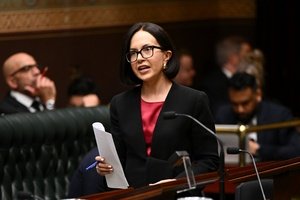
“France opens the way by being the first country in Europe to adopt a digital majority,” Anne Le Hénanff, junior minister for AI, told senators.
The legislation also bans the use of mobile phones in high schools.
Both houses of parliament – the Senate and National Assembly – adopted the ban on Tuesday.
President Emmanuel Macron, who in April urged young people to switch off their phones and read in order to become better citizens, wants the law in place in time for the start of the next academic year.
“I had pushed for this, and now it has been decided: from the new school year, social networks will be banned for children under 15,” Macron said in response to the parliamentary vote on Tuesday.
With the new legislation, children younger than 15 would not be allowed to open a social media account from September 1.
Social media platforms would have another four months to close accounts already open.
The platforms would also need to use age verification approved by the French privacy regulator.
Social media platforms generally oppose blanket bans and stress they already have measures to protect younger users, including age restrictions.
But they have also pledged to comply where governments enact bans.
The European Commission is working on its own regulations to rein in social media across Europe to protect young people, and it will have a say on whether France’s bill respects existing European Union legislation.
An EU panel of experts has recommended restricting social media access for children under the age of 13 across the bloc, saying it should be allowed only under parental supervision or in educational settings.
The report, convened by European Commission President Ursula von der Leyen, was presented in Brussels last Monday (July 13) .
Several EU countries, including Spain, Greece, Germany and Austria, intend to introduce a legal ban on social media for minors up to a certain age.
But any attempt to implement age limits on platforms such as TikTok, Instagram and Snapchat is likely to require action at the EU level, as the European Commission is responsible for enforcing rules on major online platforms within the bloc and national laws must be compatible with EU legislation.
Von der Leyen has recently voiced concern about the impact of social media on children and commissioned an expert panel to advise the commission on the protection of young people online.
She has pointed to Australia as a possible model after it became the first country to introduce a ban on social media access for children under 16 at the end of 2025.
The European Commission is expected to present legislative proposals later in 2026.
Macron, however, is not waiting for his European counterparts.
“We left you in this jungle and it robbed you of your attention,” he told teenagers at an event in April, speaking of the lack of rules on social media.
“We need to slow down and help you become adults, and above all citizens.”
“That’s why what we want to do is say that before 15 years old, no more social media,” he said.
(AAP with DPA and AP)