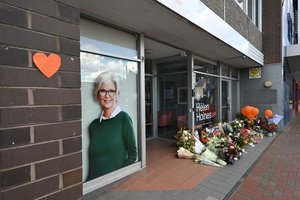


The public comment follows reporting last week in The Age newspaper that Hester Hornbrook Academy in Melbourne is facing a demand from the Federal Government to repay $23 million in disability funding from last year, after education department auditors found it was claiming more than 90 per cent of its students were in the highest “extensive” needs bracket.
Hester Hornbrook Academy enrols young people with cognitive disabilities and social or emotional challenges. It was founded in 2013 by Melbourne City Mission and caters for young people who are disengaged from mainstream education.
Parents don’t have to pay fees because the Academy is largely funded by grants from the state and federal governments.
School Can’t Australia wants those governments to urgently review funding structures including the Nationally Consistent Collection of Data (NCCD) funding rules to ensure vulnerable young people including those experiencing “school can’t” can access appropriate support to reengage with learning.
Director of School Can’t Australia Tiffany Westphal says special assistance schools are simultaneously ‘schools of last resort’ and ‘schools of renewed hope’ for families and their young people.
“They are places purposely designed to support students to heal, experience belonging, and safety. They create vital pathways back to engaging with learning and subsequently obtaining employment,” Westphal says.
“Without the availability of intensive supports like these, vulnerable students are at risk of engagement with the mental health, family support and youth justice systems.”

Tiffany Westphal says special assistance schools are places purposely designed to support students to heal, experience belonging, and safety, and create vital pathways back to engaging with learning and subsequently obtaining employment.
School Can’t Australia supports more than 19,000 parents and carers nationally who are supporting students experiencing school refusal or “school can’t”, which Westphal says is an incredibly distressing experience for families.
Alternatives to mainstream education such as home education, distance education or attending a special assistance school may literally be lifelines for these students.
Prior to attending a special assistance school, students are typically completely disengaged from learning, are often isolated, and may be recovering from mental ill-health or trauma.
They are unable to access mainstream education due to their complex support needs.
Special Assistance Schools (SAS) provide a vital bridge back to learning, connection and life beyond the home.
“It is no surprise to School Can’t Australia’s parent/carer community that students at special assistance schools often require extensive supports,” Westphal says.
“Recovering from school can’t or disengagement requires flexible, relationship-based supports that meet students at their point of need, while trust, safety and capacity are rebuilt.”
School Can’t Australia’s families say schools need funding for a wide range of supports.
They need access to places of learning with reduced student numbers and high staff to student rations and co-designed re-engagement/support plans, created with input from students, families and any formal supports.
Schools need to provide flexible attendance allowances, gradual returns and access to hybrid or remote learning when needed along with consistent access to trusted staff, who can provide regulation, connection and safe transitions.
Support is also required to engage in interest-based activities and work towards personal goals, access to small-group programs, and facilitated clubs, to support peer connection and one-on-one support across a day as needed for regulation support, learning engagement and addressing missed learning.
Westphal says funding for supports must be available, even when a student has not been able to attend school for 10 weeks in the 12 months before the census date.
“Students in need of these services, need supports in place before they even set foot on campus,” she suggests.
“They don’t have capacity for second chances, if support is delayed.”
“Without adequate resourcing of SAS, parent/carers are pushed out of work, student and parent mental health is adversely impacted, and some of our most vulnerable, students are left without a pathway back to education and wellbeing,” the social worker and disability advocate says.
With fewer than 40 students at one site in South Melbourne when it opened its doors 13 years ago, Hester Hornbrook Academy has grown rapidly to more than 700 enrolments last year across five campuses.
A spokesperson for the Academy told The Age that it has successfully changed the lives of more than 2000 young people who would have struggled to complete their school in the mainstream.
The spokesperson said it does not accept the Education Department’s draft determination and is carefully considering the options available under the Australian Education Act 2013.