E-bike and e-scooter injuries are rising and government advice is leaving schools in limbo, with principals and welfare teams increasingly being asked questions they don’t have the answers to.
Acting Victorian Assistant Commissioner for Road Policing, Justin Goldsmith, said police in his state are concerned about the rise in road fatalities involving e-bikes and Wednesday night’s incident should not have happened.
The 15-year-old was not wearing a helmet and the e-bike was unregistered.
“This is a great frustration for Victoria Police and a great frustration for the community I’d imagine. These things are totally avoidable,” he told ABC Radio Melbourne.
He said the rise in accidents involving electric rideables such as scooters and e-bikes was “an alarming trend” that posed significant problems for police.
In NSW, the Department of Education has told schools not to run their own licensing programs, but kids are still riding, and the incidents are still happening.
In response, two couples – firefighter Daniel Payne and his wife Mary, a former paramedic and nurse, along with Paul Gawman and his wife Trish Steel – have produced their own education-first response to a policing problem.
New online platform BikeHero is a practical, structured resource that schools can confidently endorse for parents and students.
“The platform covers eight topics, each designed to take around 15 minutes,” Gawman says.
“Content includes how to tell whether an e-bike is legal (wattage limits, the difference between pedal-assist and throttle-only bikes), state-by-state footpath rules, helmet laws, road rules for common situations like roundabouts and intersections, and what to do in an emergency.
“Short videos, quizzes and illustrated content throughout. It is built to engage young riders, not hand them a government PDF.”
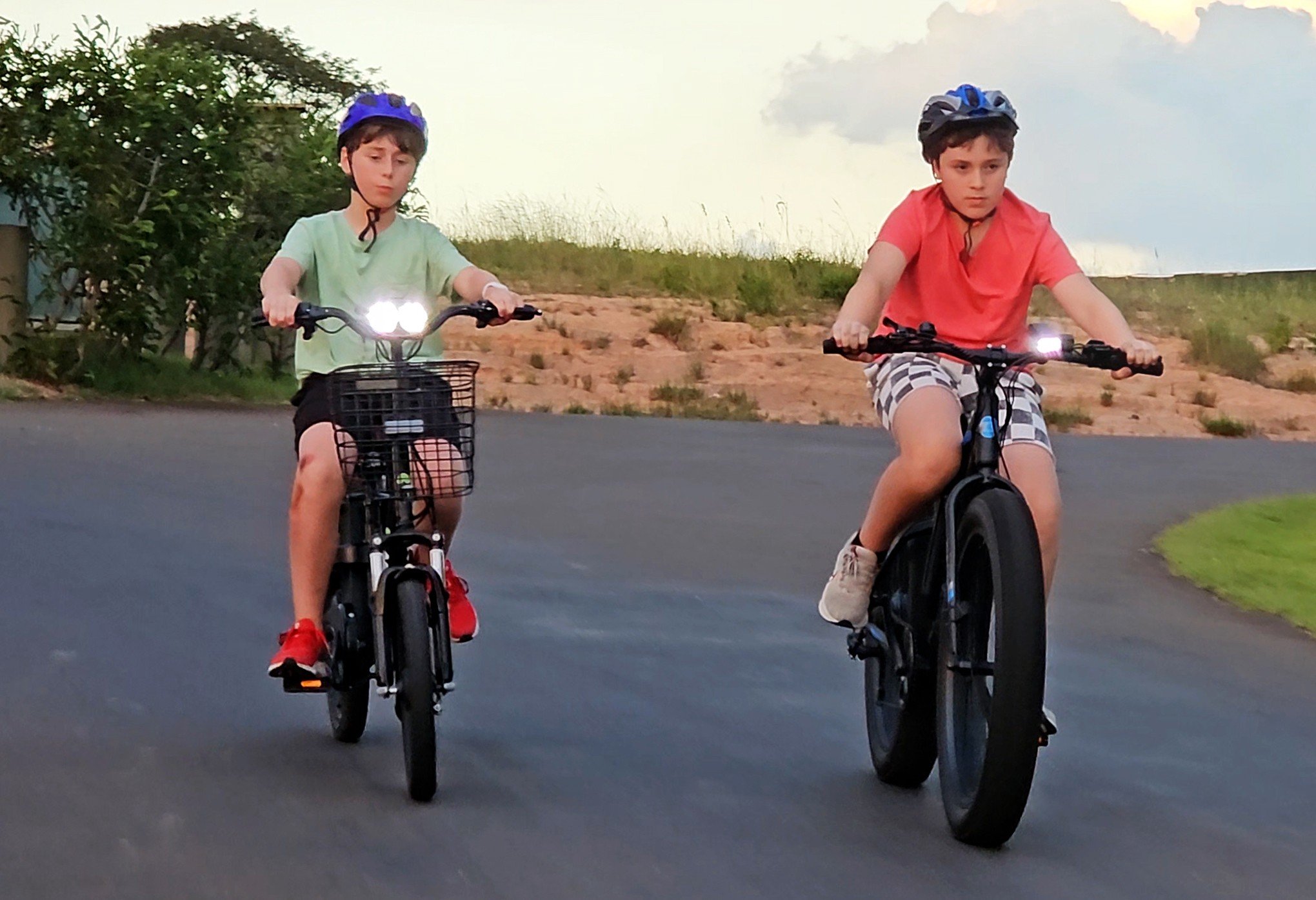
When it comes to e-bikes, schools don't need to become road safety experts, but they are in a unique position to set expectations early and share clear, practical guidance with families.
There’s no curriculum time required and no implementation cost.
“We just saw there was nothing out there at all, and we thought maybe we can do something about this,” (Daniel) Payne explains.
“Plus, we saw a lot of e-bikes getting more and more popular, week on week in the (Northern Beaches) area we live in, a lot of teens are riding around on e-bikes.”
Legal e-bikes are 250-watt, 25-kilometre-per-hour electric motorised bikes, but their power is meant to cut out at 25 kilometres an hour and riders are meant to pedal assist, Gawman says.
“There’s a big difference out there. There are a lot of high-powered bikes that are obviously illegal that are causing a lot of the troubles.
“I think kids like them because it’s giving them more freedom, the ability to go further with ease and get around instead of on buses or with mum and dad, they can get to and from sport or friends’ houses or social events or school, quite easily.”
Figures from the Queensland Injury Surveillance Unit show emergency department presentations linked to e-bike injuries in that state have risen sharply year-on-year, reaching around 2000 in 2025, up from 1626 in 2024 and 1380 in 2023.
In Victoria, 234 children aged 2 to 18 presented to emergency departments with e-bike-specific injuries in 2024/25, a 61 per cent increase on the previous year, according to a March 2026 Kidsafe Victoria report.
Injuries are most concentrated in 15- to 18-year-olds, an age group where e-bike use is increasingly common, and the majority involve boys, Gawman shares.
Some Australian research also suggests young e-bike riders may face a higher risk of serious head injuries compared to riders on traditional bikes.
At present, Australia lacks a nationally consistent mechanism for tracking e-bike-specific injuries and fatalities, meaning the true scale is likely not fully captured.
“What we’re seeing isn’t reckless behaviour. It’s a generation of riders who’ve never been properly taught how to ride these faster, heavier bikes safely,” Payne shares.
Payne and Gawman’s children are under 12, so the success of their work is personal.
Gawman says what the pair is putting together is an education platform that speaks to children and young people, and “not the person writing the rules somewhere in Canberra”.
“We’re getting the rules from all of the different resources out there, and we’re putting them all together on this platform, and putting them down in a way that speaks to younger riders,” he says.
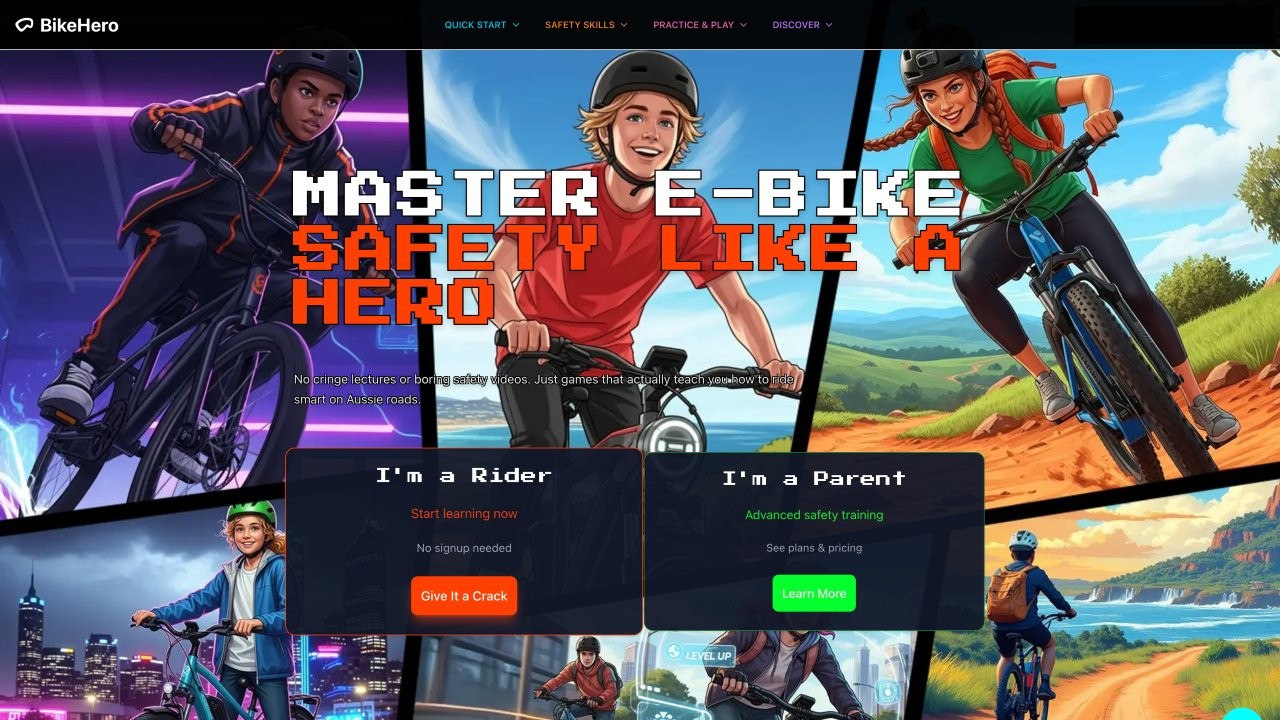
Through interactive lessons and quizzes designed for secondary school students, BikeHero covers road rules, legal bike identification, safe path behaviour, and gear requirements.
Importantly, the platform detects a user’s geo-location and adjusts the content accordingly.
A student in Queensland gets Queensland rules, a student in NSW gets NSW rules. This matters because the rules genuinely differ by state, and that confusion is a core part of the problem.
One common misconception schools can immediately address is that helmets are not required on school grounds.
“Our audience research has identified that this is one of the most common and dangerous misunderstandings among parents,” Gawman says.
“Helmets are required on roads and road-related areas, including shared paths. Many schools also require helmets on school grounds. A school that communicates this clearly will have an immediate safety impact.”
Many e-bikes in circulation are either modified beyond legal limits or operate as throttle-only devices, which are treated differently under state law. Many riders and parents have no idea their own bike may not be compliant.
Part of what BikeHero does is help young riders check that for themselves.
“No curriculum time is required,” Payne says.
“The platform is designed for use outside school hours, but each topic is short enough to use in class if a teacher chooses to.”
When a rider signs up, a parent connects to their account and can follow progress through the platform.
Gawman says for schools, recommending BikeHero to families means it becomes a conversation between parent and rider, “not just something a teen does on their phone”.
“Schools don’t need to become road safety experts, but they are in a unique position to set expectations early and share clear, practical guidance with families.
“This isn’t about stopping kids riding e-bikes. It’s about making sure they know how to ride them properly.”
BikeHero is in beta at the moment and still actively shaping the platform. If principals or teachers want to tell the platform founders what would be useful to them, Gawman and co would welcome that conversation.They can be reached at hello@bikehero.au.
E-Bike Safety Australia (EBSA) is based in the NSW Sutherland Shire, south of Botany Bay, and also provides practical, accessible, and age-appropriate e-bike safety education.