

They have mixed feelings about how well education has prepared them for the future, 90 per cent have experienced financial difficulties to some extent in the last 12 months, and most are resigned to poor mental health being an ordinary aspect of their lives.
A report, Young Australian Lives During Polycrisis: Five Years of Key Trends from the Australian Youth Barometer (2021-2025), has tracked the experiences of young Australians in the aftermath of the COVID‑19 pandemic, across education, work, wellbeing, relationships, and civic participation.
The comprehensive national study has examined the views of more than 2700 young people aged 18 to 24 and found that affordable housing, employment opportunities and climate change were the top three issues that needed immediate action.
Professor Lucas Walsh is Director of the Monash Centre for Youth Policy and Education Practice and lead author of the Barometer, and says he and his colleagues created the report to address a lack of public discussion and policymaking in relation to young people, particularly those aged 18 to 24.
The COVID pandemic was one dimension of a polycrisis, which involves the convergence of overlapping economic, environmental, political, social, and technological emergencies, where each one worsens the others, resulting in compounded effects and typically unpredictable consequences.
“I’ll give you a practical example of a polycrisis: when we look back at the 2022 floods in South East Queensland and northern NSW, we saw that young people were displaced from their schooling and their education as well as from their homes, and so what you saw was an extreme weather event that was disrupting education.”
It took a long time for many of those students to go back and some were permanently displaced, Walsh says.
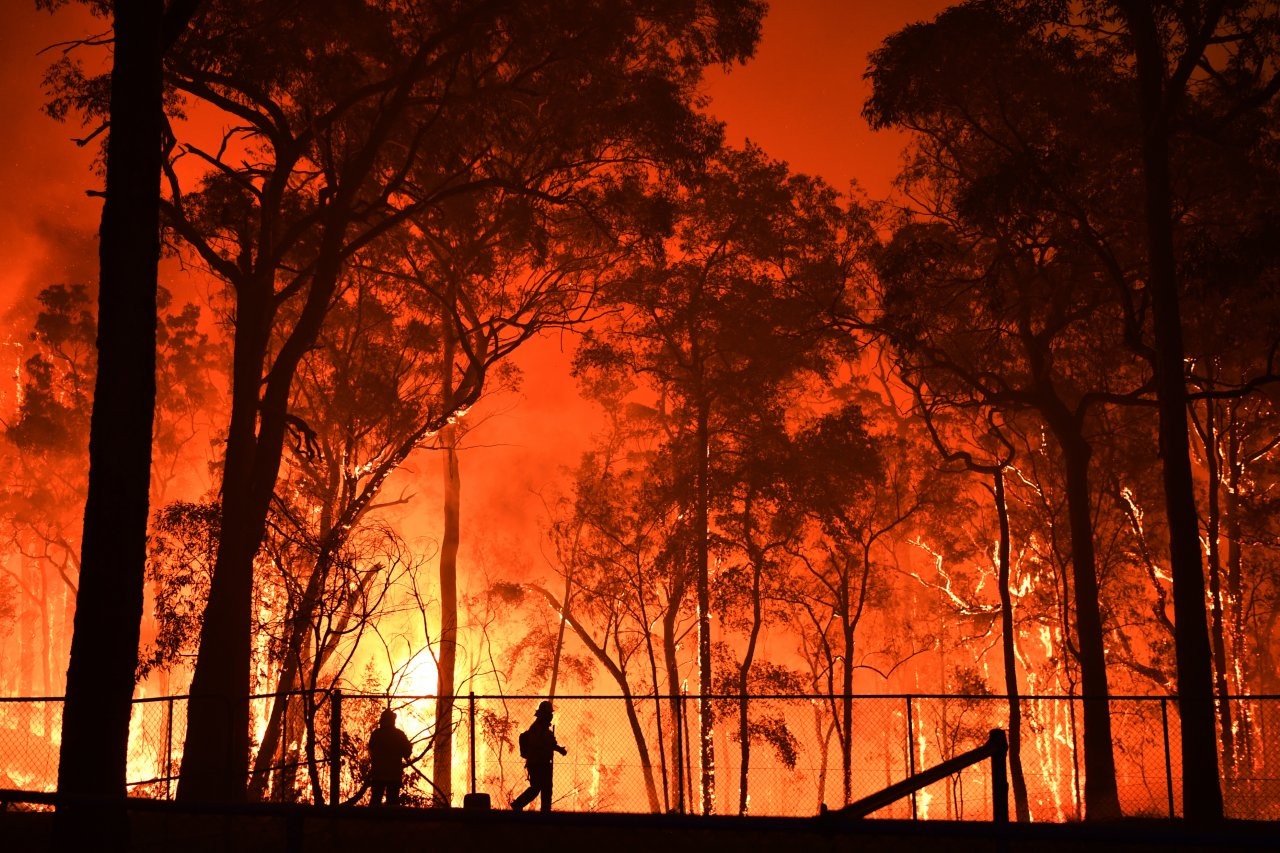
Leading climate scientists like Andrew Watkins suggest that teaching for climate adaptation should be embedded in every part of the curriculum.
“We can speculate that if they were forced to move into a capital city that the rent or the housing cost affordability would be very high and that there would be competition for work in those capitals in which young people are typically forced to live on the ground.
“What we see there is the intersection, in that example we see the intersection of climate change, education, housing affordability, cost of living, when they converge it forms a polycrisis.”
The report’s findings suggest that there was an easing of pandemic‑related impacts, but persistent economic pressures, shifting work patterns, and evolving attitudes toward education, mental health, and political engagement continue to require attention.
Critically, the Barometer showed that young people had mixed feelings about how well education had prepared them for the future.
“The interviewees in the barometer over the five years called for the development of more practical everyday skills during schooling,” Walsh says.
Deprived of this in their formal education, increasingly they’ve looked to informal learning via YouTube and social media for example to pick up these skills.
“I think we could be really focusing more on applied practical skills, and that seems to be the main thing that they’re calling for, but there’s something slightly bigger than that.
“What we’ve seen over the last two to three decades is a decline in what’s called ‘the opportunity bargain’, which is basically the promise that further education and training will lead to a better life,” the academic shares.
“We know from other research that that opportunity bargain has eroded, and that education isn’t necessarily delivering the desirable work that young people look for, and so this is a longer-term economic structural trend.”
It’s a “really sticky one”, Walsh says, because schools can concentrate overly on trying to prepare the workforce of tomorrow, but with developments such as Artificial Intelligence, and particularly generative AI, it is clear that the workforce is changing at a very quick rate, which is why those core skills, such as critical thinking and problem solving, are so important.
Leading climate scientists like Andrew Watkins suggest that teaching for climate adaptation should be embedded in every part of the curriculum, and Walsh agrees.
“We’ve had our first climate risk assessment that’s pointed out that barely any aspect of life will be unchanged, so too does it apply to the types of jobs and the fields leading into them that require a rethink in relation to these fairly urgent matters.”
Schools can also be doing inclusion better, according to Walsh.
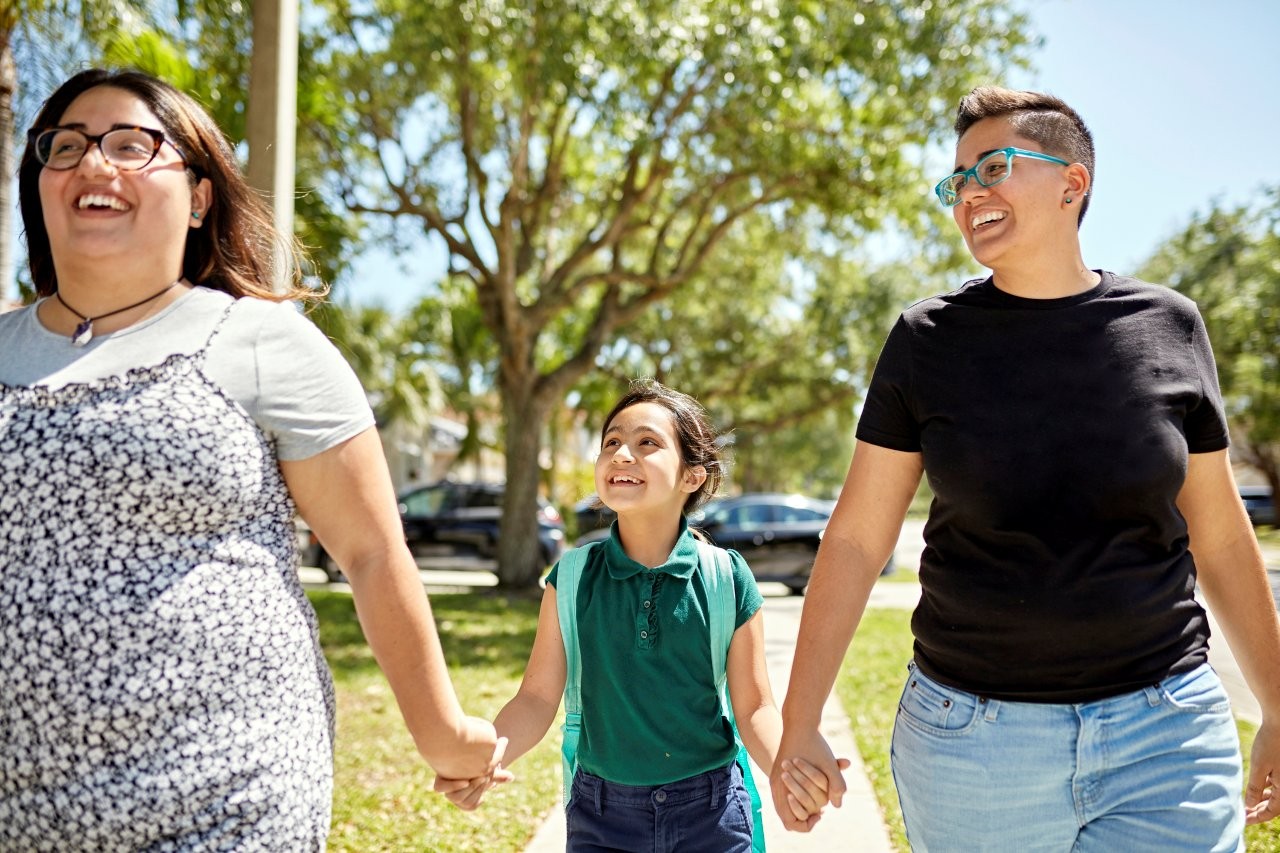
Professor Walsh says schools can always be better at fostering inclusive welcoming environments, particularly those from LGBTQIA-plus backgrounds.
“Talking straight from the data, we could be better at fostering inclusive, welcoming environments, particularly those from LGBTQIA-plus backgrounds, particularly for queer students,” he says.
“We see quite disturbing trends in the data around lack of feeling of belonging, feelings of exclusion that bleed over into workplaces at times, and it’s really not a new thing, it’s just that we have to be paying extra attention to what’s already working well.”
Walsh says one of the key things that has come out of the research is the growing of various forms of uncertainty.
“The old measures of so-called progress for individual lives were things like you finish school, you get a job, or you go to uni or you go to the VET sector and then you save, you maybe buy a property, start a family.
“All those markers have been scrambled, and so there is this everyday uncertainty that they must navigate - the every uncertainty of 'my car’s tire is flat', through to the big questions of uncertainty about 'how do I plan for a future that is decreasingly knowable?'
“Not that the future ever was knowable, but you have levels of uncertainty and those levels of uncertainty appear to be quite high in the data that we’ve collected.”
The interview data around mental health indicates that young people are less aware of mental health concerns or are resigned to mental ill health as an ordinary aspect of their lives.
The proportion of young people who sought and received mental health support generally decreased from 31 per cent in 2021 to 23 per cent in 2025, and an increased proportion did not seek mental health support from 53 per cent in 2021 to 65 per cent in 2025.
This suggests that young people are not seeking support because they’re resigned to not being able to access it, rather than needing or wanting it.
“When we started the Youth Barometer in 2021, we didn’t expect that we would be tracking youth progress during a pandemic, so on the positive side, what we saw over the years was that self-reported levels of mental health generally improved as we moved further from those lockdowns and the extreme points of the COVID-19 pandemic – but really concerningly, and year after year, young people were telling us ‘we need more support, we need more support’ and so a core group who needed mental health support gave up on looking for it.
“It is a major concern because then what happens is if you give up then they slip through the cracks and don’t get the support that they need.”
Walsh says young people need support now more than ever.
“Young people are entering a world of escalating employment uncertainty, climate change and geopolitical instability and they are acutely aware of this,” he says.
“Arguably, young people have been navigating a polycrisis since the global financial crisis of 2007-9.
“This might seem dramatic, but for young people these pressures are converging and they need our help now more than ever,” he says.
To view the report: ‘Young Australian Lives During Polycrisis: Five Years of Key Trends from the Australian Youth Barometer (2021-2025)’, click here.
This is the first of two articles about the polycrisis. Next week we discuss the polycrisis affecting educators and how we might better preparing students for life post-school.