

The issue was highlighted at a Canberra breakfast roundtable convened by The Parliamentary Friends of Engineering (PFoE) on Tuesday morning.
The bipartisan group brings together parliamentarians and the engineering profession to highlight the critical role engineering plays in supporting Australia’s national security, economic prosperity and the wellbeing of all Australians.
It aims to inform future policy settings that will strengthen the country’s engineering capability.
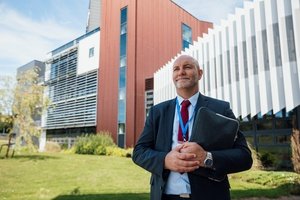
Engineers Australia chief engineer Katherine Richards said the decline in students undertaking advanced maths at school is already impacting on the nation’s future skilled workforce needs.
“In 2023, only about eight per cent of Year 12 students studied advanced mathematics, raising serious concerns about the long-term supply of engineering graduates needed to support infrastructure delivery, technological innovation and national productivity,” Richards said.
“At the same time, Australia’s overall maths participation and performance has remained largely stagnant and regional and remote students are behind when compared with their city peers.
“My hope is that this roundtable will explore the factors behind these worrying trends and unite parliamentarians in pushing for coordinated action to address the issue.”
The 2025 AMSI Year 12 Mathematics Participation Report Card released by the Australian Mathematical Sciences Institute (AMSI) revealed a deepening crisis in secondary school mathematics participation across Australia,
Participation in higher mathematics was at 8.4 per cent in 2023, and had remained below 10 per cent for the fourth consecutive year.
Intermediate mathematics participation dropped to a historic low of 16.8 per cent in 2023. Only 36.5 per cent of higher mathematics students were female, compared to a peak rate of 38.6 per cent in 2019.
Potential policy actions discussed included providing direct assistance for maths teachers, reviewing and modernising the national maths curriculum, targets for students to stick with maths in higher education – particularly girls, and prioritising funding of diverse pathways into STEM.
“Without a significant increase in students pursuing maths, we cannot grow the next generation of engineers,” Richards said.
“This has dire consequences for the nation with engineering underpinning around 60 per cent of our nation’s GDP.”
PFoE continues to play a key role in connecting policymakers with industry leaders to ensure Australia is equipped with the engineering capability required to meet future challenges including the energy transition, defence capability and rise of Artificial Intelligence.
Science & Technology Australia President, Jas Chambers said a key to addressing the decline in maths participation is to support and upskill out-of-field maths teachers.
“We need a national strategy that includes steps to harmonise registration and data collection across states and territories,” she said.