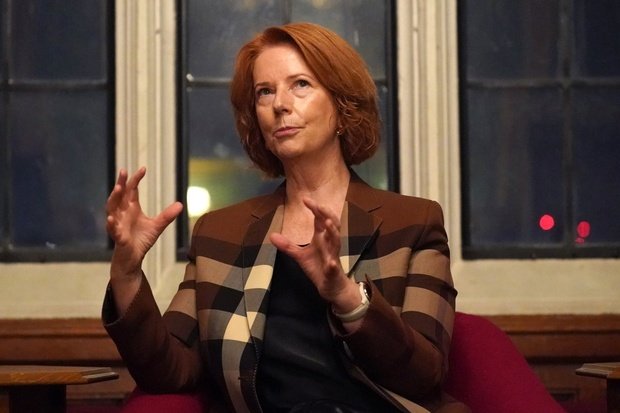
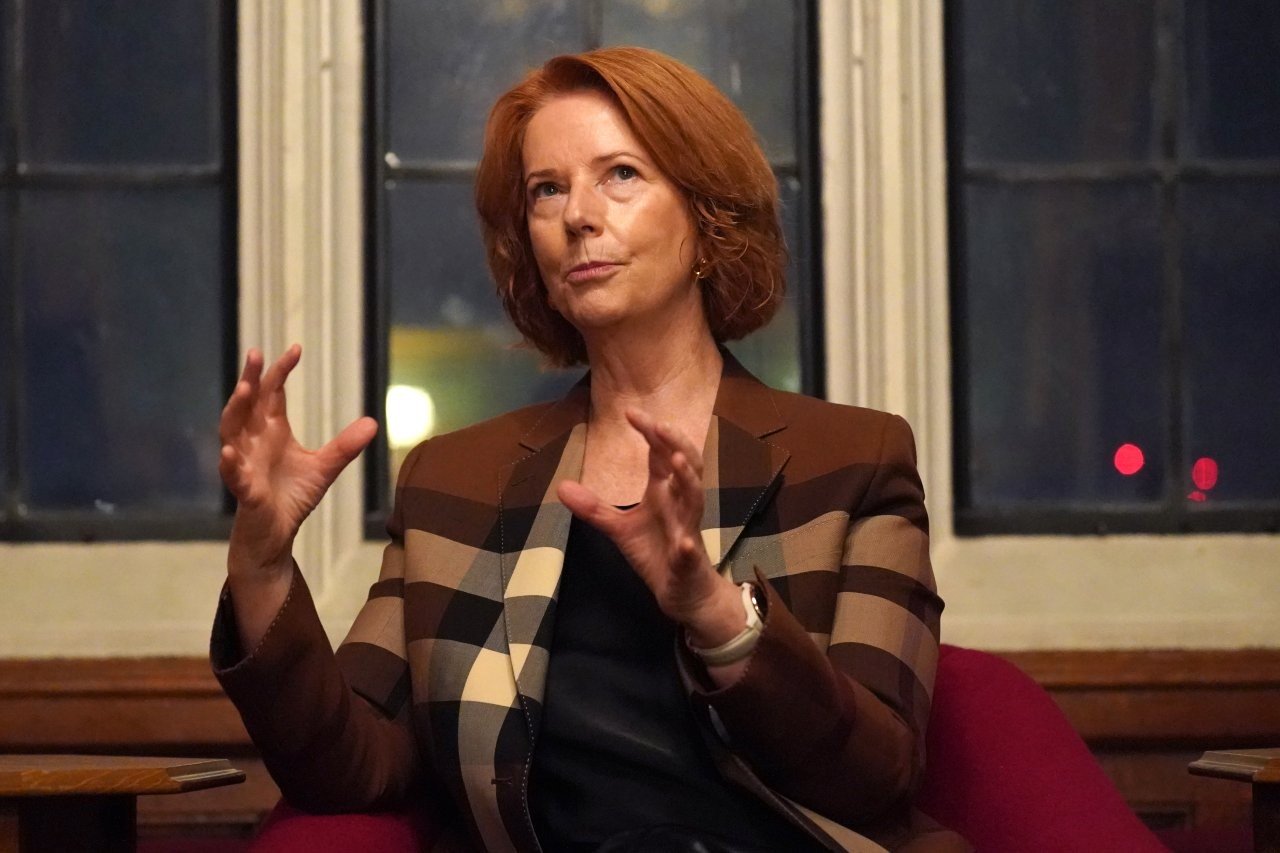
But advocates also need to turn the spotlight on themselves and assess whether their language has played a role in making men feel excluded from the movement, Julia Gillard says.
The former Labor prime minister, now primarily based in the United Kingdom, has returned to Australia as a keynote speaker at Women Deliver.
The gender-equality conference, which began today (Monday), is focused on improving all aspects of women’s, girls’ and gender-diverse people’s lives.
Melbourne is hosting the event, a significant moment as it is the first time the conference – established in 2007 and held every three years – has been in the Oceanic Pacific region.
More than 5000 delegates from 185 countries are attending Women Deliver, which was last held in Rwanda in 2023, but it is more than a talkfest, with Gillard saying attendees were keenly focused on developing solutions to global challenges.
“People are coming together not just to chat, but to build new links, work through difficult issues, come up with new ideas and then take them away from the conference and implement them,” she said.
The conference is being held against a backdrop of global push-back against diversity, equity and inclusion initiatives, and concerns about the rise of the manosphere and its impact on young men.
🌏 Here is your WD2026 Cultural Awareness Guide with easy steps to follow. Swipe through to learn how you can show up with cultural awareness and offer an Acknowledgement of Country as we gather soon in Narrm. Learn more: https://t.co/lBDGzq1SqW pic.twitter.com/45iLthkuT6
— Women Deliver (@WomenDeliver) April 26, 2026
“We have seen in many parts of the world a form of politics which weaves together nationalism, isolationism, patriotism and anti-women’s rights agendas,” Gillard said.
“With all of this happening, it’s a particularly important time for people to come together and to discuss what we can do to win the popular debate globally because, at the end of the day, more gender-equal societies benefit everyone.”
Following her departure from parliament in 2013, Gillard has focused much of her attention on improving gender equality, mental health support and education.
In 2018, she was appointed chair of the Global Institute for Women’s Leadership at King’s College London and later founded its sister institute based at the Australian National University in Canberra.
The institute was among the first to spotlight and track the trend of young men’s attitudes towards gender equality going backwards.
That trend could be partially attributed to the equality movement not being as inclusive of men as it could have been, Gillard said.
“To be self-critical ... some of the language we’ve used around gender equality has given the impression that it’s solely about women … it hasn’t been inclusive enough to explain that it’s about a better future for all,” she said.
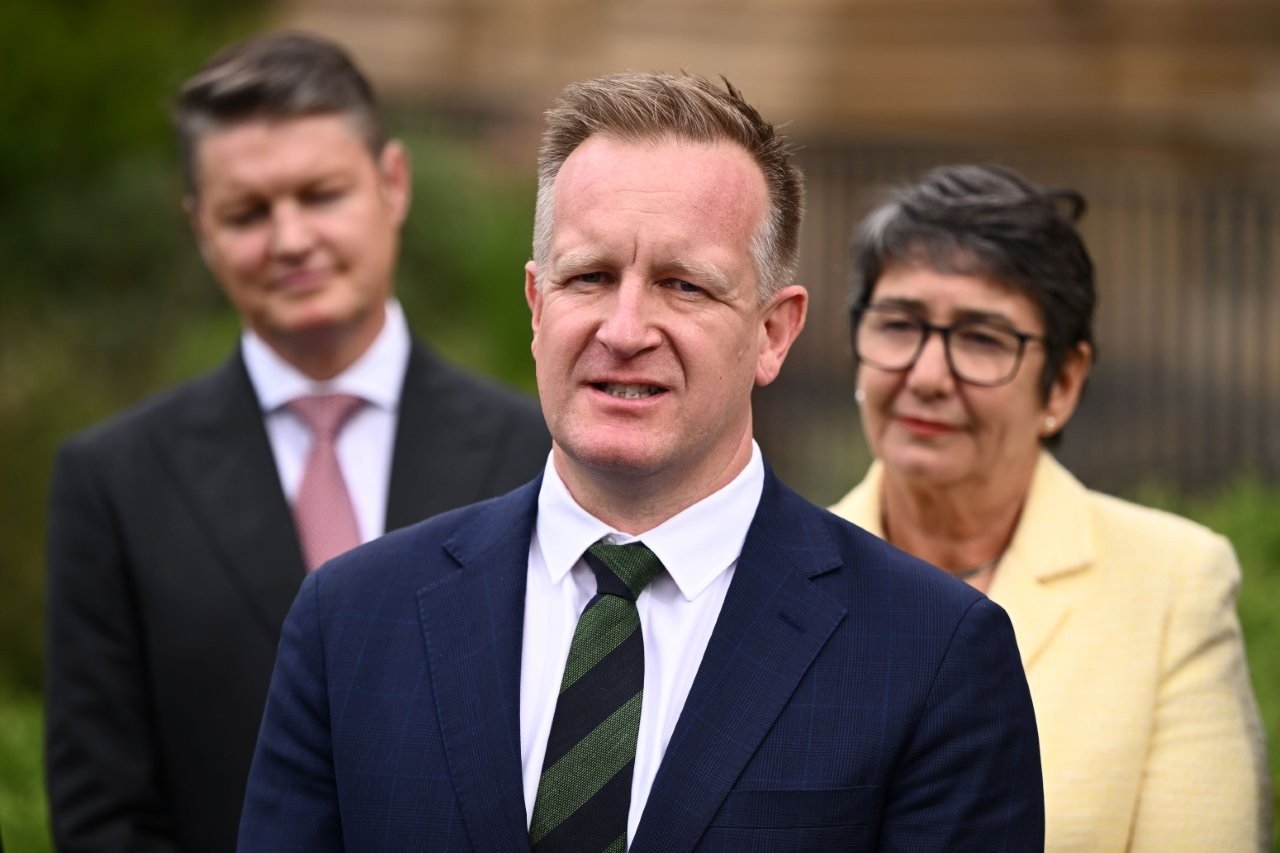
Tackling the harmful influence of the manosphere will be the main goal of Victoria’s new Minister for Men and Boys, former teacher Paul Edbrooke. PHOTO: AAP
“But it’s not just as simple as we need to change our language and be more inclusive of men and boys.
“I think we’ve got to be pretty knowing that there is concerted, organised and strategic pushback.
“There is a form of politics that has fused with online influencers and the manosphere, who are peddling a particular version of masculinity … (about being) able to project dominance over women in their lives.”
Tackling the harmful influence of the manosphere will the main goal of Victoria’s new Minister for Men and Boys – an Australian-first portfolio that has been broadly welcomed by experts who say a close focus on schools should be the priority.
Frankston MP Paul Edbrooke was appointed to the role last week, declaring that we “can’t deny that there has been societal change with the way we support young boys, to become good strong men.”
Edbrooke said his portfolio will be firmly focused on helping to shape young boys into healthier men.
“That has so many repercussions across our whole community – whether it be family violence, whether it be suicide rates – there’s a lot of work to be done there.”
Fo some time now, researchers and commentators have been warning of rising misogyny in Australian classrooms.
Last month EducationHQ reported that commercially-motivated influencers within the manosphere are indoctrinating boys across the country, effectively teaching them to reject the authority of teachers and the ‘woke’ school system.
Research has also shown that boys are falling prey to a ‘regressive masculinist supremacy’ espoused by notorious male figures such as Andrew Tate, with teachers reporting disturbing shifts in their behaviour and attitudes towards women.
The conference comes at a time when the rights of women and girls are under threat around the globe, while gender-equality organisations have had their funding rolled back.
In 2025, the United Nations reported that nearly half of all organisations aiding women in crises faced closure within six months, and 90 per cent of those surveyed had reached “breaking point”.
Attendees will have the chance to hear from global leaders and advocates for gender equality including Gillard, New Zealand’s Jacinda Ardern, and Canada’s Justin Trudeau, along with eSafety Commissioner Julie Inman Grant, United Nations deputy secretary-general Amina J Mohammed, and Olympic gold medallist Emma McKeon.
Topics like climate justice, gender-based violence, increasing representation in leadership and advancing women’s health will be tackled across hundreds of pre-conference, plenary and side sessions.
The conference will also focus on the next generation of gender-equality advocates, spotlighting young people working in the sector to improve the lives of young women and girls.
While there are strong and positive commitments globally to protect the rights of adolescent girls, too many of those had not been delivered, Women Deliver Collective Action director Julia Fan said.
“We’ve seen progress on issues like girls’ education in the last 10 or 15 years, but in other areas like adolescent pregnancy, it still remains a really critical issue,” she said.
The conference would help launch a manifesto calling for a new narrative for adolescent girls globally, Fan said.
“Girls are leaders, they’re rights holders, they are a diverse constituency and they need to be in positions of power to really set the direction and to advocate for themselves.”
(with AAP)