

Casting a critical eye over what’s grown to become a ‘shadow education system’, researchers have called for urgent policy action to address our ‘tutoring policy problem’ and a marketplace where just about anyone can offer tutoring services without qualifications or accountability.
Lead researcher Dr Ben Zunica from The University of Sydney indicates the industry has been left to operate a bit like the Wild West.
“You don’t need any training at all to be a tutor,” he tells EducationHQ.
“We referenced an article from a newspaper where a tutor says, ‘I want to be a tutor today and advertise my services tomorrow, and I don’t need to do any training to do that’.
“And also, tutors don’t always know what’s in curriculum. So, their ability to align their teaching to what’s happening [in schools] can be a problem as well.”
Zunica was compelled to investigate the state of the private tutoring industry after his son, who attends a top selective school in Sydney, reported it “was the done thing” amongst his peers.
“He just said ‘everyone in school is getting tutors’. They weren’t doing things on the weekend with friends because the boys had to go to tutoring.
“So, I was like, ‘whoa, this is much bigger than I thought it was’.”
Maths teachers are reporting their classes are being impacted, Zunica says.
Anecdotally, teachers are noting that tutored students have already covered much of the content and work, or have been taught to tackle problems in a different way.
“That’s going to be a pretty big study that’s going to happen in the future where we talk to a lot of teachers about how tutoring impacts their classroom activities,” Zunica adds.
The study highlights previous research that shows private tutoring can negatively impact student engagement in the classroom and also influence teachers’ pedagogical choices.
Zunica says that tutoring is now mainstream for a least one in seven Australian students, and yet effective regulations to ensure safety, quality or fairness are not part of the picture.
“[The main issue], and there are a few, is the of lack of child protection – tutors do need to have a working with children check, that’s a legal [requirement].
“But there doesn’t seem to be a lot of actual child protection built in. And with online platforms as well, that can be a bit more of a problem,” he explains.

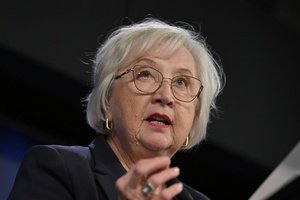
Dr Ben Zunica says the tutoring industry is currently worsening educational inequality.
As fellow researcher Dr Bronwyn Reid-O’Connor points out, tutors are not consistently required to undergo background checks or child safety screening.
“This poses a significant risk to students in terms of child welfare, combined with a lack of reassurance around quality and appropriateness of material being taught,” she says.
“Parents should be able to verify that their chosen tutor has the academic qualifications required to carry out tutoring.
“Without state-based regulation, vulnerable students and families remain at risk.”
The industry is also worsening inequality at scale, Zunica flags.
With hourly fees usually sitting at around the $80-100 mark, it’s a service ruled out for many families, he says.
“This type of education is coming to people who have the money. And if you look up the MySchool website for socio-economic advantage and look at the selective schools in Sydney, their number is huge.
“Some of them higher numbers than schools like Barker College, which costs $42,000 [per year] to go to.”
Last month an expert warned that NSW’s selective schooling system had ‘distorted’ public education in the state, with highly coveted schools only accessible to those who could ‘play the game’ and pay for their child to be privately tutored.
“It’s really locked out a lot of families that can’t afford the sometimes tens of thousands of dollars that people are spending on private tutoring. “And just the time and the energy and the planning – only certain kinds of families can afford that,” Dr Christina Ho from UTS said at the time.
Zunica and his research team are advocating for discussion and further research on how a ‘coordinated, evidence-based’ approach to tutoring regulation could be brought in.
Key recommendations include:
- A national audit of the tutoring sector to understand current practices and risks;
- Mandatory child safety requirements, including Working With Children Checks and advertised display of credentials;
- Development of accreditation pathways for tutors (such as qualified ex-teachers) who meet professional standards; and
- Establishing state-government agencies to regulate and enforce educational and safety standards.
A huge hurdle is that reliable data on the industry is sorely lacking, Zunica says.
“One article we saw [said we had] 45,000 tutors and then another article had 80,000.
“So, we really don’t know the size of this industry, we don’t know how many students are involved, we don’t know how many tutors there are, we don’t know how [students are] being tutored, whether it’s more one-to-one or small groups or whatever it might be.
“The lack of reliable data on this industry makes it really hard to work out how to regulate it. So that’s a big one,” the researcher says.
Zunica would like to see stringent standards brought in for tutors that “cannot be circumvented”.
“So having concrete rules rather than guidelines and things like this,” he says.
“The main guidelines we see from government is to inform parents to make wise choices about who is a tutor.
“And we’re really keen to go, ‘OK, that’s a great thing to do’, but we think there should be some baseline standards as well’.”
Senior lecturer Dr Katherin Cartwright from the University of Wollongong, who is also behind the research, says government needs to step in.
“While many legitimate organisations such as the Australian Tutoring Association work hard to self-regulate and support tutors in gaining qualifications, this should be the role of the government.
“A more systematic, nation-wide approach is needed.”