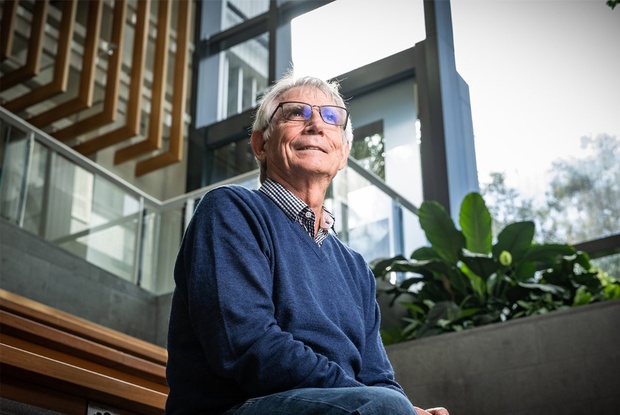
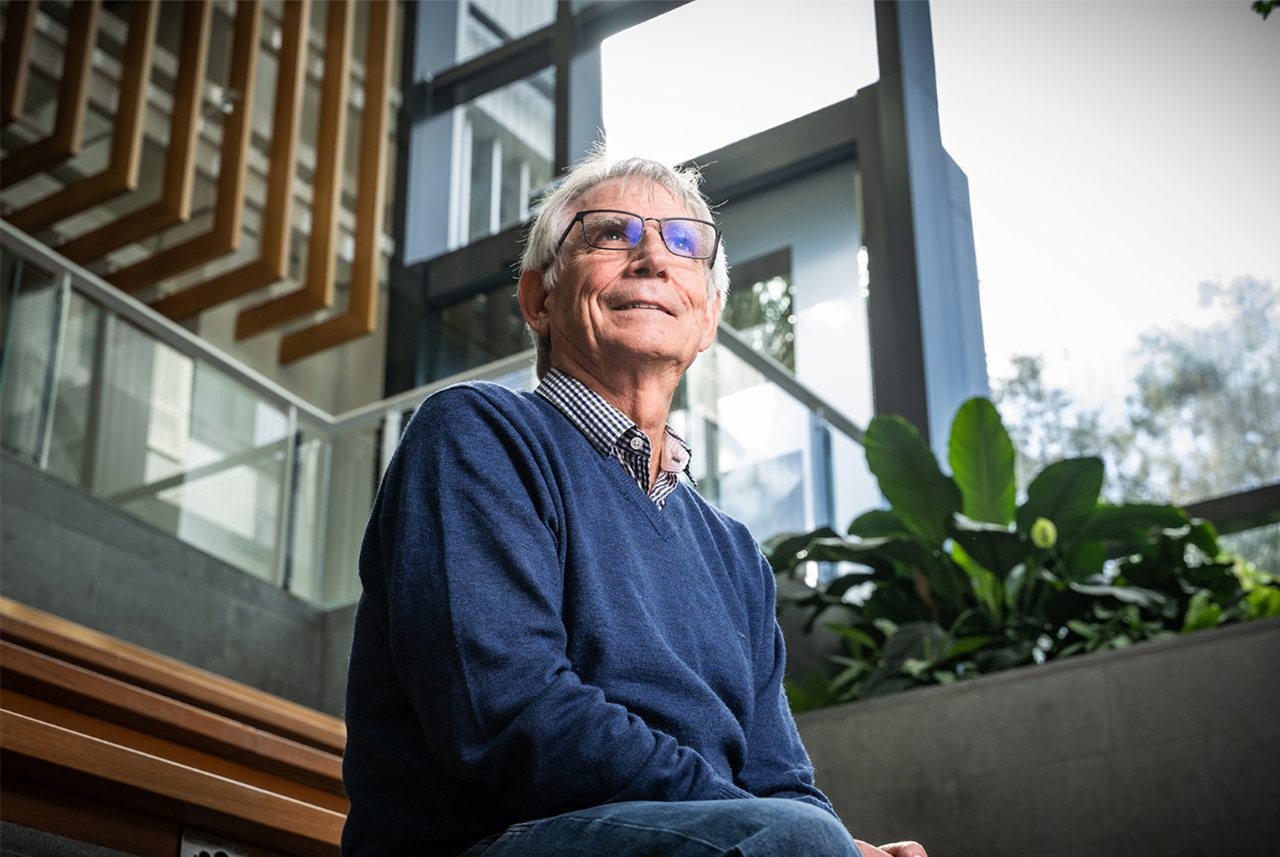
Professor Martin Mills, a research professor in QUT’s School of Education in the Faculty of Creative Industries, Education & Social Justice, says teachers tell him the issue is far less about money and more about being freed up to focus on teaching and wanting to be heard – wanting their thoughts and feelings to be acknowledged by school leaders and by policymakers.
He also believes that what he calls the ‘de-professionalisation’ of teacher education, or the fast-tracking of people into teaching, is not the answer to the shortage crisis.
“I treat it as a social justice issue, that wherever you work, you have to have a sense of achievement and a sense of being able to make a difference to where you work,” Mills, who has published more than 100 journal articles and co-authored 10 books, tells EducationHQ.
“One of my teacher union friends is in the middle of an industrial campaign in Queensland, where teacher pay is an issue, so, money is important, and being paid appropriately is absolutely important.
“But when I speak to teachers, the first thing they talk about is workload, and the stress of workload, and that it’s workload which feels like it’s not relevant to their job, or relevant to the immediacy of their classroom.”
What they want time on, he says, is lesson preparation, thinking about curriculum, thinking about the students in their class, how to deliver for them, not spending evenings answering student and parent emails, for example.
“The encroachment onto your personal time and to your out of work life is enormous with things like that,” Mills, whose research has largely been around social justice in education, teachers' work and identities, school retention and gender, says.

Teacher education is often criticised for is not providing teachers who are classroom ready. “Show me the first year lawyer that’s given lead on a murder trial, or the first year medicine graduate who’s given open heart surgery to undertake a lead?” Professor Mills says.
Teachers, he says, are not afforded the same level of respect as other professionals like engineers and doctors and lawyers, and it’s a travesty.
And government interference doesn’t help, he argues.
“I think that education has become a bit of a political football. Governments change, a new reform comes in and with it a new approach, and I think you have this change fatigue of teachers.
“Teachers are not involved in that decision making. For instance, if there’s changes in engineering, the engineering profession is involved in those changes; there’s no government interference in engineering education at university that I’m aware of?”
Mills says a case in point has been the teacher education expert panel review, Strong Beginnings.
“You see that disrespect right at the government level,” he says.
"Whenever PISA results come out or any kind of international testing, or even NAPLAN testing coming out, we see schools and teachers blamed for that, as if they’re not doing their job properly.”
Teachers, he says in contrast, are doing "an amazing job”.
“We should be lauding the achievements teachers have, given the resources they are given.
“I see teachers doing all this amazing work, often which isn’t recognised. I can’t tell you how many teachers, when they’re talking about the stress they’re under, actually burst into tears or feel overwhelmed by what they have to do.
“When I was a teacher … there was a sense that the classroom was mine and that I thought about my students and I could change the curriculum, tweak my pedagogies to suit that class or to particular students who needed to engage. Now what’s happening a lot of times is teachers are being mandated.”

Professor Mills says it doesn’t help that educational policy is constantly mandating what we should be teaching instead of just letting people exercise their own professional judgments.
Mills says when teachers can create a really positive environment in their classroom, when they’re given those opportunities, given the resources, the respect from the students comes with that.
“It doesn’t mean that every student’s always going to be respectful or not misbehave, but it’s a different environment and teachers have got to exercise professional judgment.”
It’s critical that early career teachers are provided with support, guidance and mentorship, however, the teacher shortage means there’s no teachers to do the mentoring because they’re needed on class, Mills laments.
“We need funding to do it, and we need the teachers to do it, and so we have to start by saying, 'OK, we recognise this is an issue, we need to give teachers lighter loads when they come in and we need to induct them into the profession'.”
Teacher education is often criticised for not providing teachers who are classroom ready, who can just walk into the classroom and start teaching well.
“Show me the first year lawyer that’s given lead on a murder trial, or the first year medicine graduate who’s given open heart surgery to undertake a lead?” Mills says.
“We expect so much of our teachers, and so we have to have some way of easing them into the profession to enable them to become expert teachers and not expect that they can do that on day one.
“Every profession has some way of introducing slowly people into their field of expertise.”
Mills, who was the inaugural director of the Centre for Teachers and Teaching Research at the Institute of Education, University College London for five years, before returning here post-COVID, says in England there’s been a move towards academies which don’t have to appoint registered teachers.
“So the argument was they could appoint a history graduate from Oxford over somebody who’s done teacher education at what they would see as a lesser university,” he says.
He talks about the de-professionalisation of teachers, but think the de-professionalisation of teacher education is of concern as well.
England’s Teach First program, to fast-track people into teaching as a way to address teacher shortages, is a variation on our own Teach for Australia initiative.
“I don’t think they work,” he says.
“… because you have to have some background in understanding why a student from a First Nations background maybe isn’t engaging with school, an understanding of the kind of cultural context in which students operate, and you need those kinds of knowledge which are missing from some of those fast-track programs.”
The Victorian Government announced today that it is banning teachers with interstate one-year degrees from teaching in Victorian government schools, preventing teachers from Western Australia from working unless they have completed a postgraduate initial teacher education degree of at least two years’ duration.
Introduced as a measure to assist with its critical teacher shortages, WA's one-year Graduate Diplomas in Education do not meet the nationally agreed AITSL accreditation of initial teacher education programs in Australia.
Some have slammed the Allan Government’s ban, with Victorian school leader and author Dr Greg Ashman calling the move an ‘absurd, regressive step’ on X.
An absurd, regressive step. https://t.co/TR8OUw3s9w
— Greg Ashman (@greg_ashman) September 2, 2025
Ultimately, Mills suggests there’s a problem with the conversation we’re having, in that it is possibly making the profession sound unattractive.
But there’s a joy in teaching, he says.
“Teachers talk about the moment that they see a student who’s struggled, who’s face lights up when they’ve grasped a concept or learned something new, or managed to solve a difficult problem,” Mills shares.
“There is something about teaching that when you’re given the space and time, it is one of the most rewarding careers you could have – working with young people who are excited about learning – and so somehow we have to talk about that excitement and that enjoyment and how we get that back, or we make sure that we create environments that do that.”
Mills says schools are places of learning, absolutely, but they’re also workplaces.
“We have to see them as a place where people go to work, where they have to feel safe, where they have to feel respected, and that’s critical, I think, to addressing the teacher shortage issue.”