

That’s according to social-emotional learning expert Nikki Bonus, who says by the time a teacher is dealing with serious disruption in the classroom we are often looking at the end of the story rather than the beginning.
“Behaviour is highly visible. Changes in a student’s sense of belonging, engagement or readiness to learn can be much harder to see,” the CEO of Life Skills GO, says.
Last week, EducationHQ interviewed former teacher and education director at the Centre for Independent Studies (CIS), Blaise Joseph, who has just headed up a survey that found teachers reported, on average, losing 9 minutes out of every 30 minutes of teaching time to student impropriety.
That’s one-third of lesson time being lost as student misbehaviour reaches what Joseph called “crisis” levels in rowdy Australian classrooms.
He says the scale and frequency of the problem amounts to a crisis.
“[Student misbehaviour is] severely eating into the amount of time that teachers have to teach and students have to learn, and I think it explains a large part of why such a large portion of Australian children don’t have adequate literacy and numeracy skills,” Jospeh said.
“It’s a huge part of [our education system’s] problems in this country, and for that reason I think we need to prioritise fixing and improving student behaviour in Australian classrooms.”
The findings follow national NAPLAN testing revealing one-third of Australian students are not meeting expectations in literacy and numeracy.
About 10 per cent of students are so far behind their peers they need additional support to catch up to the two-thirds of students who met or exceeded expectations in the tested domains.
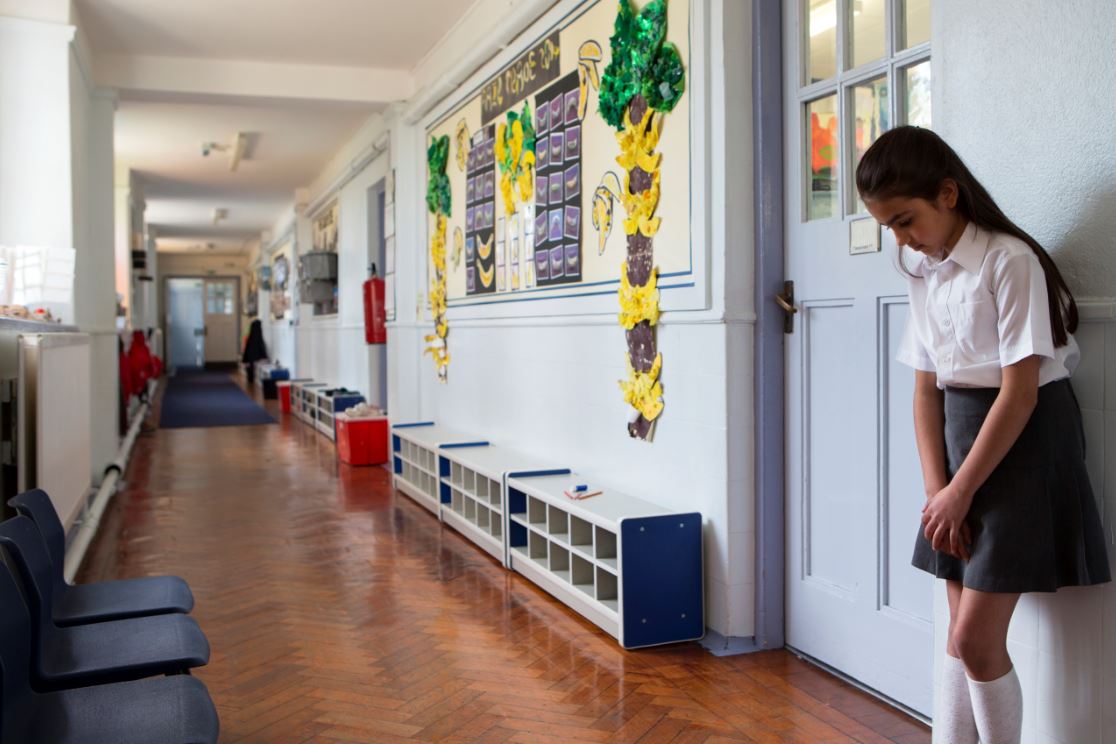
Bonus says the system has become very good at measuring what happens after a student disengages, however the opportunity now is to get much better at seeing the signals before they reach that point.
Bonus says she isn’t arguing against strong classroom management – clear expectations, consistent routines and consequences absolutely matter, she contends – but good behaviour management and earlier identification aren’t competing ideas. Schools need both, she says.
“Australian schools collect enormous amounts of data, but much of it tells us what has already happened: a student was absent, a behaviour incident occurred or academic performance declined,” Bonus suggests.
“We also need better visibility of what is changing before a student reaches that point.
“We keep asking teachers to manage what has already happened. We need to give schools a better chance to recognise when something is changing earlier, before it becomes another behaviour incident, absence or lost lesson.”
According to Bonus, teachers are already carrying an enormous workload, so the answer cannot be to simply ask them to observe more, record more or fill out another form.
“Any serious response has to make it easier for schools to identify patterns and act earlier, rather than adding another administrative burden,” she says.
“This should not become another responsibility placed solely on the classroom teacher. We need systems that help make the things that are currently invisible easier to see and act on.”
Life Skills GO has collected more than 18 million student check-ins across more than 1000 Australian schools between January 2022 and April 2026.
Bonus says their data shows the value of asking students consistently how they are going, rather than waiting until difficulty becomes visible through behaviour or attendance.
“Australia now has a clearer picture of how much teaching time is being lost. The next question should be whether we are equally serious about understanding what is happening before that disruption occurs.
“If we only measure students once they are absent, disengaged or disrupting a classroom, we are measuring the problem very late.”
Almost 60 per of teachers in the CIS survey reported students talking when they were not supposed to in most or all lessons, while 44 per cent said students called out in a disruptive way in the majority of classes.
Answering back or challenging teacher’s instructions and arriving late to class were among other common disruptions.
“…individually each of those incidents might seem small, but they really add up over time and accumulate to a huge amount of learning time lost,” Joseph told EducationHQ.
Bonus argues the education sector has become very good at measuring what happens after a student disengages, however the opportunity now is to get much better at seeing the signals before they reach that point.
“Right now, our reporting relies on lagged indicators: attendance, behaviour incidents, academic results. None of it includes student voice.
“No single one of those indicators should ever be used on its own. But when we follow the evidence and bring student voice into the picture as well, surfaced consistently and in real time, it becomes a protective factor and an early signal, not just another number.
“It’s what lets teachers and schools see the why behind the data point of behaviour, not just the behaviour itself.”
Bonus suggests that for far too long, attendance has been talked about as though it’s the whole story, “yet we’re suspending and punishing young people for something they may not yet have the ability to do: communicate, identify and manage what’s happening for them”.
“They’re children. I think it’s on all of us, teachers, schools and systems, to be able to see what’s happening for that young person, and then use our professional judgement to support them rather than punish them.”