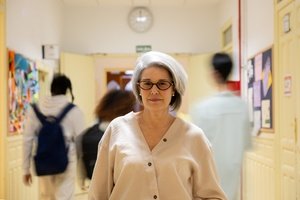
Many parents who opt to homeschool have had bad experiences within the mainstream system and are far better off without additional red tape from the State Government, parent Sally Farrelly says.
The long-time volunteer for the Home Education Association (HEA) has handled registrations and manned the association’s hotline, where she has fielded parents’ burning questions for around a decade.
Farrelly says the growing number of NSW children that are being homeschooled have special needs and/or often come with harrowing experiences from their time in schools.
“And what they don’t need is more bureaucracy,” she argues.
“What we need is empathy and understanding these children don’t fit into the Department’s ‘education’ box.
“They need something else, and we need to be able to provide that on an individual family level.”
Audit reveals state of play
A recent audit into home schooling and alternative school settings in NSW revealed some clear inadequacies in the Department’s support of children who learn outside regular classrooms.
The report from the state’s Audit Office found the Department – along with the NSW Education Standards Authority (NESA) which regulated home schooling until May this year – had failed to:
- define the learning and wellbeing outcomes for students, or evaluate whether these settings – including hospitals, youth justice centre schools and distance education – are effective in achieving those outcomes;
- monitor or respond to demand for these settings, to make sure they are available and accessible in a timely way;
- support student transitions into and out of these settings, ensuring continuity of education; and,
- proactively seek feedback from students and families to understand whether their needs were being met.
“The COVID-19 pandemic resulted in significant changes to education, technology and student needs,” the report said.
“However, the Department has not evaluated or revised its approach to providing alternative school settings since they were first introduced, which ranges from around 30 to 130 years ago.”
More than half of children being homeschooled last year had previously attended a NSW public school, with the number of registrations effectively doubling from 2019 to 2014.
According to Farrelly, there has been no ‘ongoing involvement’ from the Department or NESA over the years with the homeschooling community.
“Their role, as far as we could see, was they were the regulating authority, and that’s all they did.
“They assessed whether we were compliant or not, and they gave us our registration and said, ‘we’ll come back in two years’ time and we’ll reassess you’.
“There’s no ongoing involvement. There’s no ‘if you have problems, give us a call’.
“So the help that we have available is each other, really, and associations like the HEA.”
Anxieties at a high
Farrelly says a lot of parents have felt particularly anxious over the Department’s recent takeover as the homeschooling regulatory body.
“[This is] given that they’ve had bad experiences with the Department of Education within the school system.
“At least when they changed to homeschooling, they were then dealing with NESA … but now they very much feel like they can’t get away from that experience.
“And that is just prolonging their trauma,” she maintains.
Farrelly first dived into homeschooling when it became clear her dyslexic daughter, now 28, was struggling to keep up in the classroom.
“The school was not recognising her particular issues. They were not helping her, and she was just slipping further and further behind,” she reflects.
“After looking at all of the different options of how we could help her, and thinking ‘it’s so unfair to have to go and do these extra programs when she got home in the afternoon when she’d just wasted all day at school’, I then I thought, ‘we could just not do that’, and we homeschooled.”
What started initially as a ‘we’ll just catch her up’ plan quickly became something more permanent.
“By the time we’d done homeschooling for six months, we knew that this is what we wanted to do as a family, and we wanted to do it long term,” she says.
Farrelly has five other children, with the youngest three never having been to school.
But she suggests too many challenges remain for those who opt to homeschool.
Registration woes
Indeed, the audit found homeschooling registrations took almost as long as a whole school term, growing by 63 per cent from 40 days in 2019 to 65 days in 2024.
A timely registration process is sorely needed, Farrelly urges.
“[And] possibly a provisional registration granted immediately on application to be followed by a more detailed plan of learning.
“This would be similar to what Queensland currently has. This allows a parent to immediately remove their child from school if necessary. Currently the NSW process can take 12 weeks to complete,” she notes.
Farrelly would also like to see those that conduct home visits and assess a child’s application to be homeschooled (called authorised persons) to undergo training with – and even to be selected by – members of the HEA.
“They need to understand homeschooling and not just think it’s a replication of school at home. They need to be supportive of the option of homeschooling,” she adds.
Parents also need quality assurance that authorised persons follow the department guidelines, Farrelly says.
“Currently there is much inconsistency between the guidelines and what different APs request and expect.”
The Department said it would accept all the audit recommendations and was already addressing some of the issues raised, including prioritising working with the homeschooling community.
“In all NSW educational settings, the wellbeing and safety of children remains paramount,” a spokesperson said.
But Farrelly says she has little confidence in the Department in terms of its ability to follow through on the recommendations.
Open channels of communication and not more bureaucracy is the way to go, she concludes.
“Homeschooling is hard for families because it’s constant. You don’t get a break.
“And if you’re feeling added pressure from the Department that what you’re doing isn’t up to their standards, even though you know you’re doing the best thing for your child, that just can cause extra stress for the families.”
More than $245 million in funding was allocated to support alternative school students in 2024.