This year, they are a “tragedy” – a “national tragedy”, we’re told, that one in three students sits below a baseline and that scores have slipped a few points in some year levels. The headlines deliver a quick verdict: teachers and schools continue to fail.
It is worth pausing on this reflex. The most striking part of 2026’s national data is that it has barely moved at all. Since the NAPLAN scale was reset in 2023, the differences between cohorts are so small that the testing authority itself calls them negligible.
The fact that results are stagnating, and that a third of students are falling below a proficiency benchmark, isn’t something we should be comfortable with, either. But there is a difference between numbers that should spark meaningful conversations about education in this country, which NAPLAN is supposed to do, and the claims of a ‘tragedy’ that strangles any conversation from taking place.
NAPLAN data should be read without demonising the schools that work tirelessly to provide a safe-haven for Australia’s most vulnerable. It should compel us to ask trickier questions about the direction of Australian schooling. Seventy percent of students in major cities outperform their peers in remote communities. Around one in three Indigenous students needs additional support in reading and numeracy, against fewer than one in ten of their non-Indigenous classmates. The gap between children from wealthy backgrounds and children from disadvantaged ones is, as it has been for years, the most reliable predictor of achievement in the entire dataset.
These are not the markings of failing schools. They are markings of broader inequity.
The data is an assessment of a country whose advantages and disadvantages are distributed long before a child sits down for Year 3 NAPLAN writing. But it is NAPLAN results where that disadvantage shows up for all to see. It is in the classroom that we demand it should be fixed.

Benjamin Zonca, above left, and Tom Mahoney, above right, says the simple fact that teachers across Australia have managed to support consistent achievement of students across Australia in spite of such challenging conditions is worthy of admiration, not the disparagement doled out in the news this week.
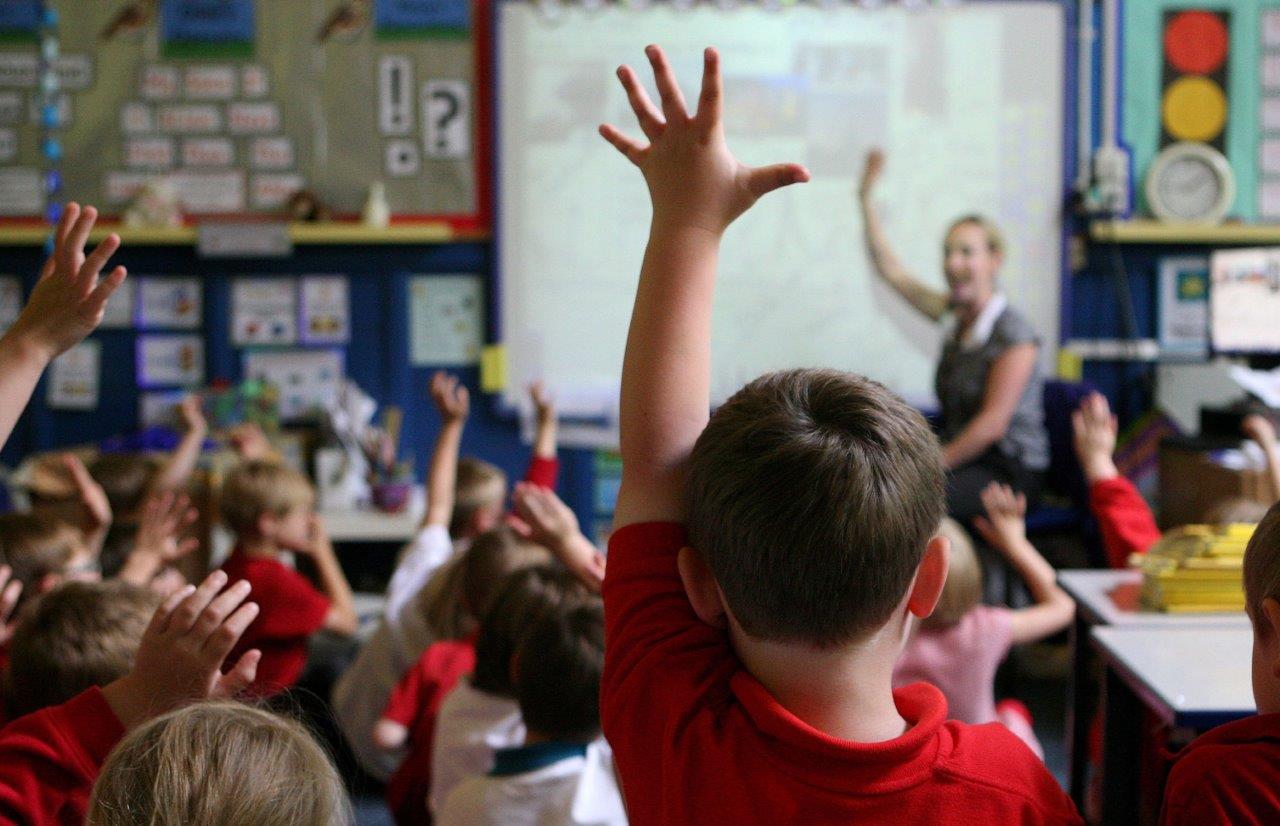
Teachers in many communities cannot just deliver a curriculum and hope to see that gap close. On any given morning, that same teacher, prepared to teach using evidence-based strategies, also attends to housing instability, hunger, intergenerational disadvantage, families whose English is a third or fourth language, and waning attendance. In a country where all public schools are underfunded, the majority of teachers across Australia are fighting an uphill battle. But the teacher tries anyway. Yesterday they woke up to their efforts labelled a ‘tragedy’.
Other teachers navigate sharp increases in the mental health needs of their students, screen addiction, and the increasing lack of family engagement because both parents need to work full-time to get by. The curriculum that would produce better NAPLAN results can’t absorb this. But the teacher tries anyway. These teachers, too, woke up to their efforts labelled a ‘tragedy’.
The simple fact that teachers across Australia have managed to support consistent achievement of students across Australia in spite of such challenging conditions is worthy of admiration, not the disparagement doled out in the news this week.
NAPLAN is a complex indicator of society’s health. We take that complexity, communicate it through one number, and label it a tragedy. Any wonder teachers are leaving in droves. If there is a tragedy in this year’s NAPLAN, it isn’t the score. It’s that we’ve asked teachers and schools to wear more of society’s challenges, and when it doesn’t work out, we call them failures.
What is needed now more than ever is a change in the default narrative describing the quality of schooling in Australia. We desperately need to shift our thinking of teachers and schools away from deficit assumptions and rally behind teachers and the education support staff that continue to do amazing work, despite the challenges.
Next August, instead of using national NAPLAN reporting to dish out punishment and discouragement, NAPLAN should be used as a compass to direct our attention. Not as a means of crudely discerning “successful” or “failing” schools, but to guide the flow of government funding, resources and support. Instead of pointing at schools at the coalface of educational disadvantage and asking, “why aren’t you doing well enough?”, we should be asking, “how can we better support you?”.
The type of support matters, because more curriculum mandates won’t solve the problems that NAPLAN reveals. NAPLAN results point to problems that sit outside the capacity of individual schools. Schools simply buffer them through relentless effort. If we really want to change NAPLAN trajectories, the data must be used to focus broader political attention and action.