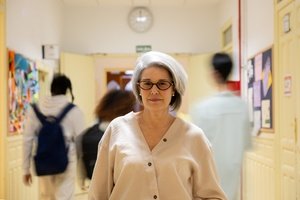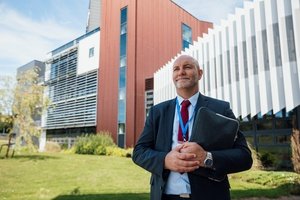


Speaking at the Australian School Improvement Summit in October, Manisha Gazula, principal at Marsden Road Public School in Sydney’s south-west, joined deputy principal Dr Greg Ashman from Ballarat Clarendon College and principal Sue Knight from Ararat West Primary School in Victoria, to identify what it takes to drive positive change at the whole-school level.
The panel agreed that initial teacher education, bar for a few notable exceptions, actually makes their jobs harder as school leaders.
Gazula, for one, said new graduates who came to Marsden Road needed to be retrained from scratch before they could effectively teach a class.
“I don’t think they know how to explicitly teach reading, or elements of reading comprehension.
“They don’t know how explicit teaching looks in a vocabulary lesson.
“They don’t know how explicit teaching looks in a maths lesson; I don’t think the university is preparing them for those,” Gazula told the audience.
The principal is currently bringing six new teachers up to scratch in pedagogy that’s aligned with the science of learning and cognitive science – instruction they ought to have received before they entered the profession, she suggested.
“Everyday I have them stay for three hours, I have them off class…” Gazula said.
“I’m basically retraining them.
“What happens in university, I cannot comment on it because I have not seen it, but what I see is, in practice, they are not able to do the real work on the ground.
“They don’t come prepared to take on a lesson. We have to do a lot of preparation before they go into the classrooms.”
In Ashman’s view, it’s a ‘fact we all recognise’ that teacher training actually makes people worse at teaching.
“I would employ someone who had done a biology degree to be a science teacher in our secondary school, I would do that over having someone that’s done two years of teacher training…” he told delegates.
La Trobe University was one “good exception” here, Ashman noted, but broadly speaking, ITE courses offer little value for aspiring teachers or schools.
“Generally, people that have had teacher training in Australia, they’re not taught much about classroom management, how to manage a classroom, how to organise routines, that sort of thing…
“They don’t tend to be taught much cognitive science. There’s a lot of sociology-based stuff, quite a lot of inclusion which is really important but possibly not to the extent that it forms that [amount] of the curriculum,” Ashman added.
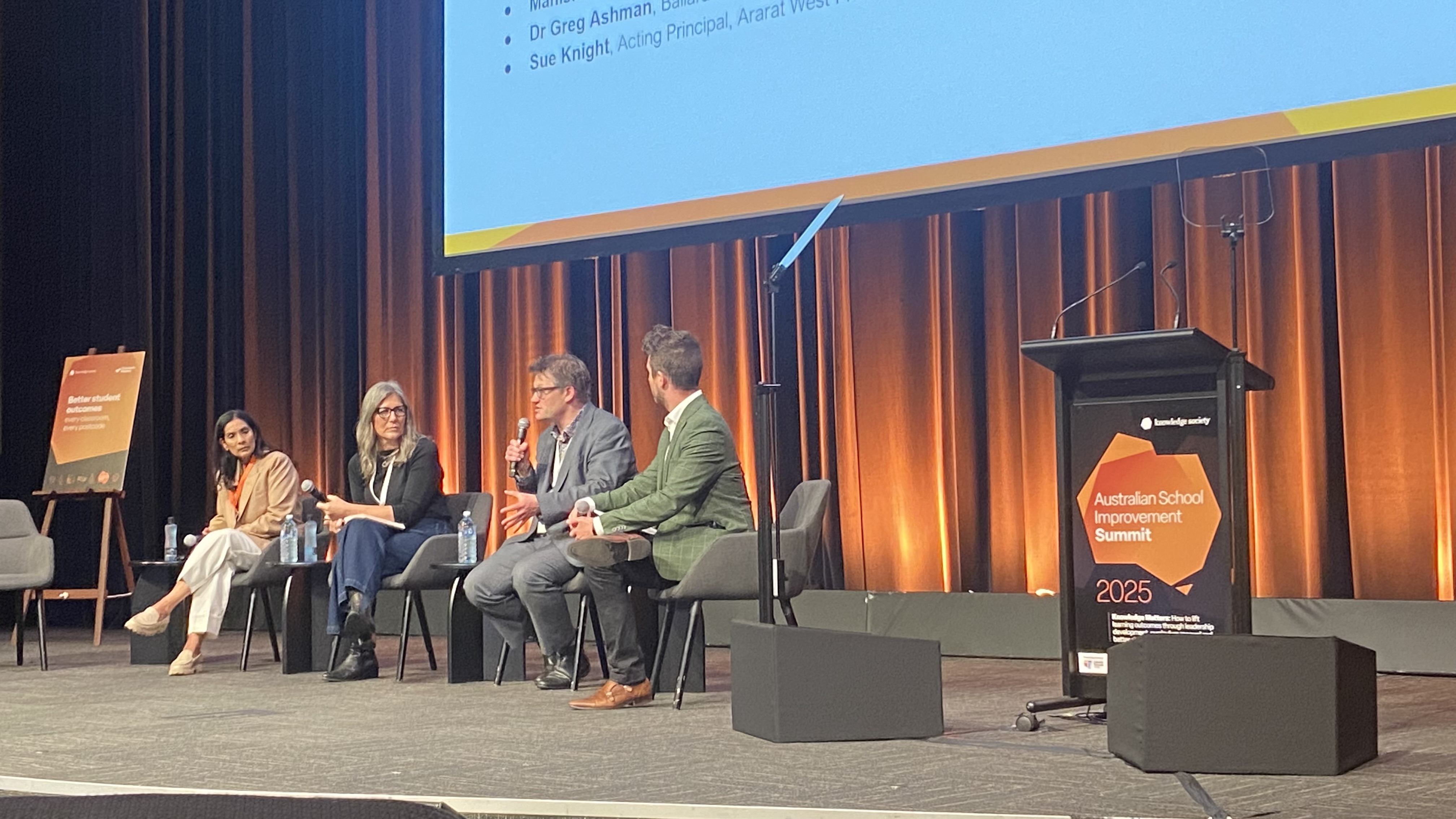
From left, Manisha Gazula, Sue Knight and Dr Greg Ashman highlighted the challenge presented by teacher training with host Dr Nathaniel Swain.
Job interviews with graduates fresh out of their teacher training are revealing, the school leader suggested.
“…they will talk as if they’ve heard maybe of explicit teaching but they think it’s bad, it’s got bad connotations for them, inquiry learning is more equitable, it’s more democratic.
“So, these are some of the things that are actually setting young people up for a negative start to their teaching career, and those are the sorts of things that we then have to undo in schools.”
ITE in Australia has come under increasing scrutiny in recent years, with commentators and researchers declaring a constructivist ‘ideological bias’ amongst academics has left graduate teachers without a solid grounding in evidence-based teaching approaches or sound behaviour management skills.
In June, a controversial policy paper argued initial teacher education should be removed from universities and handed over to a small group of national training institutions.
The authors claimed this would counter the ‘ideological drift’ and litany of flawed instructional approaches that have, they said, derailed our school system for decades.
Some other analysis has gone so far as to claim that our universities are indoctrinating preservice teachers with ‘woke’ ideologies at the expense of teaching core literacy and numeracy instruction.
Others have advocated for a ‘sustained shake-up’ of the sector to ‘undo decades of neglect’, with Australia said to be more than ten years behind comparable countries in efforts to improve ITE and bring teachers’ practice up to speed across the board.
In Knight’s experience in regional Victoria, trying to engage with one local university has proven a ‘massive challenge’. Communication has effectively come to a standstill with one lecturer, she reported.
“I have reached out to her three times and invited her to my school [to show her that phonics programs are] not ‘spray and pray’, it’s not deadly boring.
“She has refused three times, and that to me – it’s devastating, really.
“I feel like we’re sitting in two isolated spots, [they’re] not giving me the grads I need yet we can’t engage with each other and I almost feel like there’s not a middle ground…”
Opening up the discussion to the audience, host Dr Nathaniel Swain took a pressing comment from Professor Barney Dalgarno, executive dean of the education faculty at University of Canberra.
Dalgarno called on the school leaders to properly engage with ITE providers, inviting Ashman to take a close look inside his faculty’s programs before “you blanketly tell us that we’re wasting our time”.
“I’m happy to take you up on that,” Ashman replied.
“I would say, as Sue has demonstrated, engaging with teacher education providers is actually quite challenging.”
EducationHQ is a media partner of the Australian School Improvement Summit. Read more of our event coverage here and here.