
The study, published in Economics of Education Review, finds stronger performance in two global assessments is associated with higher levels of education, stronger numeracy skills, and higher incomes in adulthood.
University of Auckland economist Dr Sam Stemper combined data on mathematics scores from standardised tests TIMSS (Trends in International Mathematics and Science Study) and PISA (Programme for International Student Assessment) and analysed adult outcomes from 18 global surveys.
The assessments, used in Australia and New Zealand and around the world, are regarded as the ‘gold standard’ for evaluating adolescent numeracy and literacy skills on a global scale.
Stemper compared PISA and TIMSS maths scores with later outcomes among groups of students who took both tests during high school.
“Maths skills play an important role in the academic and economic trajectory of individuals throughout their lives,” Stemper says.
The academic claims the research findings suggest PISA scores have a stronger relationship with education and income in adulthood compared to TIMSS scores, and this is significant for two main reasons.
First, PISA and TIMSS exams test distinct skills, even within the same subject - TIMSS emphasises curriculum-based knowledge, focusing on material that students learn in school, while PISA has a focus on measuring students’ ability to apply their knowledge in ‘real-world’ scenarios.
Secondly, since 2000, PISA and TIMSS scores have moved in opposite directions in many countries.
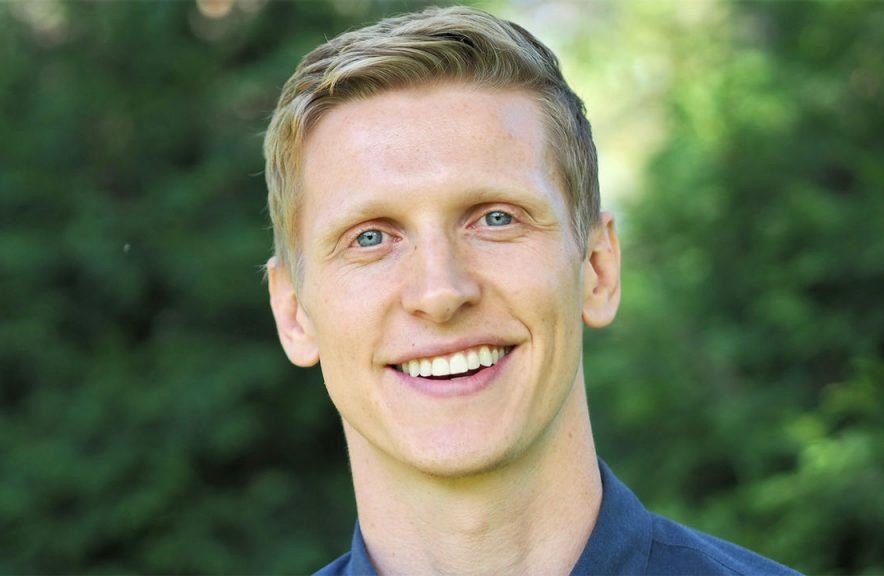
Dr Sam Stemper says we should pay attention to potential declines in ‘real-world’ problem-solving skills and what that may mean for students later in life.
While TIMSS math scores have generally increased, PISA scores have stagnated or declined for most participants.
Stemper says taken alone this is concerning; when considering his findings, it’s even more so.
“The divergence suggests we should pay attention to potential declines in ‘real-world’ problem-solving skills and what that may mean for students later in life,” he says.
“Students may become good at repeating information, but it is important to also focus on how well they can apply their knowledge.
“This may better support long-term educational and economic outcomes.”
The research follows the highlighting last week at a Canberra breakfast roundtable convened by The Parliamentary Friends of Engineering (PFoE), that now is the time to tackle Australia’s significant drop in participation rates for advanced mathematics.
Engineers Australia chief engineer Katherine Richards said the decline in students undertaking advanced maths at school is already impacting the nation’s future skilled workforce needs.
“Australia’s overall maths participation and performance has remained largely stagnant (in recent years) and regional and remote students are behind when compared with their city peers,” Richards says.
According to Australian Mathematical Sciences Institute (AMSI) data published in July last year, participation in higher mathematics was at 8.4 per cent in 2023, and had remained below 10 per cent for the fourth consecutive year.
Intermediate mathematics participation dropped to a historic low of 16.8 per cent in 2023. Only 36.5 per cent of higher mathematics students were female, compared to a peak rate of 38.6 per cent in 2019.
General mathematics participation dropped from 53 per cent in 2011 to 44 per cent in 2023.
AMSI also shared that nearly 40 per cent of math teachers are not qualified to teach the subject, and 75 per cent of Years 7-10 students experience out-of-field teaching.
Most, including the Department of Education, agree that the nation’s long-term workforce depends on reversing these trends.
“Without a significant increase in students pursuing maths, we cannot grow the next generation of engineers,” Richards said.
“This has dire consequences for the nation with engineering underpinning around 60 per cent of our nation’s GDP.”