
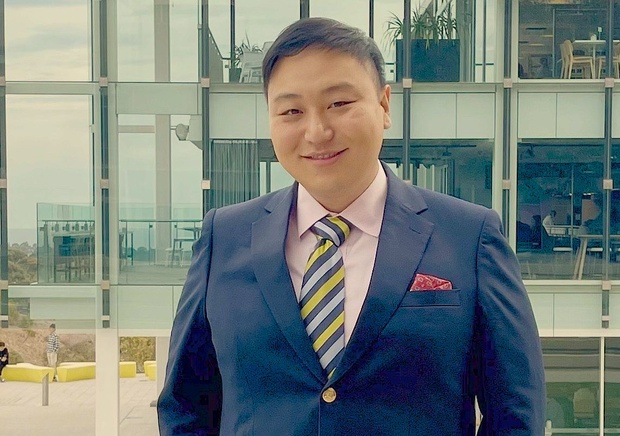

The study, one of the first to examine how teachers here are making sense of GenAI for gender-inclusive STEM education, finds that teachers’ thinking is more nuanced than a simple “pro” or “anti” stance.
Instead, their views are shaped by practical judgement of what GenAI can enable versus what it could complicate for girls’ STEM engagement.
The gender gap in STEM remains a challenge worldwide, Dr Tianchong Wang says.
“With GenAI becoming more common in Australian classrooms, teachers see real promise in what they could do to support more equitable STEM learning participation, but they’re also alert to the risk that without critical and careful use, these same tools could widen that gap further,” the senior lecturer in STEM in Innovative Education Futures at Flinders University’s College of Education, Psychology and Social Work, says.
Wang, together with Associate Professor Therese Keane from La Trobe University, co-led the investigation, funded by the Google Award for Inclusion Research (AIR) programme – a highly competitive international award from Google Research that supports innovative projects with positive societal impact.
Their research draws on interviews with Australian primary and secondary school teachers to examine how they are making sense of GenAI in relation to gender-inclusive STEM education.
The findings reveal that teachers’ approach to using GenAI for gender inclusion is shaped by three interconnected considerations.
Firstly, familiarity and experience with GenAI are crucial. Teachers who are better equipped with AI skills and who use these tools confidently are better able to articulate equity-focused classroom uses and teaching without gender bias.
Secondly, teachers recognise that GenAI can help lower the barrier to STEM participation by giving students supported entry into challenging tasks and making learning more personalised and confidence-building. However, they are also aware that biased or stereotyped AI outputs can quietly reinforce “who belongs” narratives in STEM – although these can be checked and countered.
Thirdly, teachers emphasise implementation barriers – competing time commitments, access to fit-for-purpose professional learning, resourcing and policy interpretation uncertainty – alongside confidence-related barriers that shape whether GenAI can move from cautious experimentation to an intentional lever for gender-inclusivity.
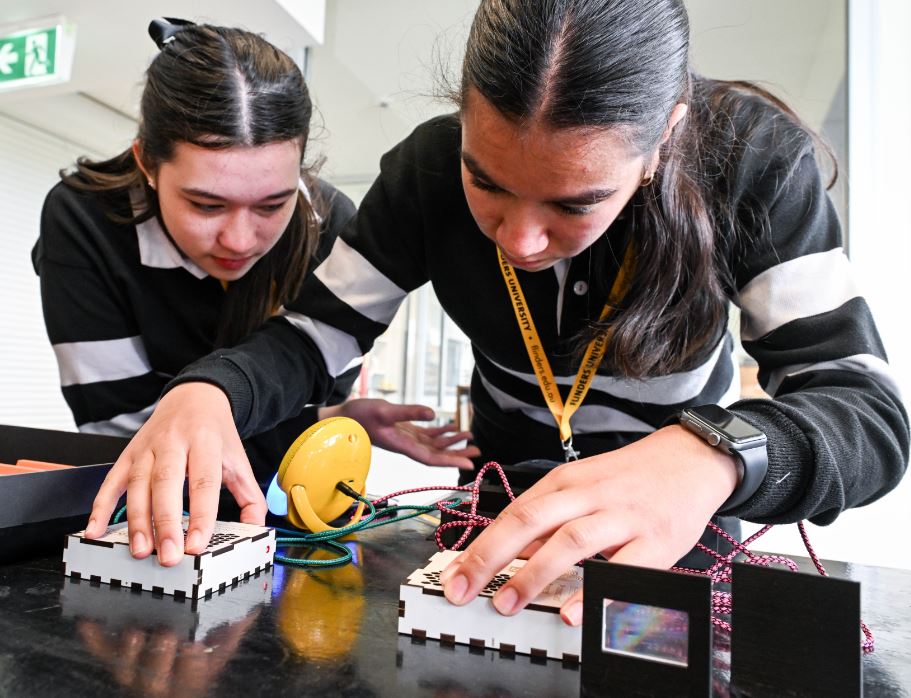
Initiatives like the STEM Enrichment Academy at Flinders University aim to boost female enrolments in tertiary degree courses such as engineering, space, astrophysics and nuclear physics, biomedicine, architecture and laboratory sciences.
“This research makes one point very clear: achieving gender-transformative STEM education with AI is not a tool problem, it’s a capability and conditions problem,” Wang says.
“Schools and systems need to invest in upskilling opportunities that build AI literacy for both teachers and students, in different ways.”
Wang says teachers need professional learning that goes beyond how to use GenAI efficiently and explore how to design learning experiences where GenAI actively supports girls’ confidence agency, and sense of belonging in STEM.
Students must build critical skills to recognise and challenge bias in AI outputs they encounter.
“Policies and guardrails matter, but they are only half the story,” he says.
“Teachers also need conducive school environments and practical support to turn GenAI’s potential into deliberate learning experiences that open doors and celebrate success for girls in STEM.”
Beyond STEM, Associate Professor Ritesh Chugh says teacher confidence with AI is critical as we progress into the school year.
In an opinion piece on EducationHQ earlier this year, Chugh explained that teachers need clear, usable guidance and targeted, practice-focused professional learning, not abstract policy statements.
“In ICT and digital technologies, AI can help analyse code, debug logic, or compare design alternatives, provided students still produce and explain their own solutions,” the academic argued.
Blanket bans on GenAI are difficult to enforce and often do not prevent student use, he shared.
“Instead, they tend to push the use underground and widen the gap between students who understand the tools and those who do not. Teaching responsible use early is more effective than relying on detection or punishment later.”
Chugh said this early period of the year is a moment of opportunity.
“Schools that use the first weeks of term to build shared understanding of GenAI can support learning, protect academic integrity, and reduce teacher workload over time.
“Schools that avoid the conversation may find that students set the norms instead, and those norms may not serve learning.”
The research – ‘Teachers’ perceptions of generative AI in gender-inclusive STEM education: a grounded theory study’ by Celeste Tipple, Therese Keane, Tianchong Wang and Milorad Cerovac – can be viewed here.