

According to the OECD, 41 per cent of Australian students reported that noise and disorder disrupted most or every science lesson, 34 per cent reported that classmates did not listen to their teacher and 21 per cent said they could not work well in most or all science lessons.
The PISA findings have been used by some commentators and many in the media to back the findings of a recent, alarmingly titled paper by the Centre for Independent Studies called Classrooms in Crisis, which claimed Australian teachers lose almost one-third of lesson time to student misbehaviour.
However, that much smaller study measured teachers’ perceptions, rather than students’ impressions, of classroom disruption.
Nevertheless, the PISA figures are concerning because, to state the obvious, learning requires conditions in which students can actually learn. When those conditions are repeatedly interrupted, learning time is lost.
Much of the discussion has understandably focused on student behaviour and there’s good reason for that. Creating productive learning environments requires consideration of the behaviour of everyone within them and the conditions that enable teachers to teach and students to learn. And there’s no question that students talking over teachers, calling out or preventing others from working can be disruptive.
However, there’s a difference between acknowledging that student behaviour can disrupt classrooms and assuming that every measure of classroom disruption is evidence of problematic student behaviour.
PISA measures what the OECD describes as the “disciplinary climate”. In 2025, students were asked how often their science lessons were disrupted by classmates not listening to the teacher, noise and disorder, teachers having to wait for students to settle down, students being unable to work effectively and delays in students beginning their work.
While these measures provide important information about the conditions in which learning is taking place, they don’t identify the cause of every disruption.
One of the challenges I’ve encountered in reviewing the research is that there is no single, consistently applied definition of classroom disruption. There’s broad agreement about its effect – that disruption interrupts, delays or interferes with teaching and learning – but considerably less agreement about what should count as disruption and where its causes sit.
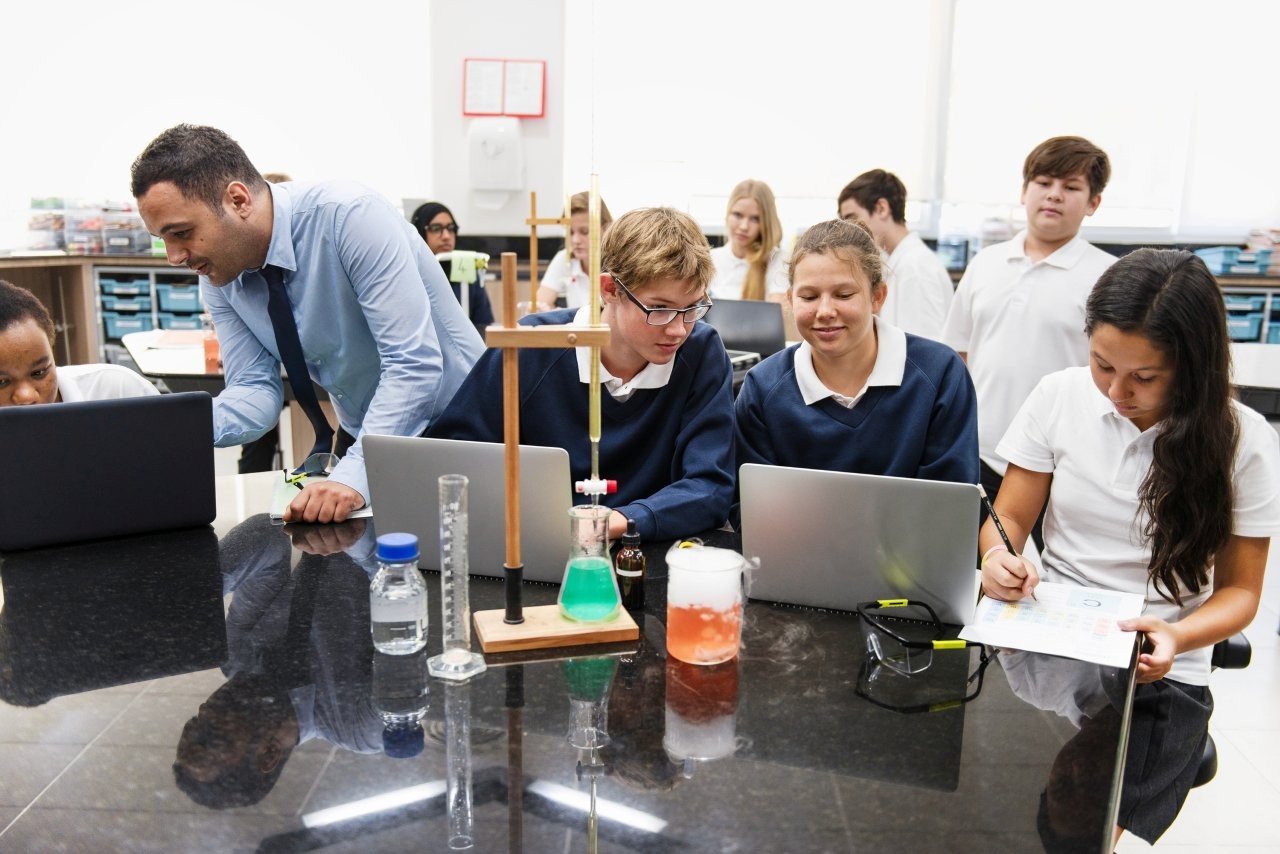
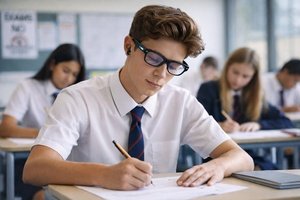
There’s a difference between acknowledging that student behaviour can disrupt classrooms and assuming that every measure of classroom disruption is evidence of problematic student behaviour, according to Ben Sacco. PHOTO: Rawpixel
There’s no doubt that students calling out while a teacher is speaking can disrupt learning, as can students talking while others are trying to concentrate. However, teaching and learning can also be interrupted by school-wide announcements, administrative interruptions, visitors entering and leaving classrooms or other events that break the flow of a lesson.
Science lessons for 15-year-olds also often involve practical work, discussion and collaboration. That means noise or movement in a classroom or science lab is not automatically evidence of poor behaviour or ineffective teaching. In some cases, it may simply reflect the environment in which the lesson is being conducted.
I’m not suggesting these examples necessarily explain the PISA statistics but they do illustrate why clarity about what constitutes classroom disruption is important, particularly when the way a problem is defined can shape the policy response.
As I discuss in my book Disruption in Schools, care must be taken not to conflate “classroom disruption” with “disruptive student behaviour”. They’re related but they’re not the same thing.
Student behaviour is certainly part of the discussion but it should not be the only lens through which classroom disruption is understood.
There’s another finding worth considering. While Australian students report comparatively high levels of disruption, they also report comparatively high levels of teacher support. Eighty per cent said their science teacher gives extra help when students need it, compared with an OECD average of 73 per cent. Seventy-nine per cent said their teacher shows an interest in every student’s learning, compared with 69 per cent across the OECD.
There’s also an important limitation when interpreting the latest findings. The 2025 disciplinary-climate questions relate specifically to the science lessons experienced by the 15-year-olds surveyed. Science was PISA’s major assessment domain in 2025. In the previous PISA cycle, mathematics was the major domain and disciplinary climate was measured in relation to mathematics lessons.
That doesn’t diminish the value of the data. But it does raise a question about how far experiences reported in one subject can be used to describe what’s happening across Australian classrooms more broadly, particularly when evidence from one learning context is used to draw conclusions about the education system as a whole.
This is not an argument for dismissing PISA. In Australia, 14,658 students across 766 schools completed the 2025 assessment, representing about 275,400 Australian 15-year-olds. What those students are reporting deserves serious attention.
However, the temptation whenever new education data is released is to move quickly from a result to a solution. Students report disruption, so behaviour becomes “the problem” and the debate turns to classroom discipline, curriculum reform or calls for less screen time. When achievement declines, attention similarly turns to what teachers or schools should be doing differently.
Where student behaviour prevents teachers from teaching and other students from learning, education systems should identify it and respond to it. But if the objective is genuinely to protect learning time, attention should also be given to the broader conditions that interrupt, delay or diminish it.
PISA identifies patterns that warrant attention. It does not necessarily explain what sits behind them.