Tiffany Westphal, director of School Can’t Australia (SCA), says that before children’s distress escalates to the point they cannot go to school, many are subject to behaviour management strategies that only worsen their heightened state of anxiety and/or shutdown.
“When [ a child] is in a fight-flight (response), it can look like misbehaviour – you can see somebody who’s arcing up, who’s nervous system’s saying, ‘I’m not doing this’. Or, they’re digging their heels in, or they might be slamming doors or yelling or running the other way,” Westphal tells EducationHQ.
“It can look like behaviour that maybe needs discipline, needs correcting – and oftentimes when we conceptualise that somebody won’t do something or they’re making a choice to misbehave, we reach for solutions that are founded in behaviourism; we’re looking at rewards and consequences.
“And those don’t actually assist the young person who’s struggling, who’s distressed about something, to feel supported or to have their problem identified and addressed.”
When students’ stress about being at school is punished, over time they can begin to internalise the belief that there’s something very wrong with them, Westphal flags.
“The distress just gets prolonged and actually accelerated, because they start to internalise that ‘the problem is me, I’m a naughty kid, I’m a bad student, I’m a bad person, I’m a disappointment to my teachers, I’m a disappointment to parents, no-one can help me’.
“They shut down and they disconnect further as a form of self-preservation.”
A huge complication here is that for teachers, signs of distress in students can be very difficult to spot, Westphal says.
“We have children who will mask. They’ll be in a shutdown state sometimes and it’s really hard to tell when somebody’s in a nervous system shutdown state or just burnt out,” she explains.
“That’s often a very passive looking classroom. It just looks like a kid who’s staring at the paper or zoned out, and if you tap them on the shoulder, they might seem slightly disoriented – they’re not following along.
“Whereas a young person who’s in fight-flight, you’ll see action or you’ll hear some kind of behaviour action.
“We talk about those as internalising and externalising behaviours, these two different ways of responding.”
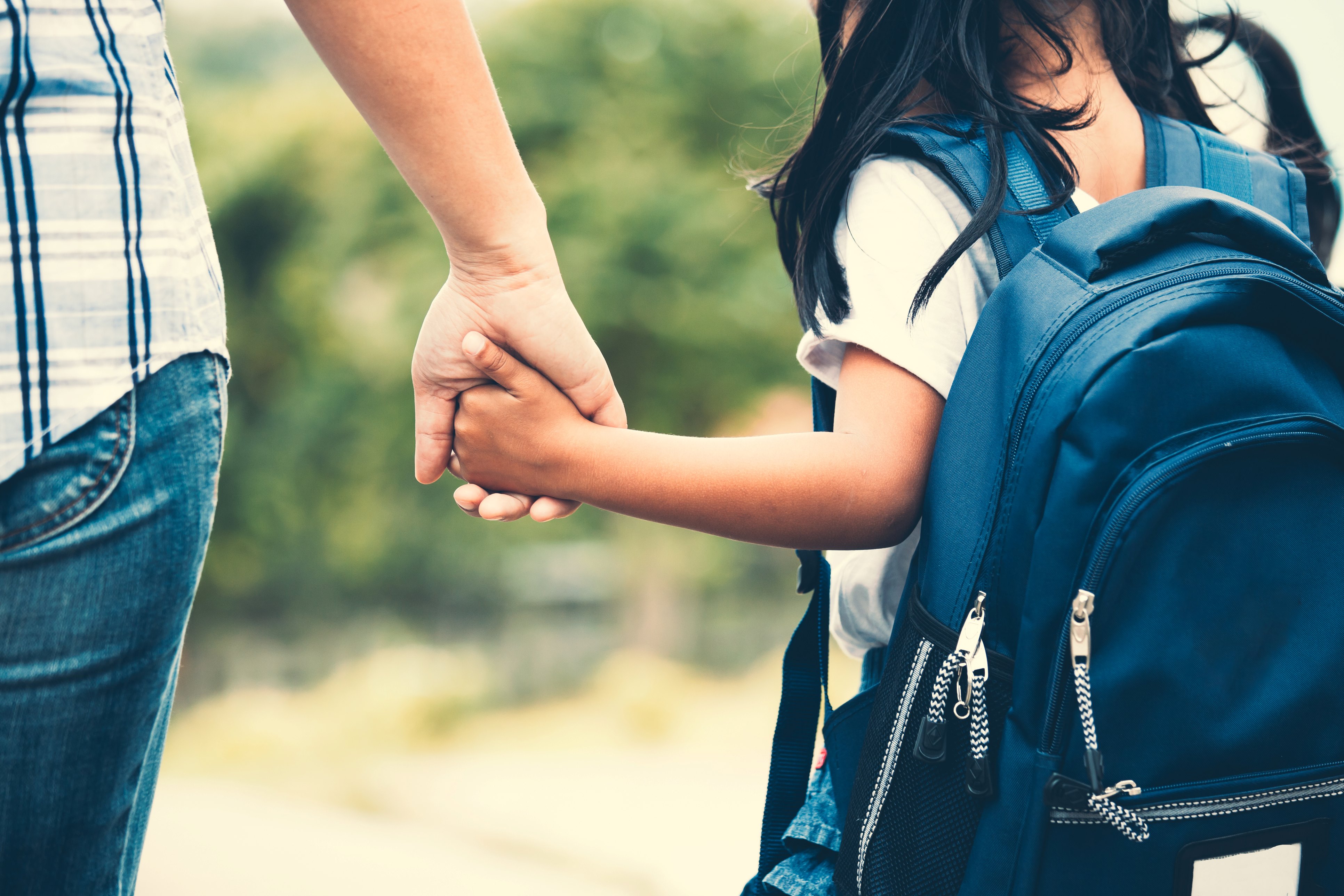
Early support intervention is critical to prevent a young person from spiralling further along the ‘school can’t’ path, Westphal says.
This is why it is so important to have open communication channels with parents, and especially in secondary school, she adds. For teachers, a student in a shutdown state can often appear to be totally fine in the classroom.
“They don’t realise what they’re seeing is a student who’s masking or who feels very vulnerable to ask for help or to say that they’re not okay.
“Maybe they’ve felt judged in the past for not being okay, they’ve been told they need to be more resilient or they need to try harder or the problem is theirs, you know – it’s their problem to solve.”
Girls especially can also feel like they don’t want to be a bother or to draw attention to themselves by highlighting their distress, Westphal says.
“And so they just fly under the radar until they can’t anymore. I think it’s important that we listen to what parents are saying and that parents don’t feel ashamed to share that information…”
Early support intervention is critical to prevent a young person from spiralling further along the ‘school can’t’ path, Westphal says.
“What happens in high school sometimes is that we wait until that first parent-teacher interview, which often doesn’t happen until nearly halfway through the year. And it’s too little information, too late.
“We know that by the time young people stop being able to go to school, oftentimes they’ve been dealing with a chronically stressful situation for quite some time and that’s broken them.”
At this point a trauma response can be triggered by the stressor – be it walking through the school gate, being handed an assignment or the first sound of the lunch bell.
“We know if we can catch signs of distress early, if we’re getting information about things that are causing young people difficulty at school early, it’s much easier to resolve those issues, to put supports in place and to restore a sense of safety for that student,” Westphal says.
School Can’t Australia currently has almost 17,000 parent and carer members, and around 3000 “very distressed parents waiting for support”.
Westphal says around 70-80 per cent of SCA members are supporting children who are neurodivergent.
The group say accessing help and support can feel like a minefield, with some receiving harmful advice to use coercion or to ignore their child if they become distressed or won’t go to school.
SCA launched a podcast ’The School Can’t Experience’ last year and have just released a short online guide for parents canvassing a range of topics, designed to “make lived experience wisdom more accessible”.