

The state’s public schools will introduce daily screen time limits for the start of the 2027 school year before the changes become mandatory from 2028 to allow time for teachers to make adjustments.
It follows similar moves from the Victorian Government to reduce screen time in the classroom from 2027.
NSW Education Minister Prue Car said government research showed excessive screen use was a problem.
“An entire generation of students are increasingly living in an online world,” she said on Sunday.
“We have a responsibility to ensure their health and education isn’t adversely affected by excessive screen use.
“When the research is telling us teenagers are spending as much as seven hours a day on screens and we are seeing reading and writing skills going backwards for a whole generation of children, we have to act.”
Schools are advised to limit screen-based homework, with the use of digital devices not recommended before Year 5.
New state guidelines also recommend at least an hour daily of pen-and-paper learning, citing benefits of handwriting and reading print.
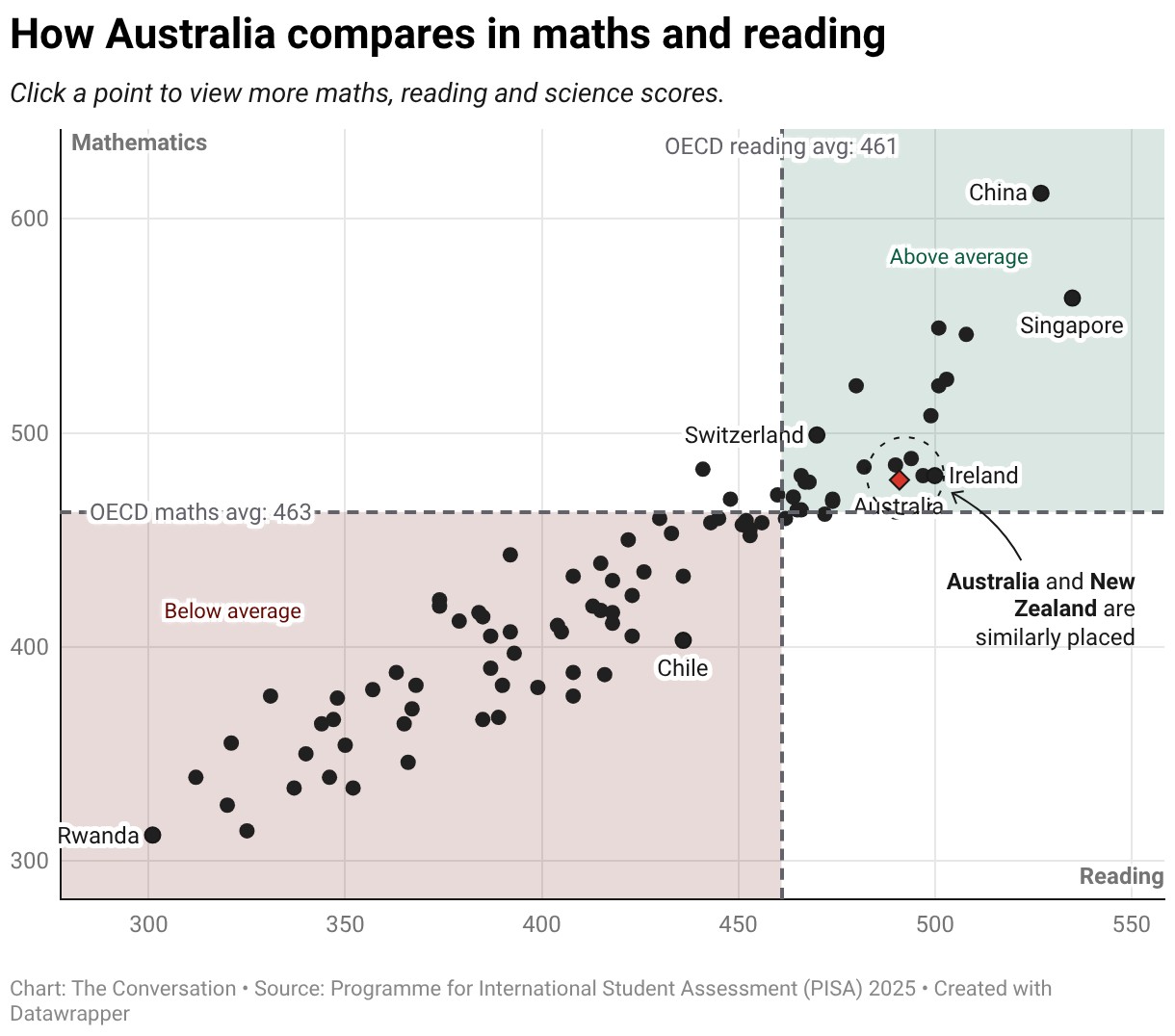
The move follows PISA results showing Australian high school students registering record-low scores in mathematics and reading.
Recent NAPLAN results mirrored the findings.
About a third of students failed to meet basic benchmarks, reading scores dropped across all grades compared to the previous year and only Year 5 students showed writing improvement.
Australian 15-year-olds, however, continue to perform above the OECD average in reading, mathematics, and science, ranking roughly in the top tier of participating nations despite hitting historic lows in domestic performance trends.
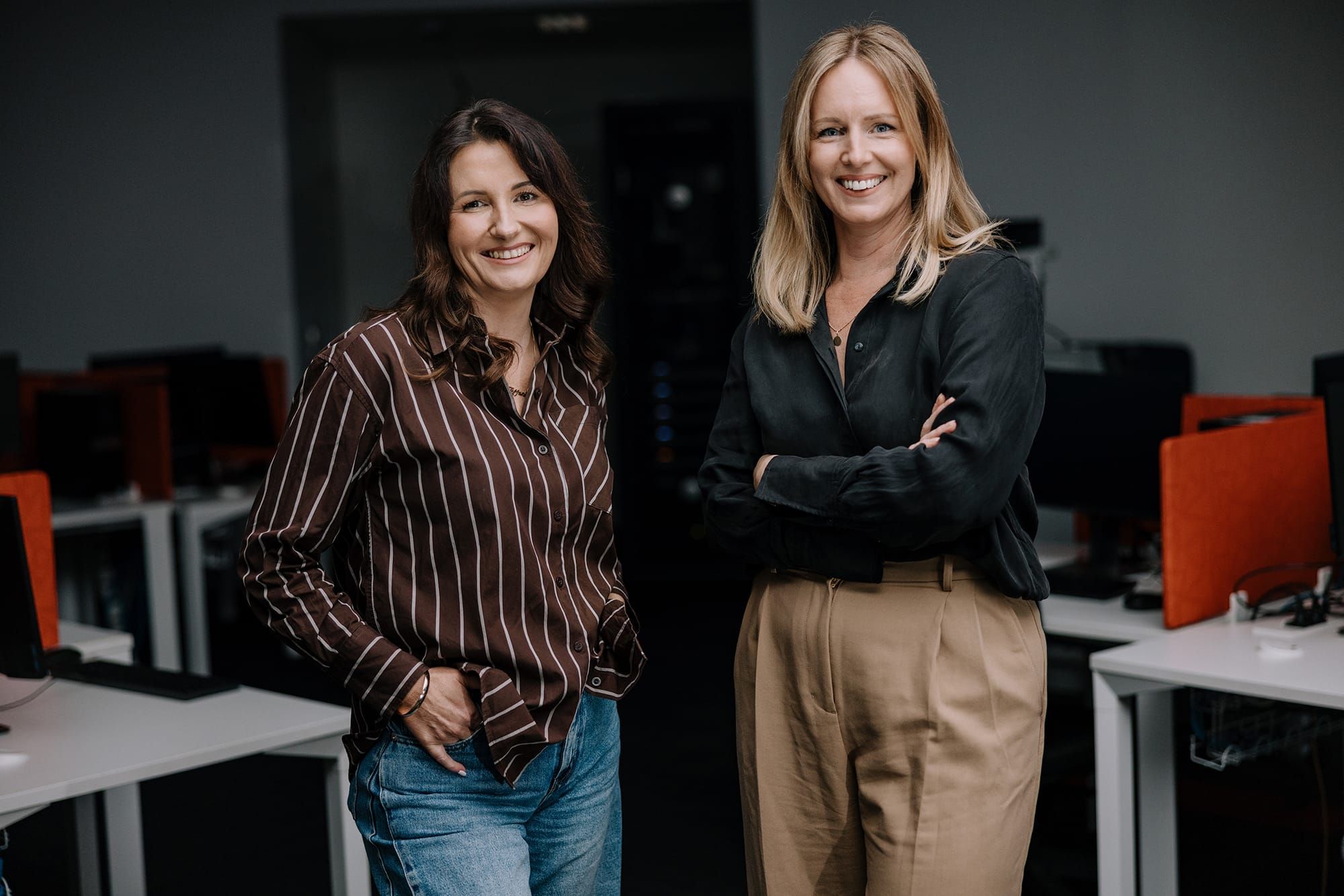
Instead of time limits, experts like Associate Professor Apps and Dr Beckman, pictured above, want to see an evidence-informed, consultative approach that evaluates the quality of educational technology, backs teachers' professional judgement and invests in digital and media literacy education for all students.
While our scores are at an all-time low relative to historical baselines, many other OECD countries are declining at a faster rate, which keeps Australia’s relative international ranking stable or slightly improved.
Australian students spend nearly twice as long using digital devices for learning compared to the OECD average and performed strongly in the new PISA 2025 digital literacy domain, known as Learning in the Digital World, scoring an average of 532 points compared to the OECD average of 500 points. It was Australia’s strongest-performing area.
The OECD has suggested digital devices could have made an impact on global reading skills, but this is only a suggestion at present, and more research is needed, the organisation said.
It’s clear we simply do not yet know enough about the quality of students’ technology use, the impact on learning, when to use digital devices and when not to.
More than 120 leading Australian experts and organisations have joined forces to urge the Federal Government, along with state and territory governments, to shift the debate from screen time to screen use in schools, warning that blanket restrictions risk undermining learning, digital literacy and educational equity.
The Position Statement led by University of Wollongong (UOW) researchers Dr Karley Beckman and Associate Professor Tiffani Apps calls for evidence-based policy decisions on how digital technologies can best support learning.
“The conversation right now is about screen time, but what actually matters for learning isn’t how many minutes a student spends looking at a screen but what they’re doing with it, why, and with whom,” Beckman, a senior lecturer in Digital Technologies for Learning and Deputy Head of School (Research) in the School of Education, said.
“A blanket time limit risks taking away one of the only places some students get to build digital skills they’ll need for the rest of their lives.”
Apps said obviously nobody’s arguing that kids should be on devices all day, every day.
“The real questions are about the quality of education technologies we use in our schools, how we teach students to use these tools well and how we support teachers to meet students’ learning needs, interests and motivations,” she said.
Apps argues that teachers know that different children need different tools and they’re engaged in different ways in learning.
“Motivation and engagement is really key in switching kids on to be able to engage in those learning processes, and I think teachers need to be trusted and they need the autonomy to choose the right tools for the right students, for the right learning outcomes,” she explained to EducationHQ.
“I feel like much of the conversation going on around this at the moment, and having been a school teacher and a technology coordinator and now an academic that explores this, I really understand, and I think it’s important to support our teachers in schools to make those decisions.”
Under the NSW policy, daily screen time limits – averaged across a school week – will be set at 15 minutes for Kindergarten to Year 2, 30 minutes for Years 3-4 and 45 minutes for Years 5-6.
High school students are capped at one-quarter of class time per subject in Years 7 10 and up to half in Years 11-12.
There will be exemptions and adjustments for students with disability, those with additional needs, or students for whom English is not their first language, or where digital support is part of a personalised learning plan.
NSW Health chief paediatrician Helen Goodwin said it was important to limit screen time for children.
“A healthy day for children and young people includes a mix of being active, getting enough sleep, and building active social connections with their peers and family,” she said.
“We know that too much time spent on screens impacts these important daily activities that support healthy growth and development.”
(with AAP)