


As this behaviour becomes more challenging to identify and address, many teachers say they don’t feel confident having conversations that go beyond warnings or discipline. This gap between what young people need and what teachers are equipped to handle is why we developed the OurFutures Institute (OFI) Educator Masterclass.
Part of a federally funded national rollout, the program aims to train 2700 teachers by June 2028 and provides evidence-based knowledge and practical prevention strategies to help educators address vaping before it becomes an entrenched behaviour.
From reactive to proactive: teachers as early intervention
When vaping is detected in the school environment, the most common response is punitive and reactive: confiscation, suspension, or a call home. But by the time a student is caught, they may already be vaping regularly or experiencing the early signs of nicotine dependence.
The Educator Masterclass encourages a different approach. At its centre is the ‘Notice • Ask • Listen • Support’ framework. Teachers learn how to spot subtle warning signs, such as a change in behaviour, withdrawal from peers, or signs of secrecy, and how to open a non-judgemental conversation. From there, they can offer support or refer students to appropriate services.
These conversations don’t require teachers to wait for a ‘vape incident’. They can begin during a class discussion prompted by a news headline, something seen in a movie, or a passing comment from a student. This approach is based on one simple but essential fact: Prevention is most effective when it’s built into everyday conversations, not left until something goes wrong.
Understanding what’s driving the behaviour
There is no single reason young people vape. For some, it’s social. For others, they may feel it’s a way to manage stress or anxiety. Some are drawn in by marketing or peer pressure, while others simply believe the products are harmless, especially when they’re flavoured or sold without clear labelling.
In many cases, vaping is part of a broader pattern of risk-taking or experimentation common in adolescence. For some students, particularly those in vulnerable communities or young people who have been exposed to the behaviours in the home setting, it can be part of a more complex behavioural pattern.
Educators explore these influences through the lens of adolescent brain development, including how the teenage brain processes reward, risk and decision-making. An adolescent brain feels dopamine seven times more than an adult with a fully developed brain, which makes this risk-taking behaviour that much more fun or compelling. With that understanding, they can move beyond judgment and respond with insight and empathy.
Misinformation is often a major barrier
One of the biggest challenges teachers face is navigating widespread misinformation about vaping. Many students still believe that vaping is ‘just water vapour’ or that nicotine-free products carry no risk. But testing shows many supposedly nicotine-free vapes do, in fact, contain nicotine, and some also contain up to 200 harmful chemicals not listed on the label.
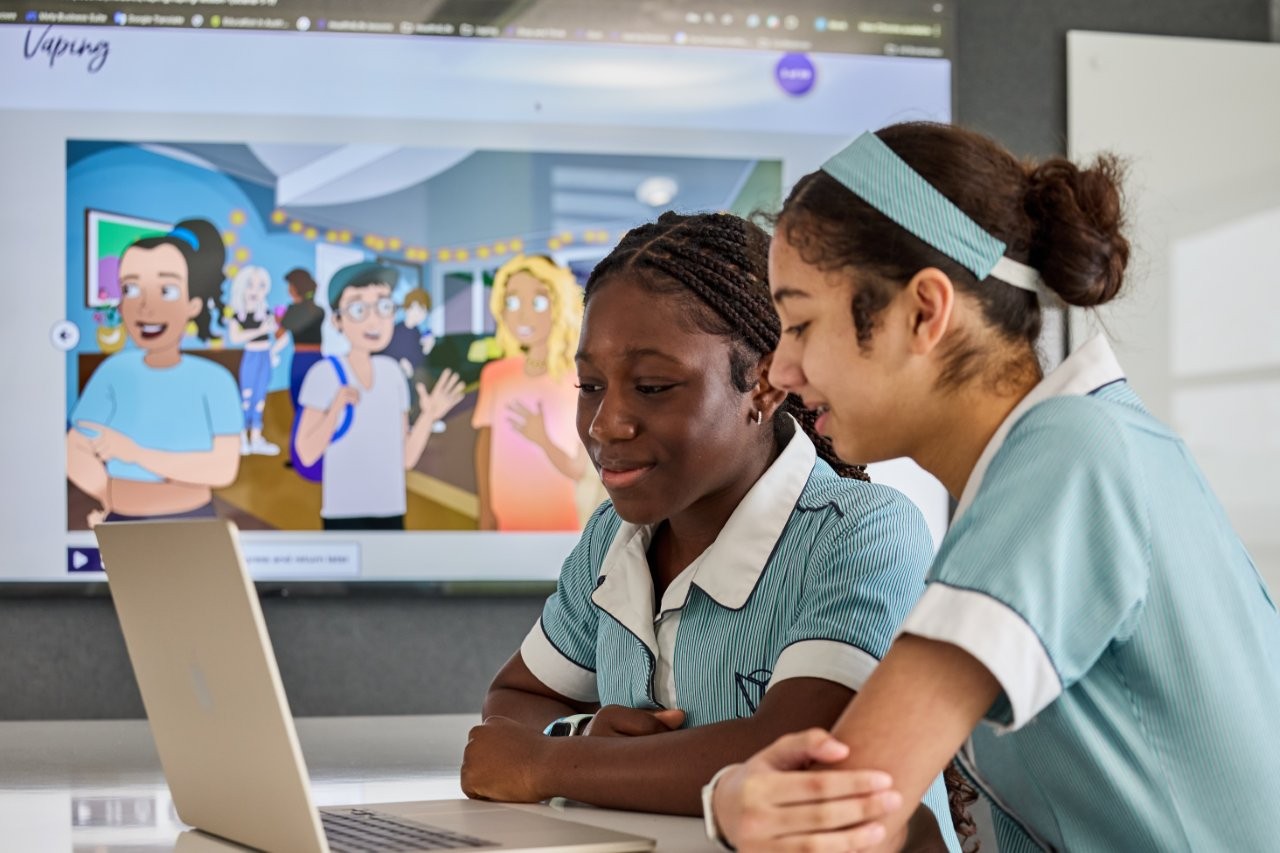
Conversations with students don’t require teachers to wait for a ‘vape incident’, they can begin during a class discussion prompted by a news headline, something seen in a movie, or a passing comment from a student. Prevention is the most effective approach. PHOTO: OFI
This is why the OFI Educator Masterclass dedicates time to myth-busting, gives educators up-to-date, evidence-based facts, and helps them respond to common misconceptions. It also encourages teachers to reflect on their own beliefs or assumptions, and how those might shape the way they speak to students.
Teachers work through this together, using peer discussion to test language, share strategies and learn from each other’s experiences. It’s a collaborative environment, not a lecture.
It’s important to understand that while teachers aren’t expected to take on the role of health experts, they are often the first adult to notice when a student is struggling, and the first safe adult a student might trust enough to talk to. These blurred lines can make it difficult for a teacher to know where their role begins and ends, and the Masterclass makes a point to address these challenges, too.
We encourage teachers to start conversations, listen carefully, and then refer students to wellbeing staff, school counsellors, or health services when needed. The referral process is framed as part of a trusted relationship, not a hands-off approach.
Crucially, the Masterclass aligns with existing wellbeing frameworks and state-based policy guidance, so teachers can act with confidence in their professional and local context.
Behaviour change takes time, but culture can shift quickly
Students often test limits. That’s normal. But when vaping is treated only as ‘bad behaviour,’ schools risk missing an opportunity to change it.
What’s more effective is a school culture where students feel safe to ask questions, challenge misinformation and seek help, not hide what they’re doing.
That kind of culture takes shape when staff respond consistently, with clear language and confidence. Over time, early conversations become the norm, and the stigma around nicotine use begins to fall away.
While vaping is the focus, the Masterclass sits within a broader prevention strategy. Students face a range of risks, including alcohol use, digital overuse, bullying and online behaviours, and these often intersect. By giving teachers a broader lens on adolescent behaviour, the program helps them spot patterns and respond before problems escalate.
A national program built on evidence
The Masterclass brings together the latest evidence on nicotine and adolescent brain development, with tools teachers can use straight away. We focus on building confidence with the facts, offering a clear framework for early conversations, and making space for myth-busting, reflection and shared learning.
When teachers feel informed and supported, they’re far more likely to step in early, before vaping becomes an entrenched habit.
When teachers are prepared, prevention becomes possible
Vaping is already showing up in classrooms and playgrounds. The question is no longer if teachers will face it, but how well prepared they’ll be when they do.
The OFI Educator Masterclass gives educators practical, evidence-based tools they can use straight away to respond in the moment with care.
With the right information, the right approach, and support from their schools, teachers can be powerful agents of early intervention, not just reaction.
To learn more or register for the OFI Educator Masterclass, click here.