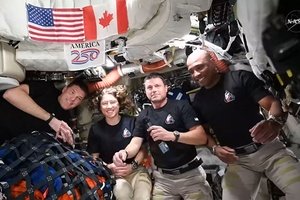
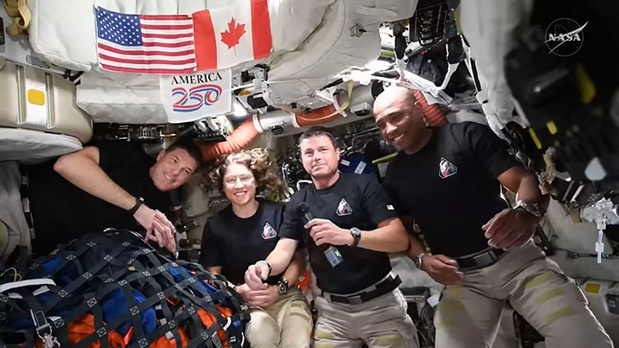
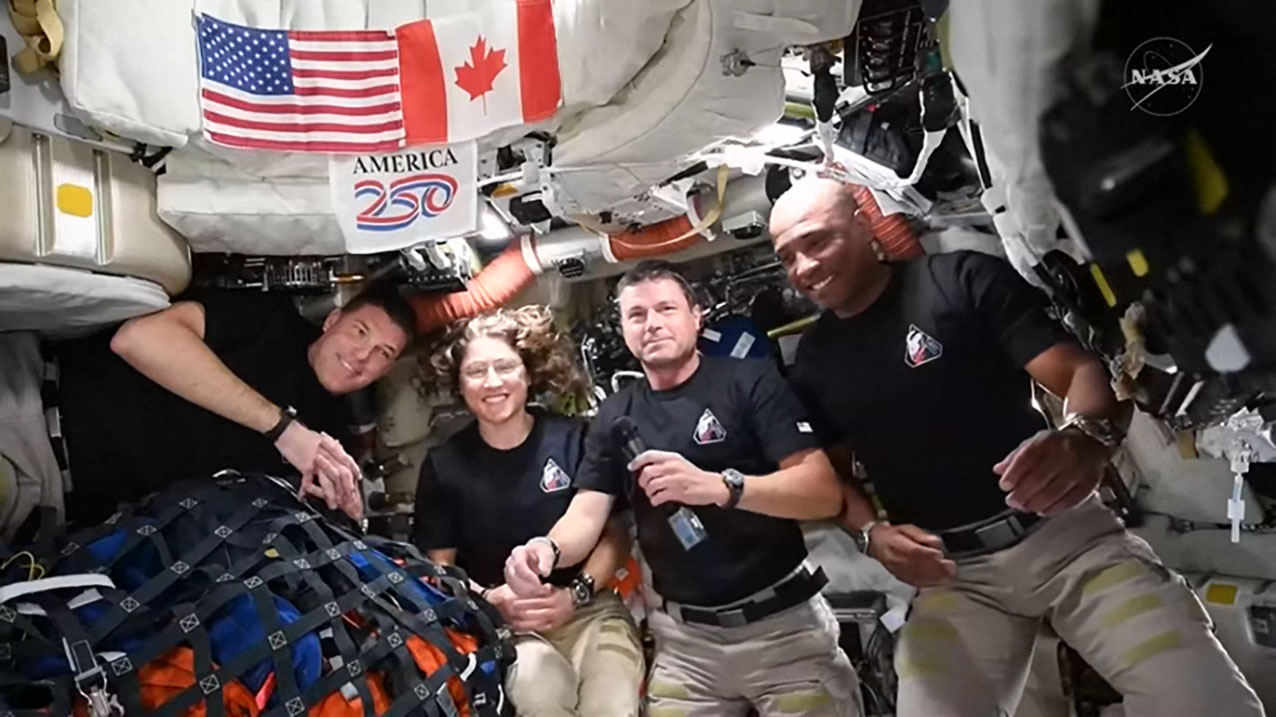
Looking down at our planet – fragile, borderless and shared – they described humanity as one. Not divided by politics, conflict or geography, but connected by a single, finite home.
It’s a familiar reflection from Space. But right now, it couldn’t be more urgent. Because back here on Earth, that sense of shared humanity feels increasingly distant.
We are living through a period defined by division. Geopolitical tensions are rising. Misinformation is spreading faster than truth. Technological innovation is accelerating at a pace that outstrips our ability to fully understand its consequences.
At the same time, we are facing complex, interconnected challenges – from health and ageing populations, to climate pressures and global inequality, challenges that no single country or discipline can solve alone.
And yet, much of how we are preparing the next generation still embodies paradigms from a world that no longer exists.
Astronauts often describe the “overview effect”, the moment when borders disappear and differences fade, replaced by a deep understanding that we are all part of the same system. The Artemis II crew reinforced that idea. Not as a philosophical concept, but as a lived reality.
That perspective is exactly what we are missing here on the ground.
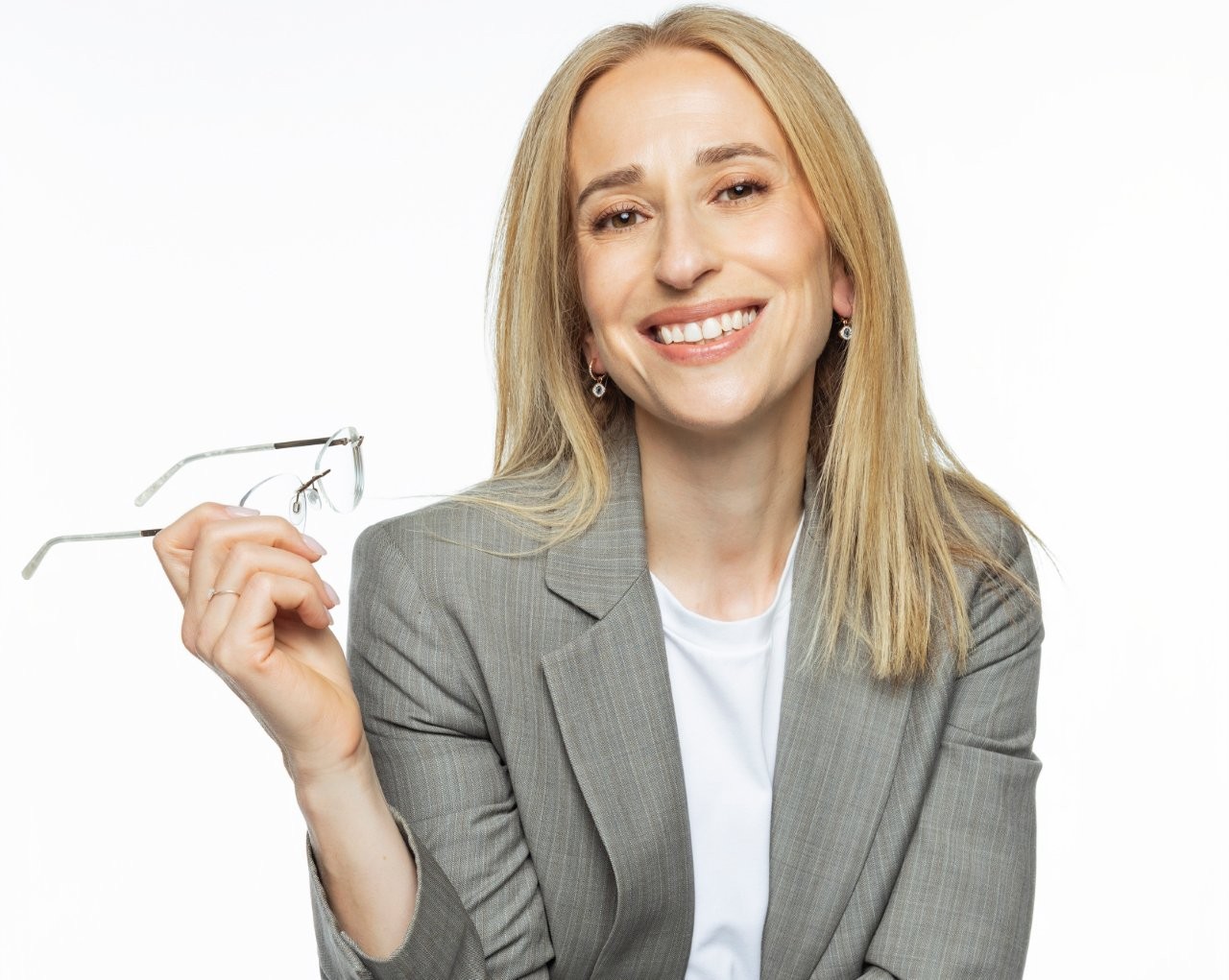
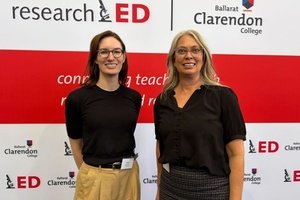
“We need to nurture curiosity not as an optional extra, but as a core capability,” Kate Ashmor says.
Because the future we are heading into will demand more than technical skill. It will require people who can think across disciplines, challenge assumptions, interpret information critically and collaborate beyond traditional boundaries.
It will require curiosity, which we at Tom Ashmor Foundation, see as the foundation for capability in a complex world. It enables young people to navigate uncertainty, rather than retreat from it. It drives innovation, but also responsibility – the ability to ask not just “can we?” but “should we?”
This matters because the systems shaping our future, artificial intelligence, advanced manufacturing, biotechnology, space exploration and climate resilience are not neutral. They will reflect the thinking, values, decisions and courage of the people who build them.
And those people are sitting in our public primary classrooms today.
If we continue to prioritise rote learning over critical thinking or treat STEM as a niche rather than an essential foundation, we risk preparing young people for a world that is already obsolete. Worse, we risk leaving them underprepared to deal with the complexity and consequences of the planet they will inherit.
The key lesson from Artemis II is not just that we can go further. It’s that when we do, we see more clearly what’s at stake.
If we want the next generation of Australians to lead and thrive in a STEM-dependent world, we must start to equip them earlier, at primary school level. We need to give all our children access to STEM education in ways that are practical, engaging and grounded in real-world problem solving. We need to nurture curiosity not as an optional extra, but as a core capability.
Because one day, someone currently sitting in an Australian public primary classroom will look back at Earth from Space. And what they understand in that moment, about humanity, about responsibility, about what matters, will be shaped long before they ever leave the ground. And it will be catalysed by the spark ignited in them through world-class primary school STEM education.
Kate Ashmor is a lawyer and Chair of the Tom Ashmor Foundation.