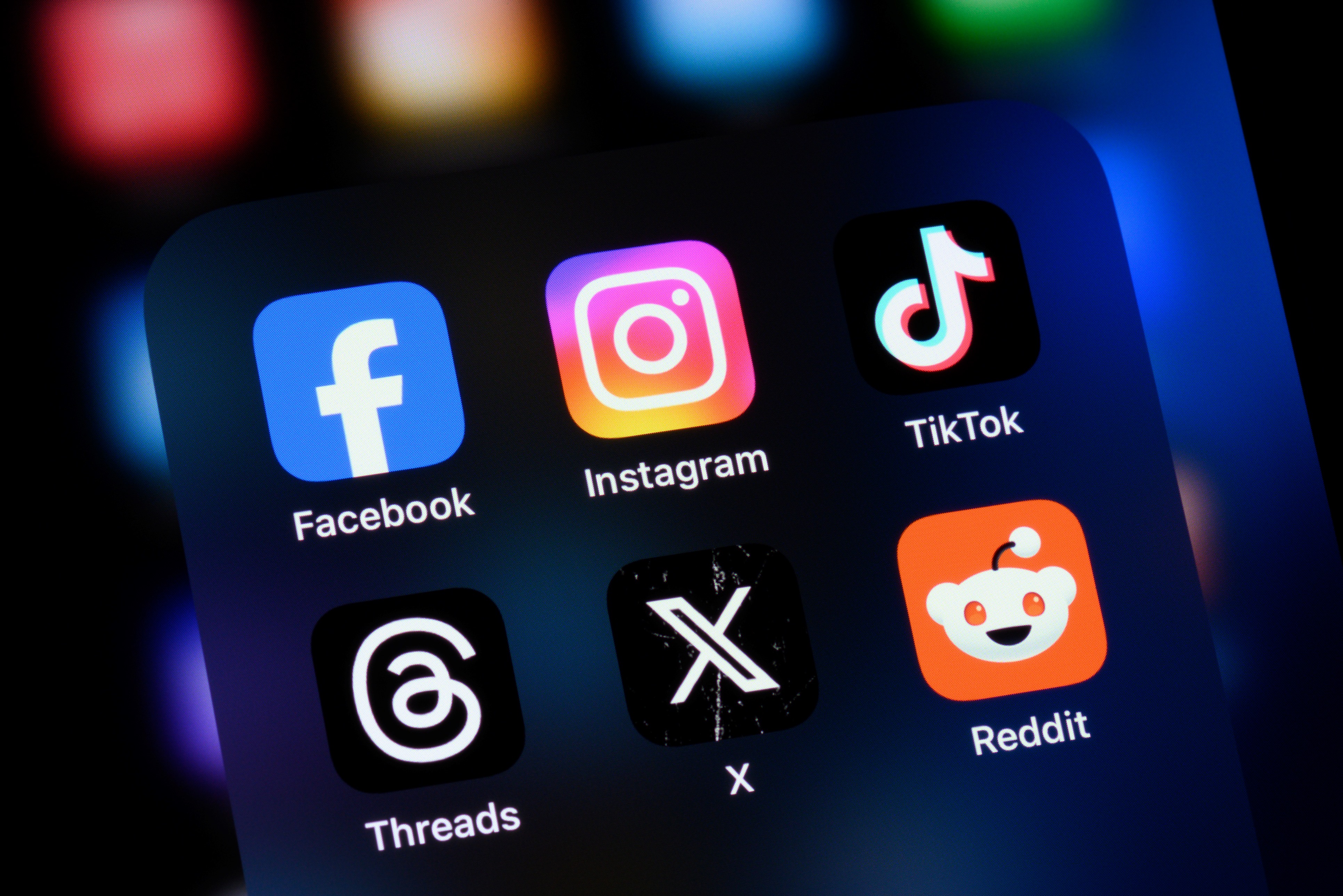
eSafety has now deemed Facebook, Instagram, Snapchat, TikTok, YouTube, X, Threads, and newly-added Reddit and Kick as age-restricted social media platforms.
Kick, an Australian livestreaming platform, is currently being sued by France for negligence after a prominent user died during a marathon broadcast, a French Government minister reported this August.
“Kick did not do everything possible to stop the broadcast of dangerous content,” Digital Affairs Minister Clara Chappaz said at the time.
Responding to questions last week, eSafety Commissioner Julie Inman Grant revealed her office had been “doing some of our own investigations” into Kick and had been “working with them for some time”.
Inman Grant said the list of banned platforms was “dynamic” and subject to continual change.
“…some of these companies, when we did the assessment, were very much, what I would say, on the line.”
Taking the example of Roblox, Inman Grant gave an insight into the decision-making process used to determine if a certain platform should face age restrictions or not.
Part of the issue is that many platforms like Roblox work as ‘hybrids’ that feature in-built messaging services, she explained.
This means that a lot of ‘mental gymnastics’ goes into applying the criteria to each, Inman Grant said.
“So, we had to put our minds to what is the sole and significant purpose? Online gaming, right? But there’s chat functionality [in Roblox],” she said.
“In the US they’ve launched a program called Moments, which is very much like Stories, which is online social interaction. They market themselves as the first metaverse company being immersive.
“And so, when we did the assessment … we also have to think about, would kids who are using Roblox today, they use the chat functionality and messaging so that they can online gameplay – if the online gameplay is the significant or sole purpose, if that were taken away, would the kids still use that messaging functionality to chat? Probably not.
“So that’s just to give you some insight in terms of how much rigour was done with each of the assessments,” Inman Grant noted.
The Steam app and Steam Chat, as well as Discord have also been looked at, she added.
In 2022, a former FBI agent and cyber intelligence expert warned teachers needed to be on the lookout for children who were being radicalised by right-wing extremist groups online, saying kids were being targeted on unconventional channels like Discord.
“I think that if we’re going to reach the kids, we have to hit those same channels: Signal, Telegram, WhatsApp, Theme, Discord – those are the channels where the kids are getting much of their information…” Dr Dennis Desmond, from University of the Sunshine Coast, said at the time.
“That’s how we have to start thinking about how these kids are reached. Because individually, children are going out on gaming sites, they’re accessing communications applications like TikTok and WhatsApp, and they’re able to independently interact with others who are spreading these ideas without necessarily becoming a part of a larger organisation or group.”
An exemption from the Government’s banned list does not mean that a platform is absolutely safe either, Inman Grant warned.
“Sexual extortion, grooming happens on these mainstream social media platforms all the time. We’ve got the data. We take the reports in on a daily basis.”
From December 10, the nine platforms must take ‘reasonable steps’ to prevent under-16s from holding accounts on their services.
Failure to do so will expose them to fines of up to $49.5 million.
But Stephen Scheeler, chief executive of AI startup Omniscient, who led Facebook’s Australian office from 2013 to 2017, said fines of up to $50 million for systemic breaches were insufficient to encourage compliance.
The amount was the equivalent of a parking ticket for billion-dollar companies, he flagged.
“It takes Meta about an hour and 52 minutes to make $50 million in revenue.
“Some of these platforms are absorbed in Europe to billions of Euros.
“They won’t bat an eyelid … this is peanuts in the scheme of things.”
The bigger concern for companies was whether the ban would spread globally, which would add complexity for compliance and impact revenue, Scheeler argued.
Inman Grant said she doesn’t expect ‘perfection’ to play out when the ban comes in.
"We aren’t chasing perfection. We are chasing a meaningful difference, because it is too important here not to try,” Labor minister Anika Wells says of the new law.
“Some companies are going to be more effective than others.
“Some may use blunt force tools and over-block, and for that reason, in the reasonable steps, we’ve required that they have access and redress mechanisms provided.
“We think some will under-bake their age assurance and their deactivation removal.
“So, we’ve asked them, and we’ve seen some of the reporting flows that some of the companies are planning in terms of giving parents and educators a place to report when under-16 accounts have not been used so that they can adjudicate that.”
Federal Communications Minister Anika Wells said the Government had met with several social media platforms in the past month to ensure they understand there is no excuse for failing to adhere to the new law.
“…Online platforms use technology to target children with chilling control. We are merely asking that they use that same technology to keep children safe online.
“We aren’t chasing perfection. We are chasing a meaningful difference, because it is too important here not to try,” Wells said.
The ban aims to bring about cultural change, the Minister added.
“…at the moment, (it’s) very much the expectation … that you reach a certain age, you get a smartphone, you’re on these things, and we want to change that so the expectation is that you are not on these particular platforms, that you don’t have an account on these platforms.”
Wells conceded that young people will find ways to have a profile on the banned platforms, but she wants this to be the exception rather than the norm.
“…that being a couple of kids in a class rather than it being everybody is on there, and only one or two kids who have strict parents or who have parents who can’t afford to give them a smartphone at that kind of age to be the ones who are excluded.”
This is not a law that solves online safety, she reiterated.
“You’ve heard me say before, we can’t control the ocean, we can police the sharks … This is not a law that cures the internet.
“What this is, is a law that creates cultural change and gives 13- to 16-year-olds 36 more months to build resilience, to forge real life connections in their activities of choice, whatever that is … and give parents some peace of mind back that they’ve got a bit more time to learn how to navigate this…”
Last week Denmark’s government followed Australia’s lead, announcing a political agreement to ban access to social media for anyone aged under 15.
The measures would set the age limit for access to social media but give some parents – after a specific assessment – the right to give consent to let their children access social media from age 13.
The measure is said to be among the most sweeping steps yet by a European government to address concerns about the use of social media among teens and children.
“We are finally drawing a line in the sand,” Minister of Digitalisation Caroline Stage said.
Inman Grant said Australia’s law will hand children “valuable time to learn and grow, free of the powerful, unseen forces of opaque algorithms and endless scroll”.
“I strongly encourage parents, educators and young people to visit eSafety.gov.au, download our resources and register for a live webinar where we will explain the social media age restrictions and answer questions in sessions tailored for parents, carers and educators.”