
That’s according to Curtin University academic Dr Saul Karnovsky, who’s been studying teacher wellbeing for more than 10 years, and says Australian teachers experience secondary traumatic stress at higher rates than paramedics, with burnout often blamed for why they opt to leave the profession.
While the Federal Government has been trumpeting new data showing applications and offers for undergraduate teaching courses have jumped for the third consecutive year, Karnovsky has long argued that in order to stem the tide of teacher attrition and address teacher shortages, reform efforts need to focus less on attracting newcomers to the profession and more on retaining those already in our classrooms.
“Teachers are struggling emotionally, they’re burnt out emotionally, but it’s not because they lack resilience.
“It reflects a system that increasingly relies on teachers’ emotional labour while offering very few structural and meaningful supports,” the senior lecturer and education course coordinator tells EducationHQ.
“There’s reduced professional trust and then also there’s escalating accountability demands.”
Karnovsky’s co-authored paper released last year, titled Teachers’ Emotional Experiences: Towards a New Emotional Discourse, revealed how social and political pressures, intensifying workloads and low professional status have all heavily impacted teacher wellbeing and reshaped the profession.
He says teachers are being asked to care about an increasingly exhaustive list, including mental health, social media use, AI, employability skills, attendance targets, behaviour metrics, inclusion, differentiation, cultural responsiveness, disability adjustment, individual learning plans, parental complaints, online reputational risk – all while being endlessly available, calm and professional, lifting test scores and ‘adding value’.
‘Caring less’, the researcher says, doesn’t mean disengaging from students; it means caring less about some of the performative, box-ticking exercises they can shift their emotional energies back into the care that reclaims the relational, human aspects of their work that keeps them in the profession.
Karnovsky says teachers need space to care less about the compliance demands and the reporting, as well as the assessment regimes they’re having to install into their classrooms and the need to constantly monitor students’ performance.
“That takes up so much head space and emotional space, because they’re asked to care about those things endlessly and they know deep down that it’s not good for students and not good for them either, yet they’re caught up in the whole paradigm, because the school is and the principal is and the system is, and socially that’s what we’re putting teachers under the microscope about now.
“When that happens, the teachers become restrained and constrained and they can’t find that freedom to breathe and to go, 'okay, let’s try and work out how do we come together to work out a better solution to some of these problems’.”
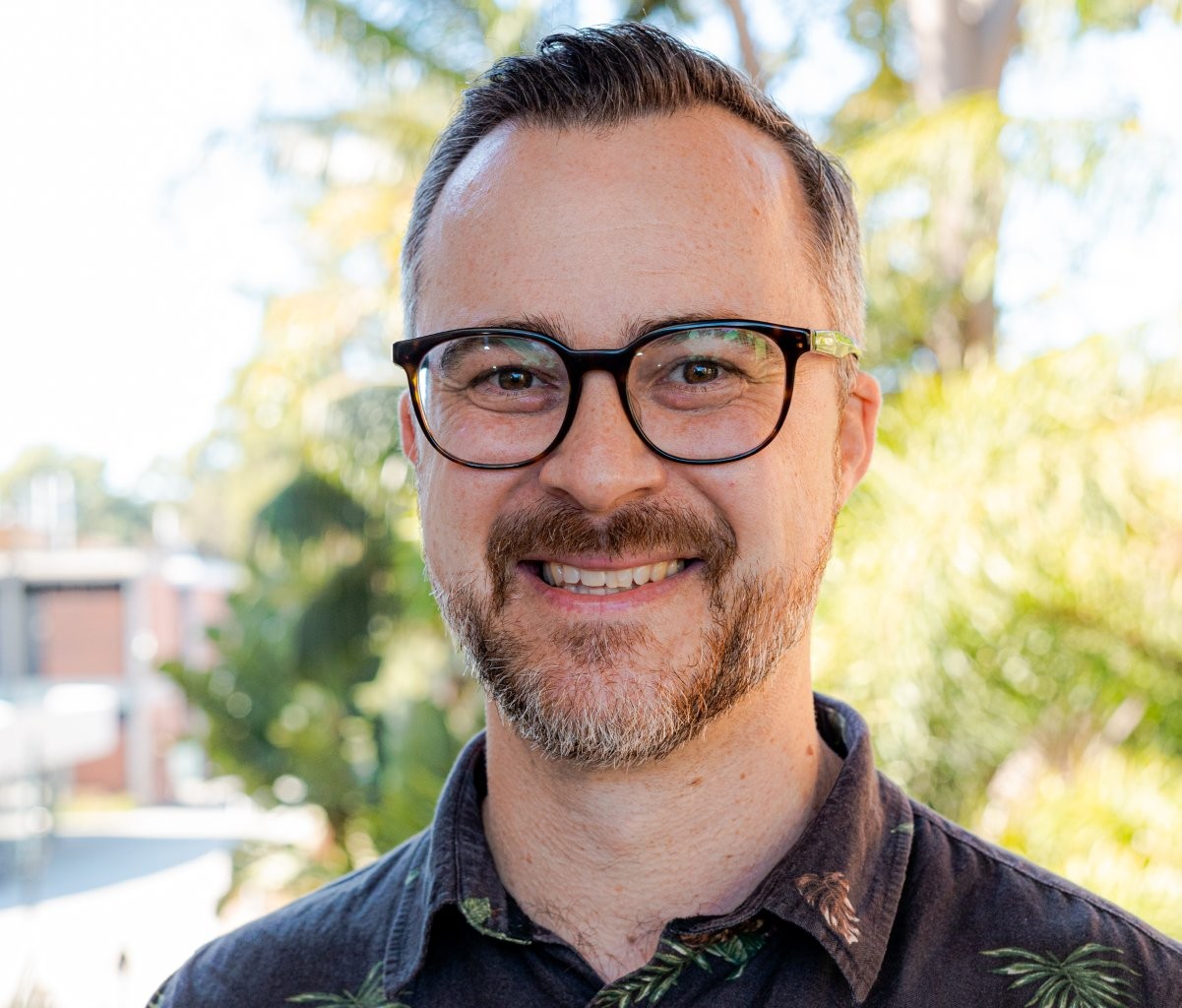
Dr Karnovsky says teachers are not just feeling burnt out, they’re navigating an emotionally complex profession that reflects broader societal issues.
Karnovsky’s research has included a deep dive into Reddit to understand teachers’ attitudes towards staff wellbeing initiatives.
He found widespread school culture was infested with ‘toxic positivity’ and programs that put the onus on individuals to make changes.
A longtime advocate for professional self-care strategies, he says as we enter 2026 there are some important ways teachers can avoid burnout.
“Language is so important here, and the differences between ‘demoralisation’ and ‘burnout’…
“It helps when we define it more clearly, the problem becomes less fuzzy and sharper, and so being able to accurately describe what we [as teachers] are feeling and saying, ‘how do we find the language to be very clear about what is going on right now?’
Often when he runs PD, the education expert says he’ll include something called ‘the emotion colour wheel’, “a really wonderful visual one-pager”.
“You can put it on an A3 in front of teachers, and say, ‘let’s start getting really specific about what we’re actually feeling right now’, and then ‘let’s get really specific about what’s causing those feelings’.
“Understanding that relationship, just the cause and effect that this particular demand of what we’re being asked this year. [For example], to do ‘X’ is making me feeling incredibly frustrated. And I feel frustrated because...
“… and so once teachers can give voice to that and they give voice to it with one another – in a way that they won’t feel like they’re being judged by leaders or managers or each other – that’s the first important step.”
Critically, Karnovsky says, this work shouldn’t happen part way through the year “when everything’s gotten really busy and everyone’s trying to just run on the treadmill and they’re feeling mostly like they’re behind all the time”.
It needs to happen now, he shares, to frame the beginning of the school year and then it’s continual work.
“And again, I just hope that schools might find the opportunity and individuals with one another, to say, ‘hey, let’s just have a cuppa and let’s just have a chat, maybe have this colour wheel in front of us and just be really honest’.”
This certainly can be a difficult thing to do, but it’s really that simple, he says.
“It’s just ‘let’s have a yarn and let’s be really honest with one another, because who else are we going to be honest with? We understand each other more than anyone else, or more than our partners and hubbies and wives and girlfriends and boyfriends’.
“Teachers understand teachers, and so we’ve got to give them permission and give them more strategies and ways that they can talk to each other honestly and sometimes vulnerably.”
Karnovsky says while individual wellbeing strategies to help manage individual stress might work for some, these do not really change any of the structural issues that are going on.
Increasingly, teachers might find it frustrating that they’re being asked to do these things or that this approach contributes to toxic positivity in their workplace, he adds.
“I’m looking at developing some asynchronous modules tied with the AITSL requirement for teachers to do ongoing professional development through Curtin.
“I see that as a possible way to leverage the work that I’ve done in the book and elsewhere to at least get some of that stuff and this rethinking wellbeing, which I broadly badge it as, into the hands of just individual teachers and perhaps teacher leaders and middle managers, heads of learning area, associate principals, to pick this stuff up.”
This year Karnovsky will once again be researching Reddit, but will be talking to people who are active in the Australian teachers sub-Reddit community.
“This time it’s not so much using their posts and data, but more asking them what brings them to those online spaces in relation to their work and what do they get from it? How do they feel about their work, whether positive or negative or otherwise, and what is that kind of space doing for them?
“It’s very early days … but it’s a really fascinating space in the profession – the whole people feeling silenced and unable to kind of speak out about some of the issues that might be going on in their individual school or the education department, particularly public school teachers.”