
So says former school leader Geoffrey Riordan, emeritus professor at the University of Canberra, who has sized up the data and is now taking a very public stand on the issue.
Enough is enough, Riordan implores.
“It’s got to a point now where we have to do something dramatic. We really need to take it seriously,” he tells EducationHQ.
“I think that [school safety] should be part of the national conversation, in a similar way to housing affordability and the cost-of-living crisis is. Because it’s a really big issue.”
Last week Riordan penned an opinion article outlining the scale of the problem and calling for change at the policy level.
He says the public reaction has been “quite surprising”.
“It’s been accessed over 250,000 times. So, the news.com.au folks sent me a bit of information about it, and it’s been published on five different platforms, and I’m getting emails and LinkedIn messages and all sorts of things.
“I think it struck a bit of a chord.”
The expert says you only have to look at our national statistics from large-scale international assessments like PISA and TIMSS, as well as the annual findings from ACU’s Australian Principal Occupational Health, Safety and Wellbeing Survey and localised surveys carried out by teacher unions, to see the horrifying trend around school safety that’s building.
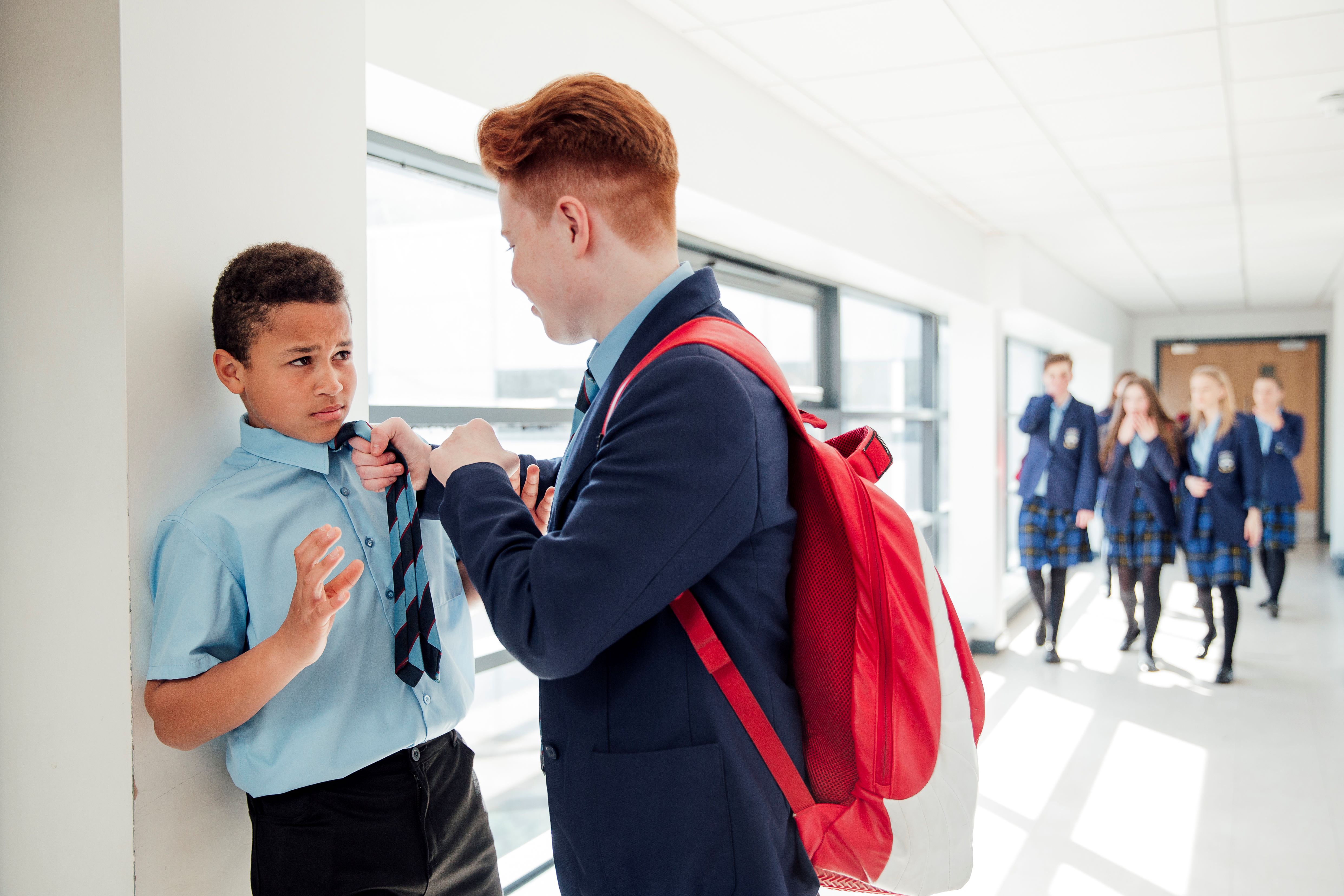
Classroom disruption and bullying are worsening, while recent research has found homeschooling numbers in NSW have surged, Riordan adds. Not to mention the significant uptick in work-related violence incidents in schools reported by Safe Work Australia.
“The thing that finally kicked in for me was reading those horrific accounts of the two men who worked in early childhood settings sexually assaulting children – that made me feel sick to the stomach.
“I first read that nearly two months ago and since then, nearly every day, I’ve read and written about this because I think, ‘That’s it. What we’ve been doing isn’t working’.
“If little children can’t be safe from predators like that, if teachers and principals are being physically assaulted, if parents are so desperate that they’re pulling kids out of school and having to consider home schooling because of bullying, we’ve got a problem.”
Within classrooms, Riordan suggests an ‘ideology around inclusion’, combined with a lack of proper resourcing, has ultimately created an untenable situation for many teachers.
“If you’re going to take kids who might previously have been in specialist settings because they’ve got high needs and put them into classrooms and expect them to get a really good educational outcome as well as the other kids in the class, you’re going to have to put a lot of resources into that school.
“What I think has happened is they’ve mainstreamed and integrated but they haven’t necessarily resourced, and by ‘they’ I mean governments and school systems – and as a result, teachers are being asked to deal with a range of behavioural and learning differences…”
While most teachers are well-equipped to handle one or two particularly challenging and/or high-needs students in a given class, Riordan says, there does come a tipping point at which “everyone’s education gets compromised”.
“So, I think the ideology is inclusion, the thinking is that we need teachers to be so ultra-professional that they can manage a wide range of those sort of behaviours in a classroom without compromising the quality of education outcomes for any of the children there – and that’s an ideology that I challenge.
“I just don’t think that’s happening.”
Many of the student behaviour issues schools are dealing with have nothing to do with the quality of instruction or curriculum in place, but yet policymakers are quick to point the finger at teacher education faculties and teachers, Riordan argues.
“It means they haven’t got to accept responsibility that they’ve got to manage [what is a wider societal problem],” he says.
“We’re not dealing with a single phenomenon. We’re dealing with multiple phenomenon’s, and some of these behaviours and issues … have got nothing to do with the school or the curriculum. They’ve got to do with ... the child or the family or the society.”
Riordan poses a question: in what world can teachers be prepared to manage students who cast rape jokes and act out sexually explicit gestures in the classroom?
“That isn’t a function of poor teaching. The explanation to that is beyond pedagogy, and that’s why I take exception with it,” he says.
Riordan is calling for a closer look at the legal and regulatory frameworks that principals have to follow when responding to incidences of bullying, violence and abuse.
“From the many, many schools I’ve been in over my career, from the many, many teachers I know, I have concluded that there is underreporting of abuse and assaults toward teachers and principals.
“And that in fact, principals are under pressure, and teachers are under pressure to calm things down and not to escalate, because they want to create positive and harmonious communities and schools,” the expert says.
A good first step would be asking school leaders and teachers exactly what supports they need to better tackle the school violence scene, he adds.
“And taking that seriously…
“And I think the overall theme of [my argument is], it has to be a response that’s educative because they’re schools. They’re not hospitals. They’re not prisons. They’re not specialist centres.
“So, we need an educative response to this challenge.”