Mandatory cultural competency standards for teachers will also be introduced, and targets will be set for school libraries to audit and decolonise their collections by “removing outdated or racist materials”.
These are some of the changes recommended by the Yoorrook Justice Commission, the country’s first formal truth-telling inquiry into “historic and ongoing systemic injustices perpetrated against First Peoples through colonisation, led by First Peoples”.
Legislation passed in state parliament yesterday established the treaty and set up the First Peoples’ Assembly as a permanent authority, named Gellung Warl, which will be consulted on laws and policies affecting Indigenous communities and act as a voice to parliament.
The inquiry’s recommendations for education aim to address “persistent issues of racism, lack of cultural safety, inadequate curriculum materials, and limitations in workforce capability” it found persisting across the state’s school system.
“The Victorian school curriculum does not tell the full story of Victoria’s history, and many educators remain ill-equipped to teach compulsory curriculum to the required standard,” Yoorrook’s education report reads.
“First Peoples’ school experiences in Victoria are also negatively impacted by the critical under-representation of First Peoples educators, leaders and public servants in the education system.”
The Commission is calling on the VCAA to assess the capacity of all teachers to deliver First Peoples’ content and to teach First Nations students, in line with the Professional Standards, which must also be reviewed.
Professor Tom Calma from the University of Sydney, a Kungarakan elder and renowned human rights campaigner, told ABC News he backed Victoria’s process as a ‘blueprint for other states and territories’, including on how Indigenous history is covered in classrooms.
“We can have truth-telling that’s able to be understood from an Aboriginal and Torres Strait Islander perspective, instead of having our history being edited and vetted out by non-Indigenous Australians,” he told the news publisher.
“We need to be able to tell it as it happened.”
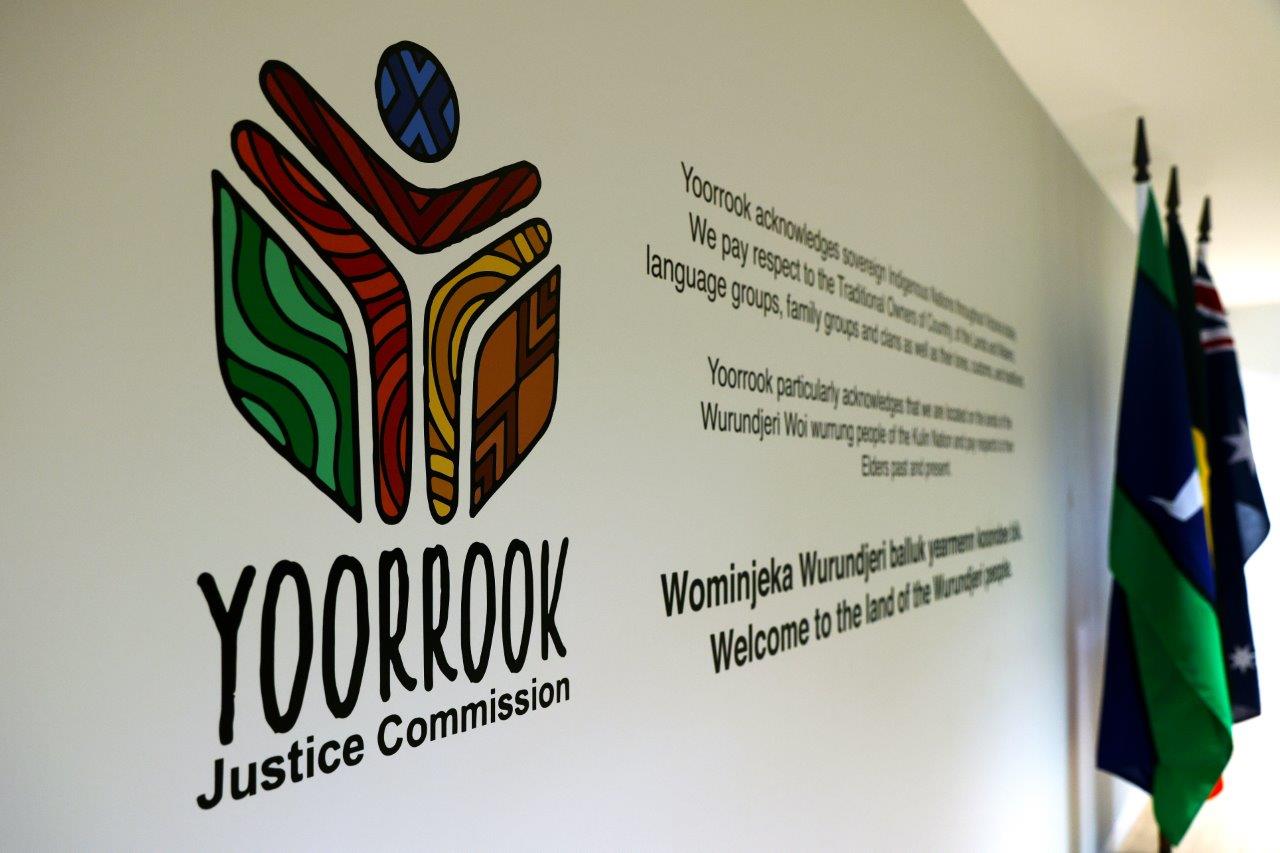
The Yoorrook Justice Commission’s final report calls for urgent reforms to education in Victoria. The AEU Victorian Branch says it “must be listened to, heard, and acted upon”.
The Department of Education, the Commission said, must also develop a distinct policy on school exclusions for Indigenous students, covering attendance, classroom exclusion, suspensions, modified timetables, and expulsions.
This policy must “ensure a higher standard of consideration for the behavioural and cognitive needs of First Nations students with disabilities in expulsion decisions”.
Yoorrook has shared some of the responses it received as part of its inquiry into the schooling and tertiary education systems in Victoria.
Dr Matthew Keynes from the University of Melbourne told the inquiry that schooling was “absolutely used … to further the aims of settler colonialism, which included at its heart dispossession of First Peoples from their land…’
Keynes added that schooling legitimated this dispossession in many ways, but chiefly by “justifying the myth of terra nullius and teaching the white civilisation was superior, and that First Peoples’ culture was disappearing”.
Aunty Geraldine Atkinson said historical colonial practices that were in place at the founding of the state’s education system had left a ‘long-lasting legacy’ on Koori culture and its social structures.
“And, unfortunately, we continue to see the remnants of these practices from episodes of racism, exclusion, segregation, that placed our Koori learners at an unfair disadvantage,” she told the inquiry.
Associate Professor Nikki Moodie, from the University of Melbourne, said the school system was “never designed to serve us”.
“…It was designed to be part of the system that broke up families, that made people feel worthless and not included, that created a master narrative of the way that white Australians should think about the world and there’s no place for us in that system and there never was,” Moodie argued.
The in-principle treaty agreement follows 10 months of negotiations between the Government and First Peoples’ Assembly of Victoria.
Premier Jacinta Allan said current practices and systems were not working to improve the lives of Aboriginal people, noting stagnating and worsening Closing the Gap outcomes.
None of the changes are about “taking anything away from anyone”, she emphasised.
“It’s simply about improving services, improving the lives of Aboriginal Victorians,” Allan told reporters.
The treaty framework is expected to cost just over $300 million from 2020 to 2028.
Australia is the only Commonwealth nation that doesn’t have a treaty with its Indigenous people, assembly co-chair Rueben Berg said.
“This will reset the relationship between First Peoples and government,” he said.
A future apology to the state’s first inhabitants in parliament was agreed to, with the wording to be settled at a later date.
Yoorrook’s final reports also called for redress for post-colonisation pain and suffering in the form of restitution of traditional land, monetary compensation, tax relief or other financial benefits.
Treaty would ensure the voices of people who spoke at the truth-telling inquiry were acted on, its former commissioner Travis Lovett said.
“We have seen too many reports in the past gather dust on shelves, with little change for our people,” he said.
“This time it will be different.”
A majority of MPs in both houses of parliament must back the legislation for the treaty’s terms to become a reality.
The premier cautioned critics not to resort to the same “deliberate misinformation” and “outright lies” that were peddled during the 2023 referendum to constitutionally enshrine an Indigenous voice to federal parliament.
The Victorian opposition withdrew its support for a statewide treaty in January 2024.
“Under a government I lead, I won’t need a treaty to consult with those (Aboriginal) communities,” Liberal leader Brad Battin said.
Battin told ABC News Breakfast he wanted to see funding going straight to services rather than treaty.
“You [the Allan Government] could have met with Indigenous groups with or without a treaty and put funding into those programs and organisations. They’ve been desperately calling for that for a long time,” he said.
“We’ll see if we can have a genuine alternative [to treaty] working with community groups that the Indigenous community are invested in and speaking to.”
13YARN 13 92 76
Lifeline 13 11 14