

Coming into effect from the start of Term 3 this year, the changes will grant principals the authority to act on threatening or abusive student behaviour that occurs off-site, bringing Victoria into line with NSW and South Australia.
The new measures build on the work of the Education and Training Reform Amendment (Protection of School Communities) Bill 2021, and are said to bolster the Government’s existing school safety measures, including a blanket mobile phone ban in schools implemented in 2020, and the provision of Safe Socials resources for students and their families.
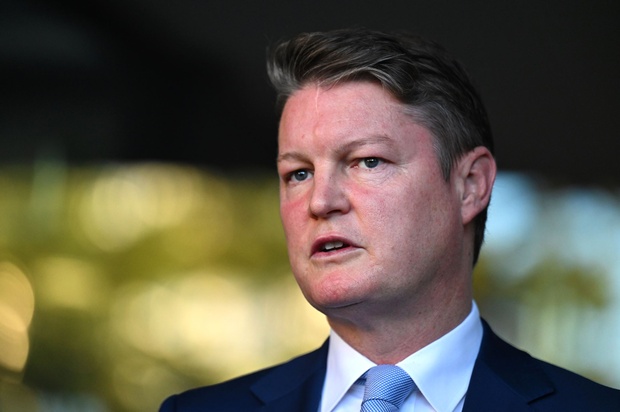
Education Minister Ben Carroll said the new powers given to school leaders convey a direct message to students.
“In Victoria, community safety comes first.
“These strengthened powers send a clear message that harmful behaviour outside of school or online has consequences,” he said.
“The safety of students, teachers and school staff is our top priority – we’re investing in programs that foster more respectful schools and acting to protect school communities.
“This builds on our nation-leading ban on mobile phones in schools and our support of a social media ban for kids – keeping kids safe in the classroom and online.”
The Government maintains principals will draw upon their new authority ‘only when necessary’ to protect their school community.
“With these expanded powers, the Labor Government is putting in place the appropriate framework to ensure school leaders have the authorisation to act where necessary,” a statement announcing the new measures adds.
Only principals and acting principals in Victorian public schools have the authority to make the final decision to suspend a student – this authority cannot be delegated.
Principals must also seek approval from their regional director in order to suspend a student for more than five consecutive days or more than 15 days in total in a school year.
Currently, a suspension cannot be used in incidents between students that occur outside of school hours, but can be applied in incidents that occur when commuting to school or when the student is engaged in a school activity that takes place off-campus.
The Government’s current school cyberbullying policy stipulates:
“The impact of cyberbullying (and other behaviours) outside of school hours or off school premises on students is acknowledged, however, if the behaviour does not occur at school or a school activity or when travelling to or from school or school activity, suspension is not an available recourse.
“If incidents outside of school hours are connected to behaviour that does meet the grounds and location requirements for suspension, this external behaviour may be considered when determining the response to an in-school incident.”
The updated suspension rules follow the State Government’s $10.4 million investment to expand the School-wide Positive Behaviour Support program, a framework designed to help schools to improve students’ social, emotional, behavioural and academic outcomes.
The program uses a tiered intervention framework which invests in:
- primary prevention (tier 1): supports for all students, staff and settings
- secondary prevention (tier 2): additional specialised group systems for students with at-risk behaviour
- tertiary prevention (tier 3): specialised, individualised systems for students with high-risk behaviour, provided in addition to primary and secondary prevention.
Under the model, schools develop a ‘common philosophy and purpose’ around behaviour, where staff and students use a shared language to discuss it.
“School philosophy emphasises the need to teach appropriate behaviour much like academic learning,” the Department’s information page reads.
Meanwhile, a VAGO audit released last week found there are ‘weaknesess’ in how the Victorian education department maintains a safe working environment for school staff in the face of harmful student behaviours.
“The department does not record or report incident numbers completely. This means that it does not have a clear overall picture of work-related violence resulting from student behaviour,” the report states.
“The department has policies and procedures for staff to manage work-related violence incidents. But it does not comprehensively review its policies or systematically collect lessons learned from how it responds to incidents."
The audit found these oversights limit the department’s ability to “take the reasonable steps required” to ensure staff are protected from harmful student behaviour.
Incidents of work-related violence resulting from students are a ‘significant’ OHS issue for the department, and make up a growing percentage of all OHS incidents, the audit flagged.