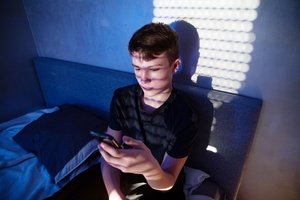
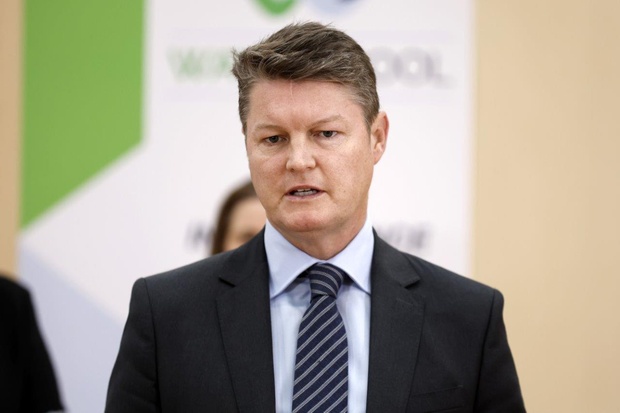
Deputy Premier and Minister for Education Ben Carroll announced the new ScrollSafe resources, designed to help secondary school students look after their mental health and stay safe online, on Friday and they’ll soon be made available for schools across the state.
Developed by Orygen, the resources build on existing wellbeing and digital literacy programs, are optional for schools, and don’t create any new requirements.
The resources assist young people stay in control of their time online and make sure it is supporting their mental health.
“We’re making sure every young person has the tools to navigate social media safety and confidently, with support from their teachers, families and school community,” Carroll said in a statement.
“Our record investment in student mental health is delivering real results and we are supporting a new generation of mentally healthy students that are also great learning students.”
A dedicated online hub will give students simple, practical advice through a 10 tips guide, supported by a student booklet, take-home flyer and digital wellbeing plan to help them make positive choices.
The resources will also aid teachers in having conversations with students about social media and youth mental health.
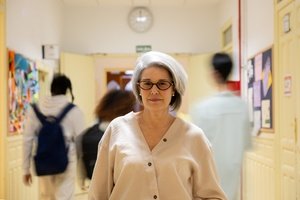
Professor Mary Ryan, Dean of the Faculty of Education at Monash University says the resources recognise that supporting young people’s wellbeing requires collaboration across schools, families and the wider community.
Ryan is an internationally recognised education leader and researcher with major contributions in teacher education, reflexive learning, writing pedagogy, and the design of innovative programs that enhance education quality and equity, including the APTT initiative for staffing hard-to-staff schools.
“By giving teachers and parents practical tools grounded in evidence, we can help young people build the confidence and critical skills they need to navigate an increasingly complex digital world,” Ryan says.
“Initiatives like ScrollSafe reflect our shared commitment to creating safer, more inclusive learning environments where every child feels supported to thrive, both online and offline.”
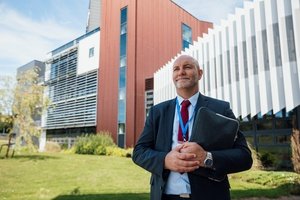
Michael Phillips, Professor of Digital Transformation in the Faculty of Education, and Co-Director of the Monash Virtual School, says the release of the ScrollSafe resources marks a constructive step in supporting young people’s mental health at school and online.
Professor Phillips’ work focuses on digital transformation in education, focusing on how technology can enhance teaching and learning, empower educators, and create more inclusive and meaningful learning experiences.
“As social media and digital platforms continue to play a role in students’ lives, it is encouraging to see practical, evidence-informed tools being made available to help them navigate these spaces with greater confidence and awareness,” she shares.
“Providing clear guidance for students, alongside support for teachers, parents and carers, strengthens the collective effort needed to foster safe and healthy online environments.”
Phillips believes initiatives like ScrollSafe sit within a broader conversation about the relationship between young people, technology and wellbeing.
“While digital spaces can present risks, especially for those already facing social or economic disadvantage, they can also offer significant opportunities.
“For many marginalised young people, educational technologies can create pathways to connection, flexible learning, culturally relevant resources, and specialised support that may not always be accessible offline.
“When designed and used thoughtfully, these tools can help reduce barriers to participation and give students more agency in their learning and wellbeing.”
The Government’s continued investment in programs such as Mental Health in Primary Schools, Phillips says, shows a recognition that mental health support must begin early and be reinforced consistently.
The Mental Health in Primary Schools program – delivered in partnership with the Murdoch Children’s Research Institute and the University of Melbourne – is helping children build stronger emotional skills, feel more connected to schools, attend more regularly and develop better social skills.
The program has reduced mental health stigma among school staff and families, with the final group of schools will be welcomed into the Mental Health in Primary Schools program at the start of 2026.
“Embedding digital literacy and wellbeing initiatives within this larger framework ensures schools are better equipped to respond to the evolving needs of their students, without placing additional burdens on teachers,” Phillips says.
“While there is still more work to do to ensure all young people benefit equally from digital learning environments, the ScrollSafe resources represent a positive step toward a balanced approach – one that acknowledges the challenges of the online world while also recognising the potential of technology to support inclusion, connection and improved mental health outcomes.”