

This is with the exception of its new CEO Andrew Smith, who was appointed earlier this year.
Dr Yehudi Blacher PSM’s Stage Two report is a sweeping review of the VCAA’s structure, operations, culture and capability.
The review followed the botching of VCE exams in 2024, where the VCAA published sample cover pages that contained hidden text in seemingly blank sections, which, when copied into another document, revealed a series of questions and answers identical or very similar to those in the final exams.
Investigations found this occurred in 65 of the 116 VCE examinations that year. It followed errors in the 2022 mathematics exams and in the 2023 mathematics and chemistry exams.
The VCAA designs and administers curriculum and assessment for more than one million Victorian students across 2300 schools – or more than one hundred VCE examinations to more than 70,000 students.
In line with Blacher’s recommendations, the VCAA will continue as an independent statutory authority, with the board, according to the Victorian Government, “resetting its priorities and strengthening its focus on giving Victorian students, parents and teachers the confidence they deserve”.
Deputy Premier and Minister for Education Ben Carroll said Victorian students deserve a world-class education, and “these actions will make sure the VCAA is fit to deliver that”.
“This root-and-branch review of the VCAA has left no stone unturned in identifying the cause of last year’s mistakes and we’re wasting no time getting on with fixing them,” he said in a statement.
“Dr Blacher and his team have provided us with a roadmap for reform which, overseen by new CEO Andrew Smith, will deliver a stronger, more accountable, and more robust VCAA for Victorian students for years to come.”
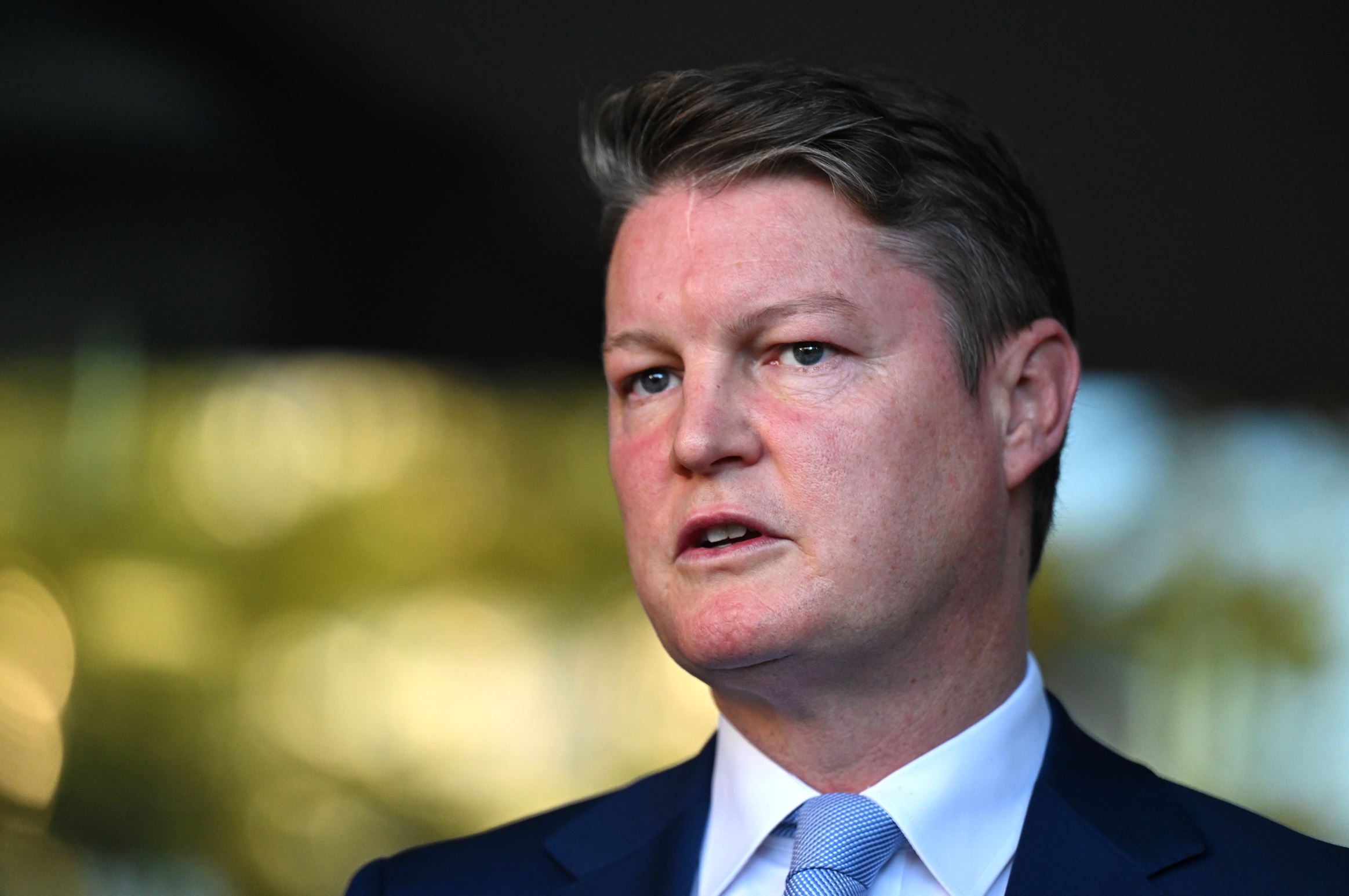 “Students deserve better. It is clear to me that some students have been let down as a result of these errors and that is completely unacceptable,” Education Minister Ben Carroll said after last year's botched exams.
Smith, who was until this year CEO of Education Services Australia (ESA) for eight years, said he welcomed the report and that it provides “a very clear plan for the authority going forward”.
“I understand that students and schools feel they have been let down by the VCAA. The last thing students need around their exams is additional stress,” he said.
“I want to assure everyone studying their VCE this year that the VCAA is fully focused on delivering a successful 2025 exam period and students, schools and families can have every confidence we will do just that.”
Speaking to EducationHQ in November last year, ACU academic Dr Steven Lewis said teachers and schools across the state had been deeply affected by the exams debacle, along with students, and that it had been a real “slap in the face” for them.
“I think there’s probably a more systemic process issue and potentially an underfunding, under-resourcing, under-staffing issue, which is creating opportunities for such things to occur,” he said at the time.
The authority’s ‘governance processes’ were clearly of concern, Lewis added.
“So, how you’re overseeing the creation of tests, the supervision of and checking of things before they’re released and made public.
“And then equally how resourcing is being made available to the various people and organisations within the VCAA to enable them to do their job effectively.”
He argued that the Victorian public had a right to expect that their exam system is of high quality.
The VCAA’s CEO at the time of the 2024 gaffe, Kylie White, resigned following the fiasco and its board was later fired.
The new board includes members with strong experience in education, governance, finance, law and HR and will lead improvements to governance, accountability and financial management.
To further strengthen oversight, the Minister for Education will issue a statement of expectations to the VCAA every two years.
Blacher said in preparing the report, extensive discussions and workshops were conducted with staff in the VCAA and the Department of Education.
“We also met with key stakeholder groups and received 180 written submissions from current and former VCAA staff, stakeholder organisations, teachers and students,” he said.
“The overwhelming sentiment was one of sadness and disappointment that the VCAA was not functioning at the level they would like, and a willingness to assist in making it operate more efficiently and effectively in the future. That sentiment underpins this report.”
Blacher made further recommendations to continue to improve the VCAA’s policies and procedures, and to reset external relationships to ensure better two-way communication with schools, staff and students.
Smith will oversee implementation of the report’s recommendations, while prioritising the successful delivery of the 2025 exams and preparations for the 2026 exams.
The report recognises progress already made this year and recommends an Independent Monitor remains in place for at least 12 months to protect the integrity of the 2026 exams.
“The VCAA lacks many of the foundational structures, governance, processes, technology and capabilities that are commonplace in modern organisations,” Blacher said in the review.
“These deficiencies have manifested particularly over the past five years.”
Stage One’s eight recommendations – focused on safeguarding the 2025 VCE exams – are on track to be delivered for this year’s exams, Blacher said.
Following Stage One of the review, the VCAA Board was replaced with an interim board led by Department of Education Secretary Tony Bates, which will oversee the 2025 exams and future governance.
Both Stage One and Stage Two of the Blacher Review are available here.