Drawing on surveys of nearly 400 disabled students and parents or caregivers conducted by Children and Young People with Disability Australia (CYDA), the University of Melbourne and the University of New South Wales, the report – titled Disillusion and Delay – describes ongoing systemic failures across Australia’s education system, including widespread bullying and exclusion, ineffective support plans, under-trained teachers, and a lack of inclusive culture.
“Students with disability, and their families, are telling us the same thing they’ve said for years, and yet nothing has changed,” CYDA CEO Skye Kakoschke-Moore says.
“We continue to hear stories of young people who have been savagely bullied or excluded, unfairly suspended, physically restrained, or forced out of school entirely because the system failed to support them.
“These frequent incidents are symptoms of a system that wasn’t designed with inclusion in mind and remains so despite the path forward being clear.”
According to the report, 73 per cent of disabled students were bullied in 2024, while three-in-five parents said their child had been subjected to physical, psychological, social, or cyberbullying.
A majority of students (61 per cent) said they weren’t involved in creating the Individual Education Plans (IEPs) schools are supposed to develop to support them, with many parents describing their IEPs as superficial and rarely put into practice.
University of Melbourne researcher Dr Catherine Smith says the message for governments is clear.
“This is just more evidence for why governments need to take the recommendations from the Disability Royal Commission seriously,” Smith says.
“There are clear, evidence-informed strategies – identified both by the royal commission and by the voices of parents and young people in these reports – that can be implemented now to address persistent barriers in inclusion.
“We hope this brings renewed focus to the practical work that must be done to support schools and teachers in making inclusive education a lived reality for all students.”
The Disability Royal Commission echoed the sector’s call for a National Roadmap for Inclusive Education and the phasing out of segregated education when it handed down its recommendations in September 2023.
It built on three decades of research showing all students – disabled and non-disabled alike – experience stronger academic, social, and developmental outcomes when they can learn and grow together.
But to date, no clear timelines have been implemented, and government investment continues to prioritise segregated settings over reforms to make mainstream schools genuinely inclusive.
In late June, the Queensland Government ignored warnings from families, advocates, educators, and human rights experts by announcing plans to build build six new special schools in the state.
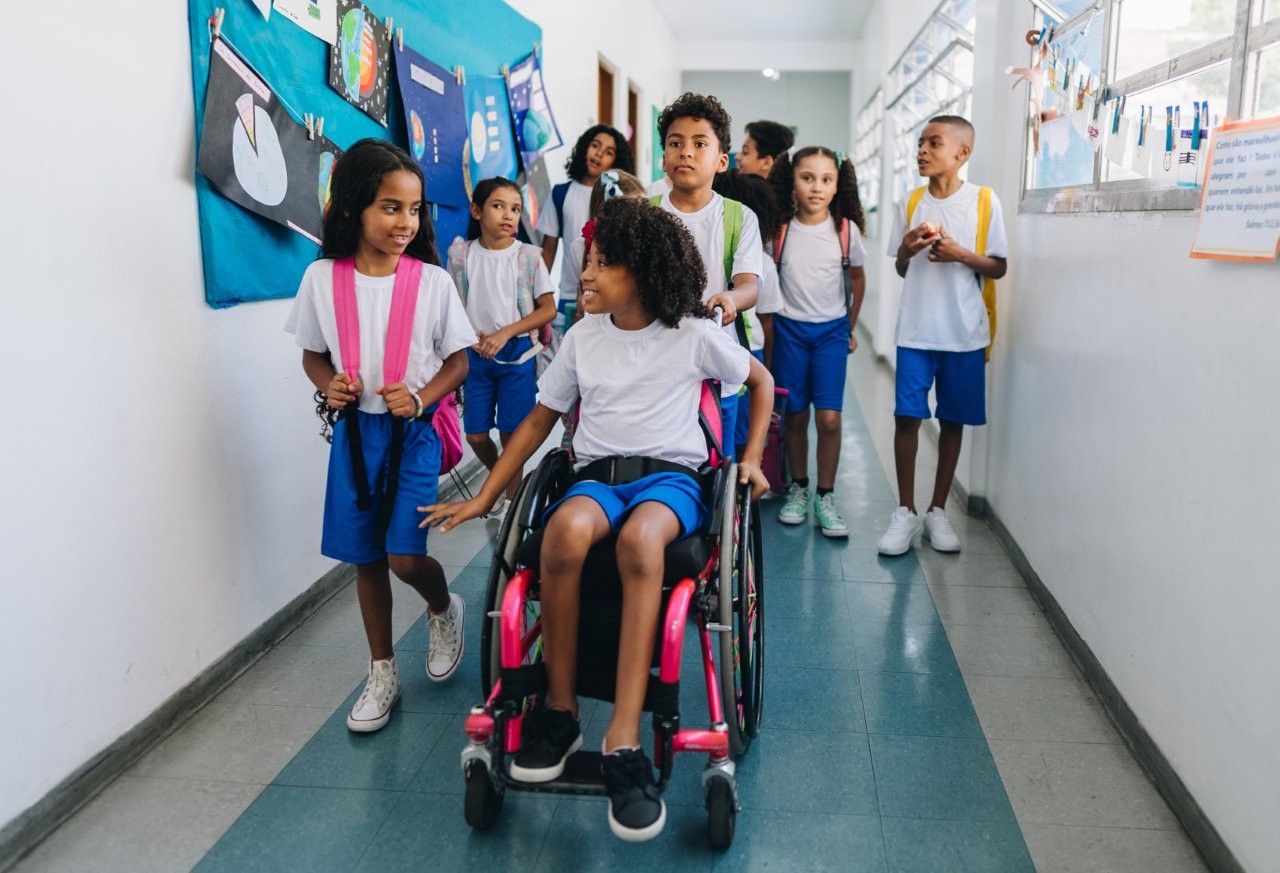
To date, no clear timelines have been implemented for a National Roadmap for Inclusive Education, and government investment continues to prioritise segregated settings over reforms to make mainstream schools genuinely inclusive.
Australia’s Disability Discrimination Commissioner Rosemary Kayess wrote to Premier David Crisafulli last month to raise her ‘deep concerns’ with the new plan.
“The investment to build new segregated schools goes directly against the Queensland Government’s commitment to inclusive education, the principles of the National Roadmap for Inclusive Education and a key recommendation of the recent Disability Royal Commission,” Kayess said in late July.
“It is deeply concerning that the Government is blatantly ignoring all the evidence and expert advice in relation to the significant benefits of inclusive education for people with disability.”
Kakoschke-Moore says future generations cannot afford for governments to go backwards on this.
“Being serious about inclusion means listening to the expert advice and taking bold, decisive action. The research is there, and now we need the political will,” the former politician says.
Since 2010, CYDA has conducted education surveys every two years to get a sense of what school is like for disabled students and their families or caregivers.
This year’s findings differ little from its 2023 report, although some measures – like prevalence of bullying – have worsened.
CYDA is calling for urgent national action, including the development of a roadmap for Inclusive Education, consistent IEP standards, and stronger training and support for teachers.
Key findings from the Disillusion and Delay report include:
1. Bullying and exclusion are the norm
- Nearly three in four students with disability (73 per cent) reported being bullied in 2024, while 72 per cent said they had been excluded from activities and events
- Three in five parents said their child was subjected to physical, psychological, social, or cyber bullying – or had been excluded (57 per cent)
2. Support plans are failing to meaningfully deliver
- Fewer than two in five students (39 per cent) were involved in shaping their Individual Education Plan (IEP) in 2024
- 72 per cent of parents or caregivers said their child had an IEP, but many described them as lacking personalisation or effective execution in the classroom
3. Teachers lack training and time
- Nearly half of students felt teachers and staff lacked adequate knowledge and training to support them
- 26 per cent felt there was a gap in knowledge, understanding and relevant skills, undermining both student outcomes and educators’ confidence and leading to reactive rather than proactive supports
- More than one in four (26 per cent) of parents said the same
4. A lack of supportive culture
- Only about a third of students (36 per cent) felt their school embraced inclusivity
- Roughly one in two parents or caregivers (52 per cent) felt their child was not made to feel welcome at school
To access the full report and survey analysis, click here.