Not long after she became a financial supporter of research into cochlear implants, made a significant donation to the University of Melbourne for the establishment of a chair in audiology, and began a passionate pursuit of enhancing educational opportunities for students who are deaf and hard of hearing to empower them to reach their full potential.
A former student at Strathcona Girls Grammar School in Melbourne’s inner east, a chance meeting with then principal Ruth Bunyan many years later in the early ‘90s initiated what has been a transformational partnership over decades that has seen the school’s commitment to inclusivity ensure that every student can fully engage in learning, regardless of hearing ability.
Education for people who are deaf or hard of hearing has come a long way since deaf Scottish migrant Thomas Pattison opened Australia’s first school for deaf children in Sydney in 1860 and as part of Strathcona’s centenary celebrations last year, new principal Lorna Beegan and her leadership team determined it was the perfect time to take the school’s commitment to its deaf and hard of hearing students to a whole another level of excellence.
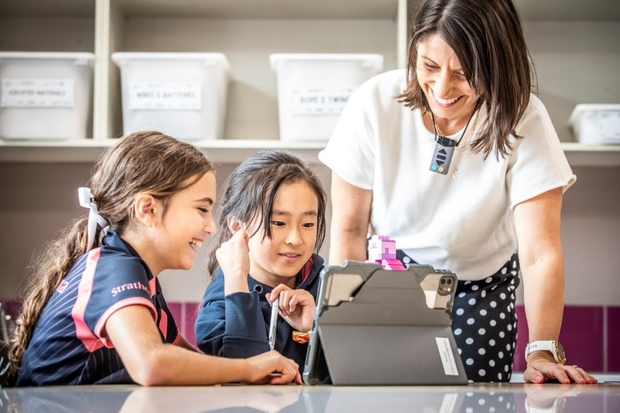
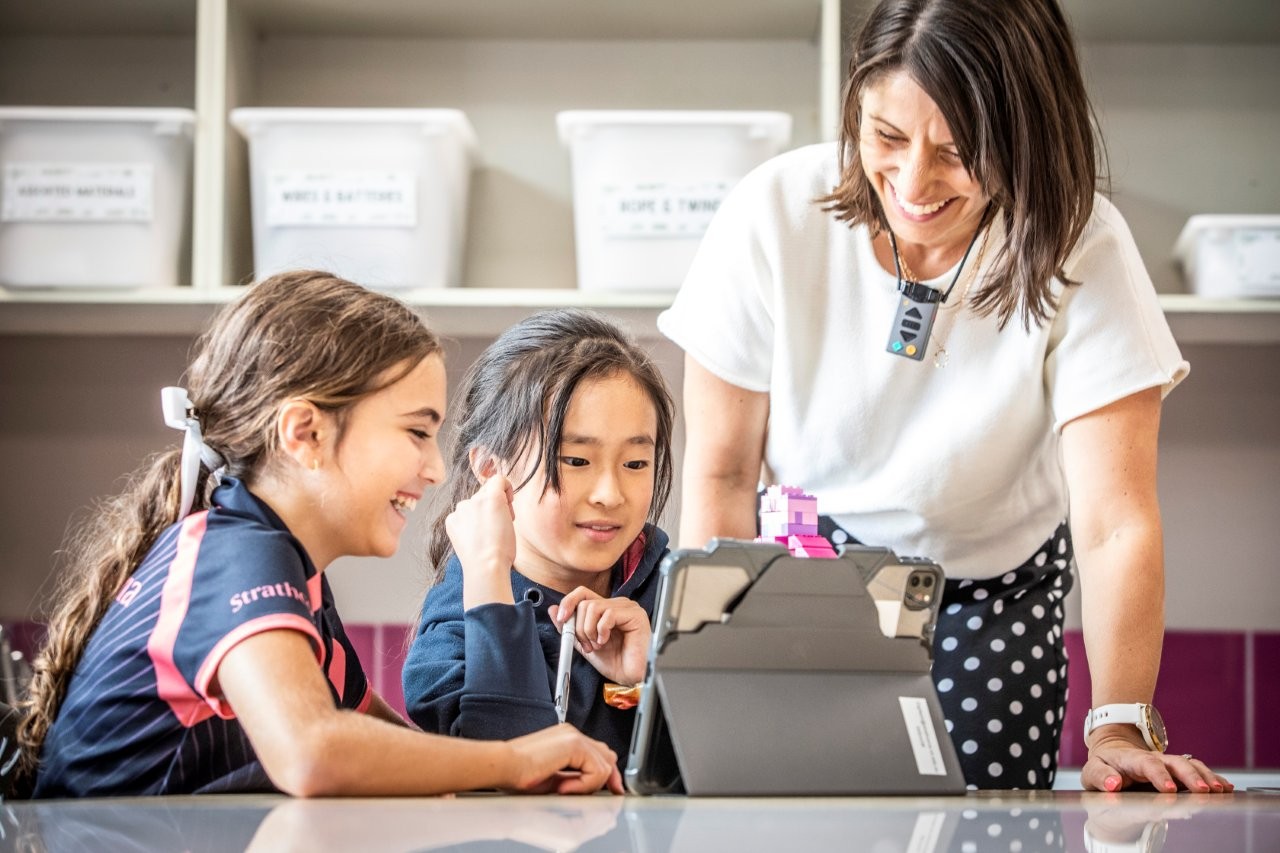
Upgrading its long-time Hearing Support Program, and funded by a successful grant through the Beth MacLaren Smallwood Foundation, Strathcona, in conjunction with Word of Mouth Technology, installed Frontrow Elevate Soundfield Systems, a cutting-edge hearing augmentation and speech enhancement system, across every classroom from Prep to Year 12, with additional integration in large collaborative learning spaces.
The investment has significantly enhanced the 800-student school’s capacity to support students with hearing loss and includes ceiling-mounted amplifiers, wireless microphones for both teachers and students, and direct connectivity to personal hearing devices via Roger technology.
Audio is also amplified via classroom speakers, creating a more inclusive learning environment that benefits all students.
The system distributes sound evenly throughout the classroom, helping students hear clearly regardless of where they’re seated – especially during group discussions or when teachers move around the room It reduces listening fatigue, improves engagement, and minimises misunderstandings that can arise from missed instructions.
The upgrade sets a new benchmark for accessibility in education.
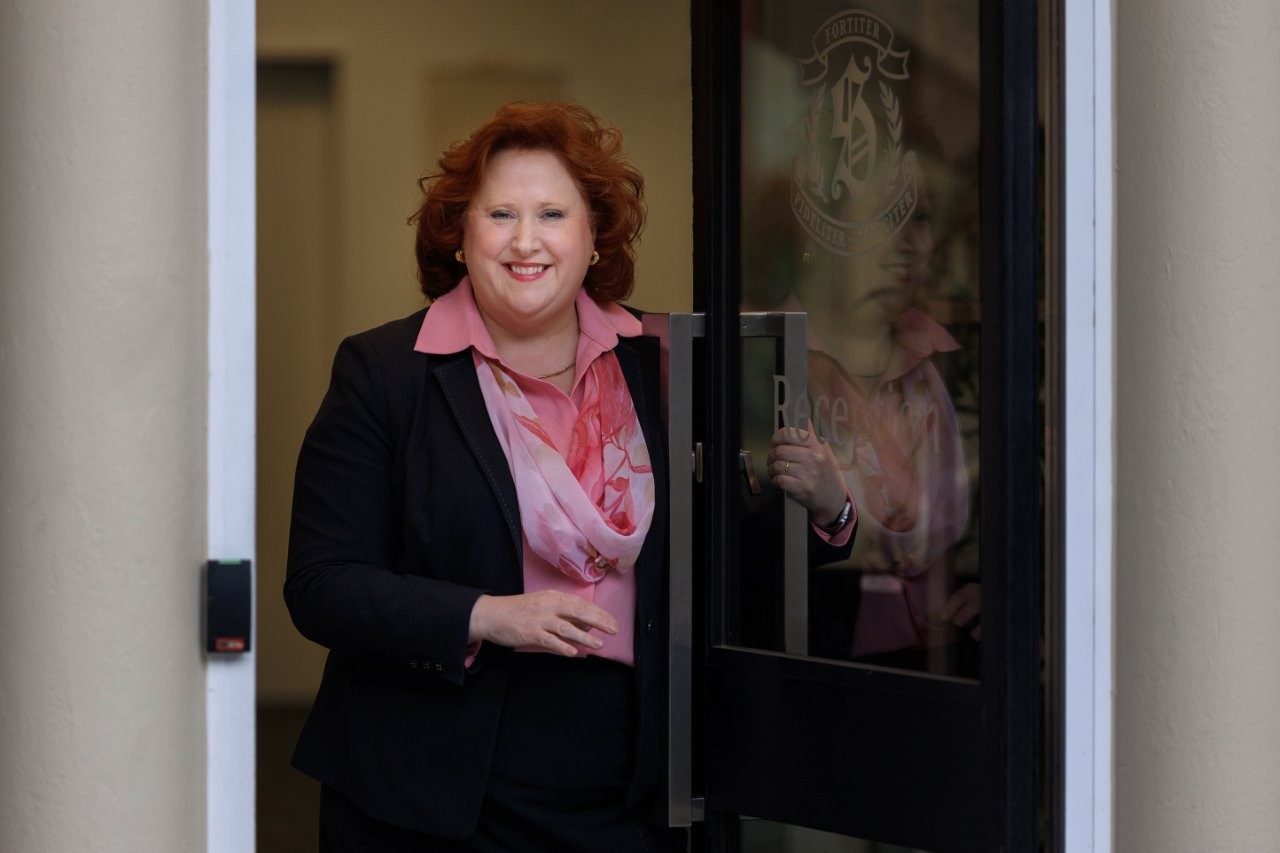
“True inclusion means designing for difference, not exception,” principal Lorna Beegan says. “This upgrade ensures all students, regardless of how they hear, have access to the full richness of classroom learning and discussion.” PHOTO: Strathcona Girls Grammar
“Beth was aware of what hearing loss meant socially, that personally you’re so isolated. As a 40-year-old with that emotional intelligence and awareness, she could see that that will send your anxiety off the chart because you don’t feel safe, you don’t know what people are talking about,” Beegan shares.
“If you don’t have the support network, then students are going to find literacy really difficult, you’re not going to be able to interact with your peers or have class discussion.
“And friendships will be really hard because you misread certain things or you don’t respond when somebody’s calling you, and you think, ‘oh, that person’s just not that interested in me, I’m going to move away’, especially when you’re in Year 1 or 2, or even when you’re in high school.”
MacLaren Smallwood was acutely aware that hearing loss affects the whole person, the whole learner – and it’s why, in collaboration with Bunyan, they started the Foundation.
“It was to really support students who needed support for their hearing loss, but also to ensure that they had the opportunities of coming to an inclusive, warm, friendly, safe, all-female environment for students,” Beegan says.
A 2021 national systematic review suggested that 3.4 per cent to 12.8 per cent of Australian primary school children have some degree of hearing loss, a rate significantly higher than in other high-income countries.
Schools’ effectiveness varies due to factors like classroom acoustics, teacher training in reasonable adjustments, and ongoing monitoring and inconsistent implementation and accountability remain challenges, particularly in ensuring effective, high-quality support for all students.
At Strathcona, staff are constantly monitoring and reviewing where students are at, how they’re progressing and putting in place individual goals, with classroom teacher capacity built to understand the needs of deaf and hard of hearing students.
Of note, the school’s means-tested Beth MacLaren Smallwood Scholarships offer three students support of up to 80 per cent of their fees to girls with significant hearing impairment who would benefit from an education at Strathcona.
“… our whole program, indeed, for every student, we have a tagline, ‘it’s personal’. And so we really work to meet the students where they’re at to ensure that they’ve got exactly what they need for their learning journey, whether that’s academic help, whether it’s hearing support, to ensure we’re building that confidence, that resilience, and ultimately a strong sense of belonging,” the principal shares.
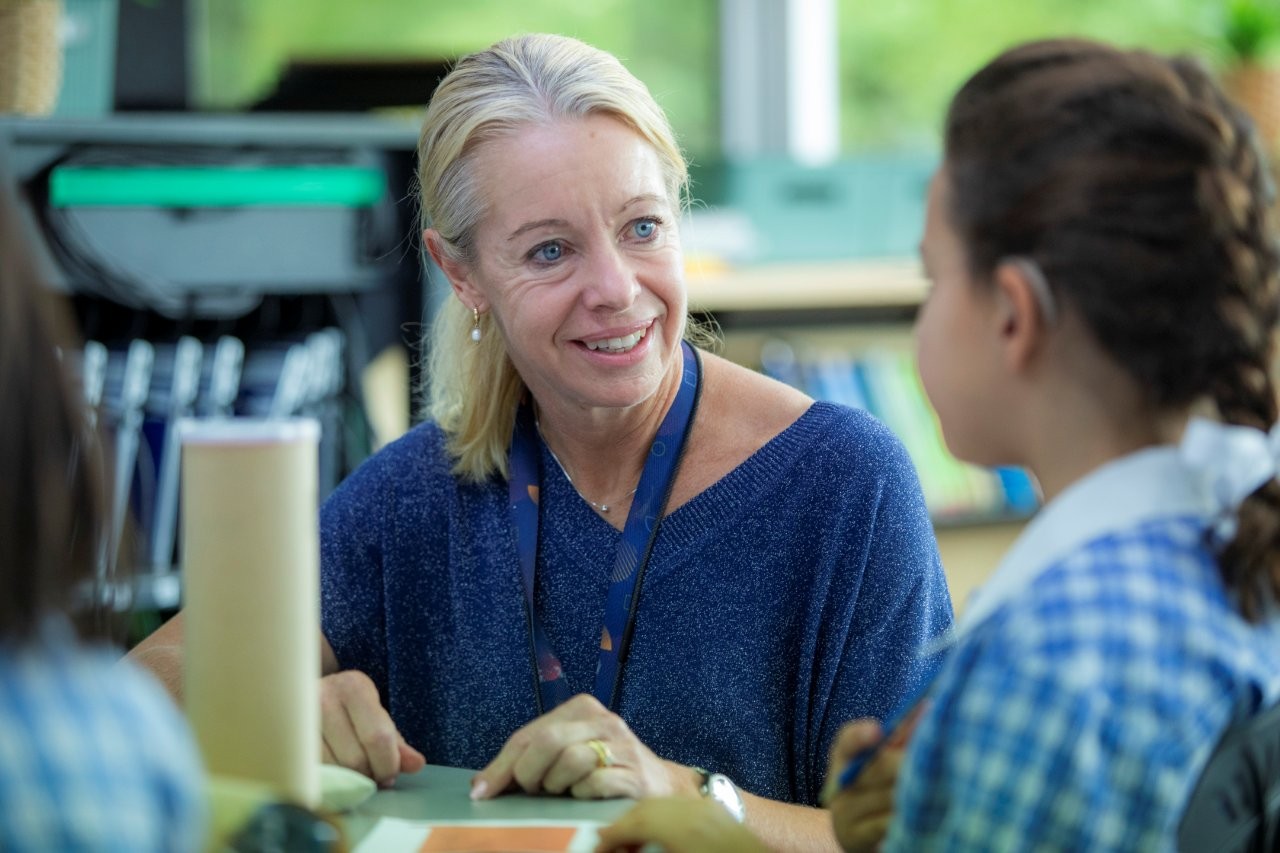
The technology is also a game-changer for educators, particularly for their oral health, allowing them to user a lower, softer tone of voice. PHOTO: Strathcona Girls Grammar
From a teaching perspective, while good hearing is an essential requisite for most teachers, for many, after prolonged exposure to such a busy – and loud – classroom work environment, there’s often damage beyond repair.
With one in six Australians living with hearing loss, there’s an even higher percentage of teachers.
Speaking to EducationHQ last year, CEO of Deafness Forum Australia Steve Williamson, said for many teachers, after many years in noisy environments, hearing loss forces them to either downgrade their employment, or worse, retire early.
“And that’s a terrible loss to the education system in Australia, and to the workforce generally,” he said.
For educators at Strathcona, however, the new system is in many ways proving as beneficial for them as it is for students.
“A number of them will say it’s a total game changer,” Beegan says.
“The ability to hear, have that augmentation, means they too are much more comfortable. They have less anxiety when they come into the classroom. It sets a different tone for the students because nobody has to raise a voice.”
Everything is much calmer, she explains.
“The voice reverberates around the room, so you feel like somebody’s talking directly to you, so in terms of their hearing, I think that’s significant.
“But I also feel what a number of teachers particularly, that whole idea of the oral health, the propensity for vocal nodules, the hazard of losing your voice or relying too much on your voice, on your vocal chords, that is a game changer because you can have a really lower, softer tone of voice.”
While the new technology allows seamless transition across the college, Beegan says one of its most powerful features is students also being able to hear each other, allowing class discussions which in turn has been transformative in terms of helping with speech, language support and group literacy.
The new assistive tech also includes closed captions and the facility to record and transcribe entire lessons.
“… all of these serve to actually empower not only our deaf and hard of hearing students, but students who are neurodiverse, students who find they’re easily distracted, students who find in terms of their mental health, they may miss a number of different classes.
“There’s this opportunity to have this seamless awareness that you can be involved in school, really aware of what’s actually happening day to day, if for any reason you’re not particularly there 100 per cent of the time, or there are certain things that you take from the class, but you need a little bit longer to digest certain things.”

When you have hearing loss, one student said, it’s the little things that make a difference, like being able to hear your teacher clearly or not having to pretend you caught what someone said. The new system helps take away that pressure. PHOTO: Strathcona Girls Grammar
“… that’s been one of the things that has really been empowering and has allowed us to really uphold and embody our commitment to inclusivity.”
Beegan says the hearing support program is, really, symbolic of Strathcona’s approach to its students across the board.
“We’re a non-selective school and we invite students from all types of journeys to come and venture with us,” she says.
“As I said before, ‘it’s personal’, is one of our taglines, ‘unstoppable’ is the other.
“Wherever you are at, whether it’s deaf, hard of hearing, whether it’s neurodiverse, whether it is significant mental illness, whether it’s school refusal – there are things that we can do to empower you to have that object one set in motion.
“We’re all about momentum and ensuring that our students are moving forward with exactly what they need. But above all, we’re not expecting people to fit in, we’re expecting them to be part of who we are, to belong as who they are, be accepted for that and to be embraced in this learning culture of excellence for all learners.”