

Mental Health in Primary Schools (MHiPS) embeds a Mental Health and Wellbeing Leader within schools, paired with a professional learning program, to strengthen teachers’ capacity to recognise and respond to mental health challenges among students, while connecting families to additional education, social and health services.
A newly-released evaluation report has found that 80 per cent of MHiPS schools saw improvements in students’ mental health and wellbeing within two years, with a clear boost in emotional literacy and seeking help, school connectedness and attendance and social skills.
It also found after one year of implementation, 87 per cent of teachers had more confidence in supporting students’ mental health and wellbeing and 88 per cent reported a reduction in mental health stigma across staff, and 83 per cent among families.
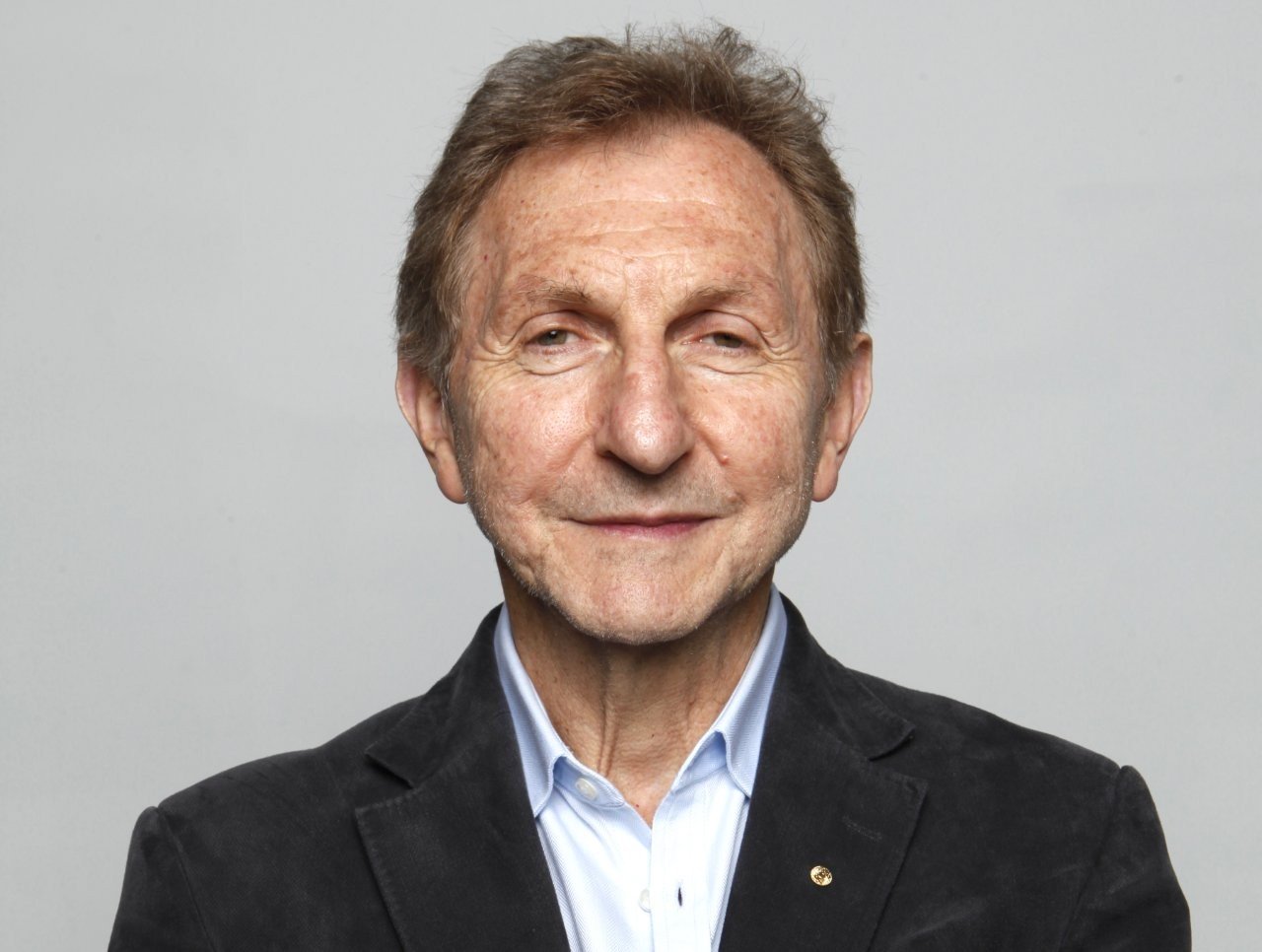
“Victoria leads the country, in fact, leads the world in this area,” Professor Frank Oberklaid, from Murdoch Children's Research Institute (MCRI), tells EducationHQ.
An internationally recognised researcher, author, lecturer and consultant, Oberklaid was co-chair of the National Child Mental Health and Wellbeing Strategy several years ago and the foundation director of the Centre for Community Child Health at MCRI.
He says there’s no other program like MHiPS anywhere internationally.
“I think this is the poster child for prevention and early intervention, it really is, and the data just speaks for [itself].”
Several years in the making, MHiPS was born of schools telling Oberklaid’s team two things – that they were totally overloaded and overwhelmed and had no space to focus on mental health, and that if there was going to be a real push for mental health in schools, it had to be an entirely new model, because they already had access to a plethora of programs they could take off the shelf, and for many schools, that meant increasing teacher workloads.
Professor Oberklaid says despite early intervention being the key tool to preventing adverse long-term outcomes, not all services and supports are accessible to all families in the first five years of a child’s life, creating inequities.
The Honorary Professor of Paediatrics at the University of Melbourne spent a year looking at the literature and best practice in other countries, consulting schools, principals, the education department, the Victorian Principals Association, the Victorian branch of the AEU – and based on those consultations, a new model was conceived based around a mental health and wellbeing leader.
“This was not a clinical role,” Oberklaid explains.
“We didn’t want them to spend time with individual children counselling – it wasn’t a counselling role, [and] it was protected from teaching, so it wasn’t a teaching role, even though some did have some teaching responsibility.”
The role was really threefold, he says – to provide some professional development for classroom teachers to help them identify and deal with issues, secondly, to develop a whole-of-school approach to wellbeing, and thirdly, to be a liaison between the school and community for those kids with more complex problems that needed to be referred out to paediatricians or psychologists.
“So the goal was really to increase the capacity of schools and the capability of teachers to address mental health issues, because we felt that was the best chance of developing a sustainable solution,” Oberklaid says.
Philanthropic funding was matched by the State Government to do feasibility with 10 schools – “which loved the model”. The training program was tweaked and the next year went to 26 schools. The following year it went to 100 schools.
“And we started a deep evaluation alongside the rollout, and the impact we were having was really impressive,” Oberklaid shares
“So that gave the Government the confidence to say, ‘look, this is important and should be in every single school’. And so we received $200 million from them to roll it out to every single school in Victoria”.
The whole-school approach, developed by MCRI in partnership with the University of Melbourne and supported by the Victorian Department of Education, is now accessible to all 1800 government and low-fee non-government primary schools.
The Government has also provided a further $93.7 million of ongoing funding for the initiative’s state-wide expansion.
“We’ve really empowered teachers, and that’s how it should be,” Oberklaid says.
New modelling from the Burnett Institute suggests that 50 per cent of teens (more than 4 million) are projected to face depression or anxiety by age 20, unless urgent action is taken to address the drivers of poor mental health.
Alexander Thomas, a researcher at Burnett, says packaging evidence based, cost‐effective prevention programs that target key risk factors like bullying, financial stress and poor school connectedness can make a big difference and that it's critical that mental health budgets are best distributed to stop these problems at their roots.
Oberklaid agrees. Mental health is not about waiting until kids have severe problems and then sending them to a psychiatrist or a psychologist, he says.
There are so many opportunities for early detection and intervention, the academic says, and schools are ideal “because you have professionals, ie teachers, seeing these kids six hours a day, five days a week, 40 weeks a year in the classroom, with their peer group, on the playground”.
“So they’re in a perfect situation to pick up these kids early, and schools are a non-stigmatising platform because everybody goes to school.”
In addition to teachers feeling empowered and thinking their schools now have an increased capacity, Oberklaid says what he’s most pleased about, is that it’s owned by the schools.
“It’s their program,” he says.
“They’ve got a stake in it. They’re proud of it. They want it to work. They can see that it’s working.
“I think that’s the best thing because there are so many examples all over the world of people that have designed nice programs, and they’ve tested with 50 kids or 100 schools”.
Oberklaid says what’s been interesting is as the roll-out has gone to scale, the impact has become even stronger.
“You’d expect the opposite - as you get more and more schoolers, that the effect would be diluted, but in fact, it’s the opposite,” he says.
“So we’re really starting to change the whole culture of schools around mental health.
“Teachers are saying to us, ‘what’s the big deal about mental health? Of course we do mental health. We can see the link between wellbeing in kids and academic achievement’. So it’s very exciting for us.”
As far as other schools nationwide benefiting from the program, Oberklaid is cautiously optimistic there might be uptake beyond Victoria’s borders.
“… we’re doing a couple of pilots in Queensland, that’ll probably be the next cab off the rank. It would be a shame for it not to be adopted universally.
“We would hope this will be taken up by other states, but every state likes to do its own thing, so it’s a hard sell.”