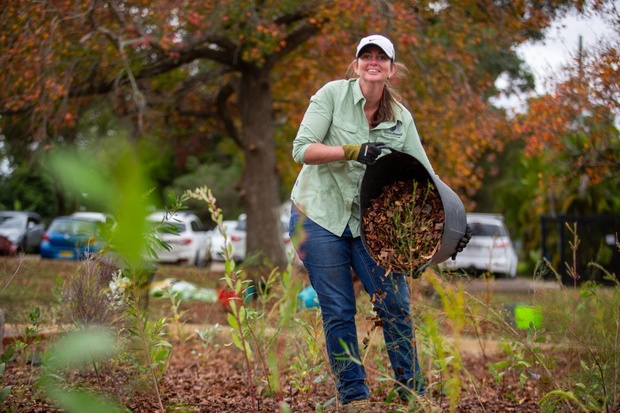

Founded in 2020, The Groundswell Collective is the brainchild of former social worker Anna Noon, a passionate advocate for social, environmental, and climate justice who has re-trained in sustainable living and co-founded the eco charity.
In two very busy years, Noon and her team have planted 16 tiny forests at schools and parks across NSW, packing as many as 900 trees into spaces often as small as a basketball court.
A tiny forest is a compact, self-sustaining ecosystem consisting of a densely packed patch of native species growing in enriched, loosened soil.
“A lot of it is about practical climate action,” Noon tells EducationHQ.
“We know a lot of young people are particularly worried about climate change, there’s a lot of eco anxiety and they often feel like our leaders and government bodies aren’t doing a lot.
“… so this is something that we can go out and talk to them and say ‘there are things that you can do in your own environment, at home and at school, you can be a part of this, you can care for it, you can watch it grow’, and it’s also that hope, that positive practical action that there are things that we can do around environmental stewardship and education as well.”
The tiny forest is based on a planting methodology that came out of Japan in the 1970s called the ‘Miyawaki Method’.
“Professor Akira Miyawaki was an ecologist and a botanist, and what he discovered was if we plant local native species densely into soil that’s been loosened and improved, we can rapidly regenerate areas and we do that for a range of different reasons, both environmental and social,” Noon explains.
“So we’re obviously capturing carbon both in the soil and the trees, we’re reducing urban heat, we’re providing habitat for biodiversity, we’re helping with localised flood mitigation, noise pollution, sound pollution, all the things that trees do that are awesome.
“And then for the social side of things, we’re connecting people to nature, connecting people to each other, helping with climate resilience and wellbeing outcomes.”
The result is a forest that grows 10 times faster, is 30 times more dense and 100 times more biodiverse than if created via traditional planting methods.
A study by the University of Newcastle showed tiny forests hosted a complete food web within seven months of planting, as insects, birds, lizards and kangaroos made them part of their habitats.
“It just shows what you can do on a small scale if we take these underutilised areas in our community,” Noon says.
For schools keen for their own tiny forest, there are a few site requirements.
A site needs to be bare and barren, so a grassed area, ideally, with no overhead power lines, because the canopy trees can be 30 or 40 metres when they hit maturity.
“Because we bring in an excavator and remediate the soil, loosen it, we don’t want to hit any gas pipes or water mains or anything like that, so no overhead power lines, no underground services,” Noon says.
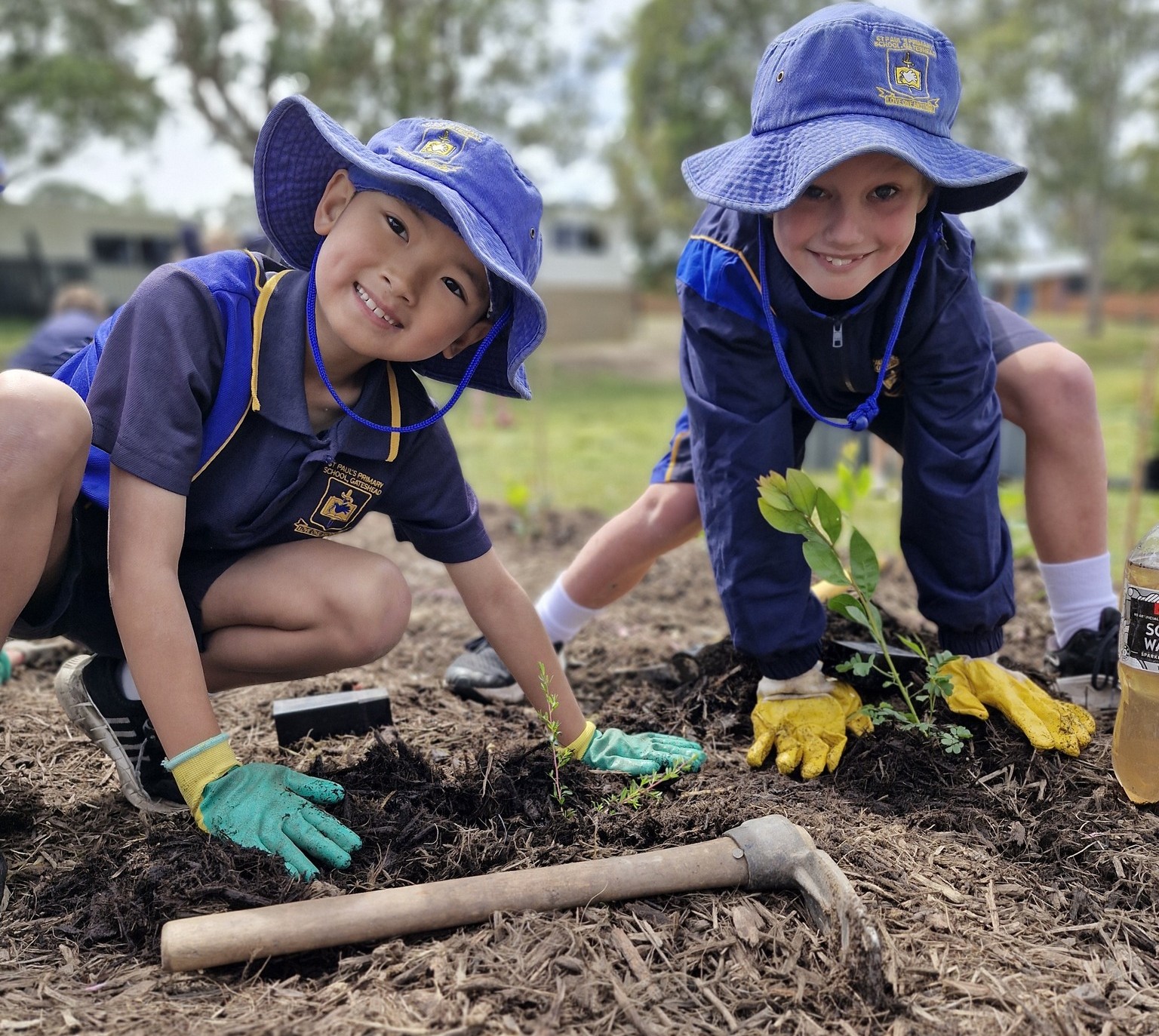
Noon says the Collective does all the project management work on the tiny forests, “we source all the plants, do all the earthworks … and then we'll have a school-based planting day [with] the kids and the staff and sometimes the parents…”
“It needs to be accessible for earthwork machinery, preferably with eight hours of sunlight a day, so no existing canopy coverage or shading from buildings, and preferably you can access water if it needs watering in that first six months.”
Education department permission is naturally required and basically a memorandum of understanding to say what the school’s role is and that there is an intention of perpetuity that they won’t remove the trees or knock them down in five years’ time.
“We do all the project management work, we source all the plants, do all the earthworks and that, which usually takes about a week and then we’ll have a school-based planting day where the kids and the staff and sometimes the parents, depending on the school and what’s happening, come in and plant the forest.
“For a number of our school-based projects we do a two-year citizen science program with them as well, where the kids monitor the forest and look at things like flood mitigation and changes...”
Noon and her team plant what is Indigenous to the particular site in the same ratios as they’d be in nature, just in a more dense area.
“So we try to replicate what a remnant part of local bushland would look like just on a smaller scale and more densely, and we only plant shrub to canopy levels, so no grasses or climbers,” Noon says.
With five school tiny forests now up and away, Teralba Public School’s (192m2) is the oldest with some of the plants there measuring about five metres at just over 12 months old.
All of the schools so far have been externally funded, with either a grant or Carbon Positive providing the funding, and schools only having to provide the land on which to establish the forest.
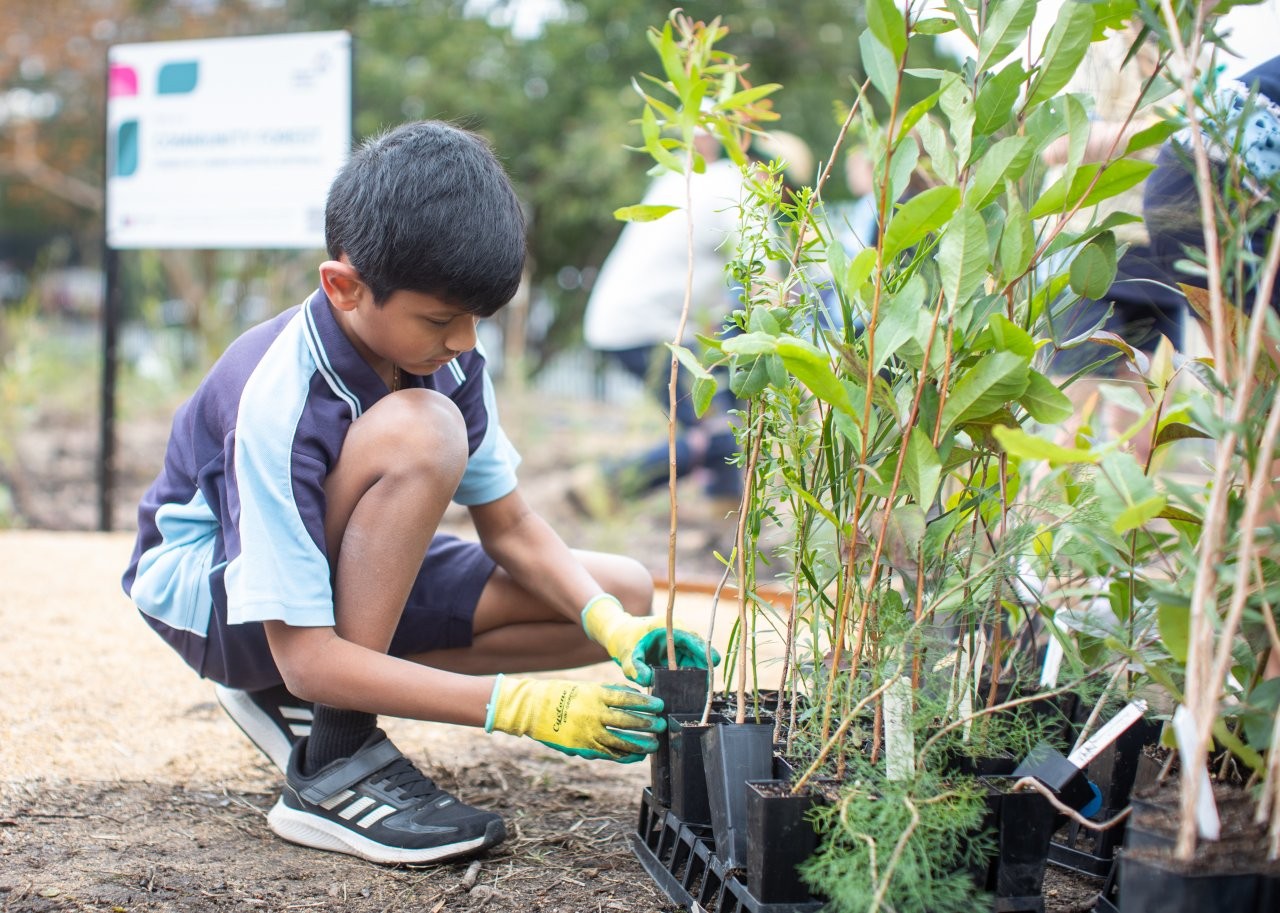
“We have this purpose to bring people together to create a better planet and we do that by delivering really practical, hands-on sustainability-based initiatives,” Noon says.
Noon says the schools have been ‘so lovely’ so deal with.
“They’re very motivated and dedicated to their student cohort and they get a lot from the tiny forest, particularly depending on how we landscape it.
“Some of our forests have outdoor classrooms or yarning circles in them, some of them have paths through them with seats, so people can have kind of sensory breaks in them, some have sculptural works, they all are very site-specific depending on who’s using them.”
Along with that, The Groundswell Collective has also written and produced a children’s book and an education kit that is downloadable for schools.
“So every one of our school projects gets a copy of that book for their school library and a kit that has a range of activities that are linked to the curriculum that they can use both in the forest or with the book.”
There are about 4000 Miyawaki forests around the world and many across Australia, including through a project at Murdoch University in Western Australia.
While the Collective can only cater to NSW schools at present, the organisation’s growth has been so rapid, tiny forests beyond the border seem only a matter of time.
“I think we certainly have scope to support projects around New South Wales and potentially into other states in Australia,” Noon says.
To learn more about The Groundswell Collective and their tiny forests, click here.