The F-2 expansion will open the door for more children to build confidence, curiosity and intercultural understanding from their first years of school, and is designed to support teachers in rural, regional and remote settings and those teaching out-of-field.
Our school environments provide the cultural building blocks where diversity, multilingualism and multiculturalism are celebrated and normalised, and where teachers are always looking for ways to supplement more globally aware programs.
By introducing young children to new languages through play, digital learning and cultural exploration via its Early Learning Languages Australia (ELLA) program, Education Services Australia (ESA) has across 10 years provided one of Australia’s most significant early language learning initiatives.
Since launching in 2014, and rolling out nationally in 2017, ELLA has reached more than 1 million children, supporting the exploration of up to 13 languages aligned with the Australian Curriculum, including Japanese, Mandarin, French, Arabic, Hindi, German and Korean.
“ELLA has really addressed some of the challenges that preschools and schools face when they’re trying to introduce languages for the early years,” Amanda Macdonald, a early learning specialist at ESA, says.
“We know that teachers have limited confidence in introducing a new language and not only that, they often lack resource materials, so particularly culturally relevant resource materials like Australian-made resources for language teaching.”
ELLA was purposely designed to address those particular challenges in providing both preschool and generalist teachers, but also language teachers with culturally relevant resources.
For young children, learning languages is important because that’s when the neural pathways are optimal for learning a new language.

Families describe ELLA as a bridge between cultures, helping children see themselves in a broader world.
“So we know from the research that the way that pathways are formed, that the brain, especially at about age five, is starting to go through that pruning process, where pathways that are not used are not being strengthened,” McDonald explains.
“If we continue to offer an additional language, or languages, those pathways will be maintained.”
However, going forward into the early years of school, it’s not just about the cognitive benefits – but the social ones too.
“We want our children to grow up in a society that’s multicultural, and that’s accepting and inclusive, and learning a new language, even if it’s just one other language, it gives children a way to see that there’s not just one language, there’s not just one way of speaking, that different people will speak differently and use different languages and have different cultures.”
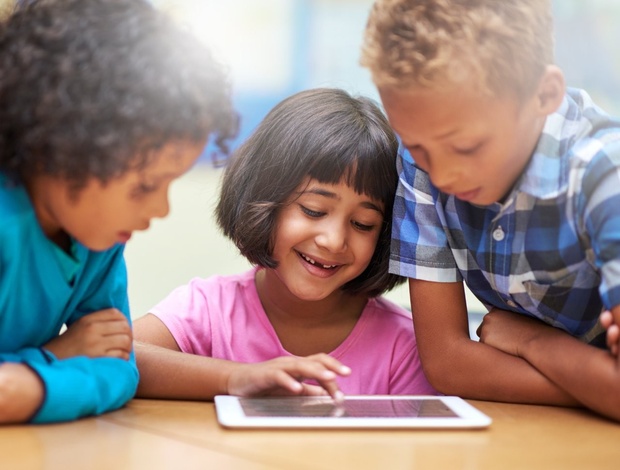
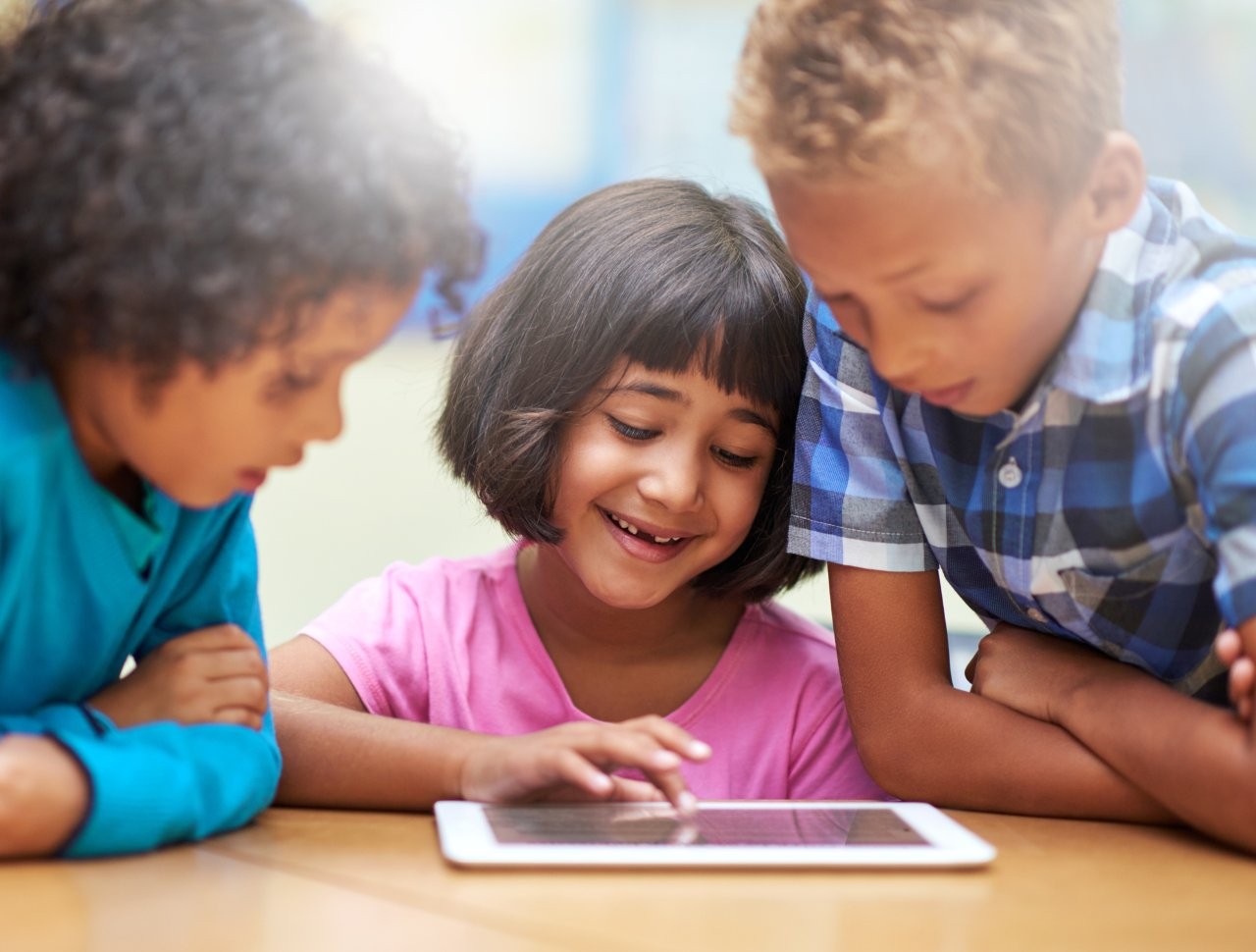
ELLA’s apps are a fun and easy way for children to engage with a new language and culture in an immersive way.
“So it’s based on the immersive principles of language learning, where the children enter this world where all of the characters only speak the language that the teacher has chosen for them to interact with.
“The teachers can choose one of 13 languages, and they then gain access to what we call Polygots apps – play-based apps.”
The Polygots bring language learning to life through art, music, cooking, imaginative play and everyday routines children recognise.
“There are seven of these for preschool or 11 for primary school, and with each one, the language does build up, but it’s been designed not to be modular.
“So it’s not like the children get to a certain level and tick, they can move on to the next level; it’s been designed to be revisited so that students of different ages can go back in and revisit that language and play with that language and interact with that language.
“A preschooler is going to get something different out of it than a Year 2 student, where they’re going to be looking at the language learning differently, but they’re still using the same language experiences within the app.”
Critically, the program isn’t aiming to reduce language teachers in primary schools, anything but, in fact.
“Language teachers are very important to schools, and it’s very important to support language teachers with resources, but we also know that, particularly for remote and very remote schools, that access to language teachers can be very difficult,” McDonald says.
“This is an opportunity for generalist classroom teachers to engage with language learning even if they don’t have prior experiences.
“So the teachers can engage in a co-learning approach with the students, and teachers already have all the skills that they need to scaffold the language learning from the app into other aspects of their teaching and learning program.”
Within each app are usually five learning experiences, and each is mapped to the Australian Curriculum.
“There’s also the general capability, so some around cultural identity, some maths, they learn colours and more.”
McDonald says feedback from teachers, students and families has been excellent.
“Teachers tell us ELLA is one of the most transformative programs they’ve used,” Macdonald says.
“Families love it.
“The apps are only accessible for school use, and that’s because we are very mindful of screen time guidelines for young children, we’re also mindful of language learning being social and collaborative.”
Two-thirds of families have said their children spontaneously use the new language at home.
McDonald says they have been amazed that their children are teaching their siblings and using words from the apps at home and in restaurants and coffee shops.
“Parents felt really proud that their little five and six-year-olds were confident to use the language ... and that confidence builds, so that in primary school, they already see themselves as language learners.”
Primary schools can apply to join ELLA’s F-2 rollout here.