

That’s according to University of Queensland Associate Professor Garth Stahl, whose recent research has looked at first-in-family young men attending university from low socioeconomic backgrounds and their perspectives on the career counselling they experienced during their secondary education.
While it’s not a surprise that in many of our schools career counselling remains under-resourced and fragmented, often failing to serve the populations most in need – but for the many students looking for direction and advice on their futures, it’s an absolute travesty.
“The problem with ‘do-it-yourself career counselling’ is that you can only get so much information off a website,” Stahl, an expert in social mobility, tells EducationHQ.
“Some of these university websites are outdated ... and for many students who are first-in-family, from a working class background, their parents know very little about university life.”
The findings also could contribute to an explaination as to why leaving school ‘early’ can make parents and teachers uncomfortable, despite the selection of quality, post-school options on offer.
Teachers, Stahl says, were absolutely integral to the formation of the students’ aspirations.
“Pretty much universally. It was only because a teacher tapped them on the shoulder and said, ‘you should go to university, you’re a bright kid, you should do this’, that they were even at their tertiary institution.
“It’s always the teacher that’s the integral part of it,” Stahl says.
“That being said, there’s a lot of examples in our data when we did speak with teachers, that they were like, ‘yeah, that kid’s better suited for vocational work,’ and they often help parents with that, as well.”
The perception of parents in the study, who were almost all working class, was that university was the risky option, that a great deal of money would be spent and debt accumulated, and there would be nothing to show for it at the end of the day.
“That was a valid concern across the dataset for both boys and girls,” Stahl says.
“In contrast, middle class students don’t think about it in those sorts of terms, right? They see university as normative and perhaps the next logical step.
“If a middle class student chooses not to go to university and to go into a vocational trade, that can be viewed as downward mobility.
"But here in Australia, we know that trade professions are extremely well paid with a high level of job satisfaction.”
Stahl says there were numerous examples of teachers going out of their way, “like, really going that extra mile to pay for them to put their university application in, for example, if they felt that student had potential”.
He says while there is a culture in Australia around wanting to upscale and professionally develop teachers and career counsellors in schools, it’s fragmented.
“It’s not equitable, and I think what we found was, yeah, OK, in a lot of middle class and elite settings you’re going to get a full-time career counsellor or someone who really takes that on, whereas in working-class schools, in what would be the best school in the study, the career counselling those students received was as little as 20 minutes.
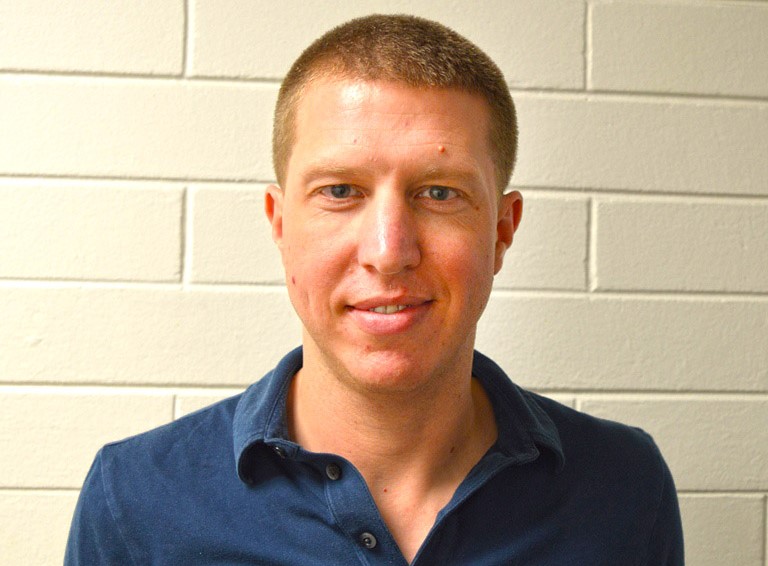
“Many working-class parents consider trades to be a safer, less risky option than university, where students can accumulate a HECS debt and still struggle to find work,” Associate Professor Garth Stahl says.
“Basically, they got asked a couple questions and given a pamphlet, and that was it. I’m sure they had people come in and give job talks and things like that, but it’s hardly an example of proper personalised career counselling.
“…in some of the schools there wasn’t any career counselling at all. Hence why students were doing it themselves.”
The transition from secondary school into university is daunting for a variety of reasons. It’s not always clear the pathway, or even other alternative pathways – all of it really comes down to the students and their families to navigate.
Stahl says there’s a lot of potential for development. Human-centred relationships, he says, are important and there needs to be more consistency in terms of professional development for teachers and career counsellors.
“In many schools, a teacher will moonlight as a careers counsellor, with very few in working class areas employing a full-time person in the role.
“I also think that we ask a lot of teachers. They go out of their way to support young people in this context, especially those who have academic potential or high aspirations or want to do well, but then I don’t think teachers always have access to the most up-to-date information around what the university courses are offering, what they entail, and we know these universities change their courses and their offerings all the time, right, because they’re trying to appeal to the pressures of the knowledge economy etc.”
The expat American academic believes realistically, to increase equity, a hybrid approach is required.
“We need face-to-face and trusted sources, and those relationships to empower young people,” he offers.
“And we need something online that is a lot more sophisticated than what we currently have, because what we currently have is students skimming over university websites…
“…a lot more can be done with university marketing, to make students aware of what university entails at this point in time.
"It can be done better, but that would take a tremendous amount of funding and resourcing and strategising and all of those sorts of things.”
On the flipside, in the study, the first in family students’ knowledge of vocational career options and trades was actually quite sophisticated.
“Because typically their parents or extended family are intimately involved in trade work. They’ve been exposed to it in their community, so they know a lot.
“Furthermore, they know that to be successful in tradework there are family relationships that are going to open doors professionally for them.
"They know that their social capital within their community is the ultimate resource and that the skills they acquire are almost secondary to that sort of stuff," Stahl says.