


Australia will need 20,000 highly skilled workers to support its submarine ambitions alone over the coming decades and solutions are required to help address critical defence industry skills shortages.
In response, an Australian first, groundbreaking new program, called Forge Your Future, is providing students with access to all the tools, connections, education, and industry experience they require to fast track securing meaningful and well-paid roles in leading defence industry companies with operations in SA in the future.
New research by Aussie career-related resources provider Year13 reveals that more than a quarter of young Australians (27 per cent) are interested in STEM or trades careers in SA’s defence industry, while one in six (16 per cent) would even consider relocating to SA to secure this type of work.
Despite the enthusiasm, 29 per cent of young people say their lack of awareness of STEM defence industry career pathways is a key obstacle to pursuing work in the sector.
Forge Your Future has been put together and delivered by Australian tech startups WithYouWithMe (WYWM) and Year13, combining WYWM’s career-matching technology with Year13’s strong connection to schools, to create a program that, according to WYWM VP of Strategy, Ian Handley, doesn’t just inform students, it empowers them.
“Forge Your Future helps students discover their natural strengths, explore career-aligned learning and connect directly with employers in one of Australia’s fastest-growing workforce sectors,” Handley tells EducationHQ.
“It’s backed by the Australian Government’s Defence Industry Schools Pathway Program and supports the South Australian Defence Industry Workforce and Skills Action Plan, and aims to connect high school students with real career opportunities in high-demand STEM fields.”
Importantly, for already time-poor and stretched teachers, the program requires minimum preparation and effort on their part
“Because the content is curriculum aligned, nationally, and most of the content is pre-developed and available online, Forge Your Future removes the burden of lesson planning or resource creation,” Handley explains.
Teachers can choose a delivery format that suits their classroom, and the program provides everything they need from facilitation guides to assessments and career-matching tools.
“Teachers can lead sessions themselves, or request support from facilitators.
“Much of the learning is self-directed, allowing students to explore independently and at their own pace.
“It’s designed to complement what schools already do, not add to their workload.”
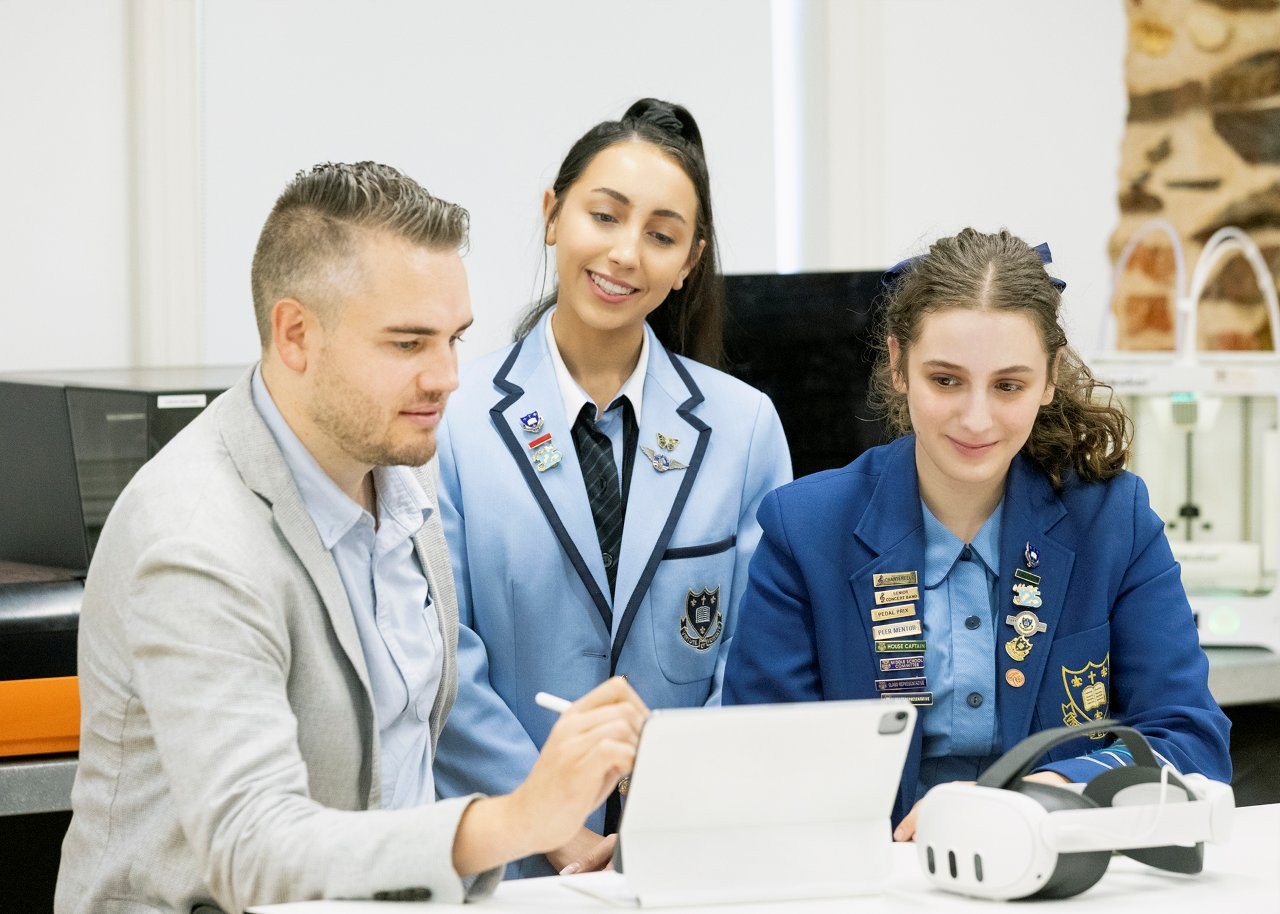
Some 29 per cent of young people say their lack of awareness of STEM defence industry career pathways is a key obstacle to pursuing work in the sector.
Handley says the Year13 research identified that students weren’t widely aware of the range of high-demand STEM careers available — and even those who were interested often didn’t know how to tell if it was the right fit or how to access learning opportunities.
Over the past decade, WYWM has helped more than 100,000 people from all walks of life — veterans, neurodivergent individuals, Indigenous communities, people with disabilities — to discover meaningful careers in fields like cyber, engineering, and AI.
They’ve achieved this by focusing on potential, not pedigree — using aptitude and behavioural science to uncover what people are naturally good at and connect them to opportunities they might never have considered.
The same philosophy, Handley says, now powers Forge Your Future, giving students across the country the chance to unlock their potential and pursue careers they may never have imagined.
The program will give students insights into STEM fields that are exciting and in high demand, such as engineering, trades, digital and ICT, and program management, equipping them with the necessary practical support to gain skills in fast growth areas.
The majority recognise that STEM roles are well-paid (69 per cent) and offer long-term career stability (49 per cent), which is likely why nearly half (45 per cent) are eager to learn more about career opportunities in the defence industry sector.
Interestingly, one in four (26 per cent of) young people mistakenly believe military service is a requirement to work in the defence industry, and so Forge Your Future will educate students on the distinct difference between the Australian Defence Force (ADF) and the defence industry, where employees do not serve in the army, air force, or navy, but work for the businesses who support the ADF through the provision of products or services.
Forge Your Future is a comprehensive 12-month program comprised of virtual and in-person activities including: in-school events and online engagement, personalised skills assessments, career matching, learning and development for job-readiness, interactive e-learning modules, mentorship with industry professionals, connections with defence primes, virtual work experience, and career events with defence industry employers.
Around 2500 secondary school students in South Australia are expected to participate in the program over the next 12 months, and 1300+ schools nationally will have access to the program via Year13’s Career Tools platform.
One of the strengths of Forge Your Future, according to Handley, is its flexibility.
“There’s no set length or rigid format to follow, and most of the content is available on-demand,” he says.
“This means students can engage with the parts that interest them the most, whether it’s completing WYWM’s AI and behavioural science-based testing to understand careers they are suited to, or diving into deeper skills development and industry engagement.”
The program is open to all Australian high school students aged 15 to 19 and for schools wanting a more structured approach, the program offers several delivery options:
- Single or multi-day sessions to large groups (eg, an entire year level)
- Classroom sessions over one or more days for a full class
- Opt-in follow-up learning after an initial large-group introduction
- Round-robin event in one day, where multiple cohorts rotate through a series of activities
This flexibility allows schools to tailor the program to their needs and integrate it seamlessly into busy timetables.
Handley says students response so far has been hugely encouraging.
“Students consistently tell us they’ve enjoyed the hands-on approach and that the program opened their eyes to career options they hadn’t previously considered,” he says.
“It’s been encouraging to see young people connect their interests and strengths to real-world opportunities.”
Prominent employers Babcock and BAE Systems have been among the first to support the program and advertise jobs and career opportunities to participating students.
Teachers or school leaders interested in the program, can get in touch with the program providers here.