The need for culturally appropriate programs and the importance of nutrition for long-term health and wellbeing of all children saw the passionate children’s health advocate launch and develop a program in WA that is changing young lives one fresh meal at a time.
The Deadly Koolinga Chefs Program, now in its fourth year, focuses on healthy foods and has had transformative impacts on everything from health outcomes, student behaviour, school attendance and nutrition knowledge and the way students think about and engage with cooking. It’s also helping to build their confidence and self-efficacy.
It’s more than a cooking class — it’s a culturally grounded, hands-on learning experience that transforming students and communities.
With the support of local Aboriginal community groups, while inclusive of all students, the program is particularly focussed on ways to improve nutritional health and social outcomes for Indigenous children and teens and, by association, their families.
Closing the gap through listening and acting
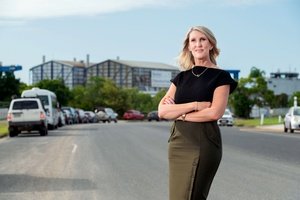
Nilson leads the project, co-designed by Bindjareb Aboriginal organisations, Murdoch University’s Coolamon Research and Advocacy Centre, Ngangk Yira Institute for Change and the School of Nursing, and says culturally aligned initiatives such as this are key to closing the gap.
“… we’ve got to understand that, for so many years, Aboriginal culture has thrived through storytelling, through doing, through seeing, through touching, through engaging – and I think that it’s important for us to know that we have to use that same way of teaching and learning in all of our experiential offerings,” Nilson tells EducationHQ.
She says critical life skills such as kitchen safety, meal planning, budgeting for groceries and how to safely store food are the keys to food literacy.
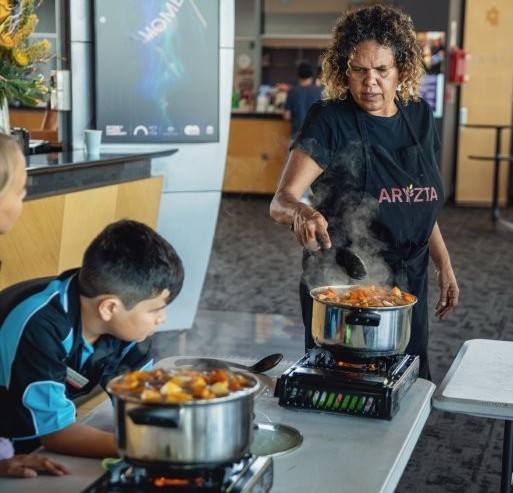
The program is particularly focused on ways to improve nutritional health and social outcomes for Aboriginal children and adolescents and, by association, their families.
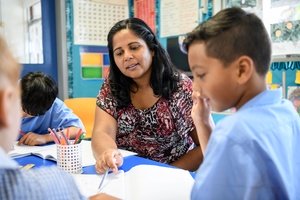
Using STEM principles and traditional knowledge, primary students in participating schools across the Bindjareb (Peel) Region are taught these skills, and are also learning how to find and prepare traditional bush foods.
More than 3500 children have attended the program since its inception.
“I have so much joy in seeing in seeing the outcomes, it’s fantastic,” Nilson says.
“It started off as a very small philanthropic seed program, where I was invited by an Aboriginal community to work with them building some health promotion activities for them, and it’s blossomed into something much bigger.
“It was their request that we sought a way to see if more children could be exposed.”
So, how does it roll out?
At present, there are five active schools engaged, and every week each has a cooking class involving up to 10 students. The classes can involve Year 3 students right up to Year 12, and each class takes about 2.5 hours.
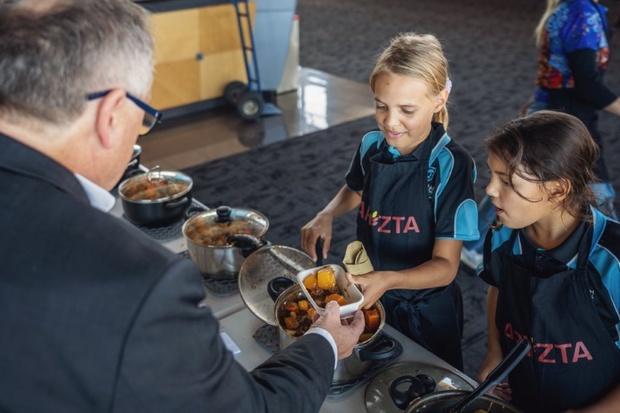
The cooking class equipment is packed in boxes, each child arrives on the day and unpacks their own cooking station in a pop-up style.
“Depending on the weather, it’s either out underneath a beautiful shady tree in in the grounds of the school, or if it’s a bit windy and wild, often in a courtyard undercover,” Nilson says.
Students learn to use basic cooking equipment, with the understanding that you don’t need expensive, highly technical equipment to cook a really healthy, delicious meal.
“We have recipes for Indigenous and Bush Tucker foods – so kangaroo and all of the local things that we can obtain, and the children cook a meal from scratch.
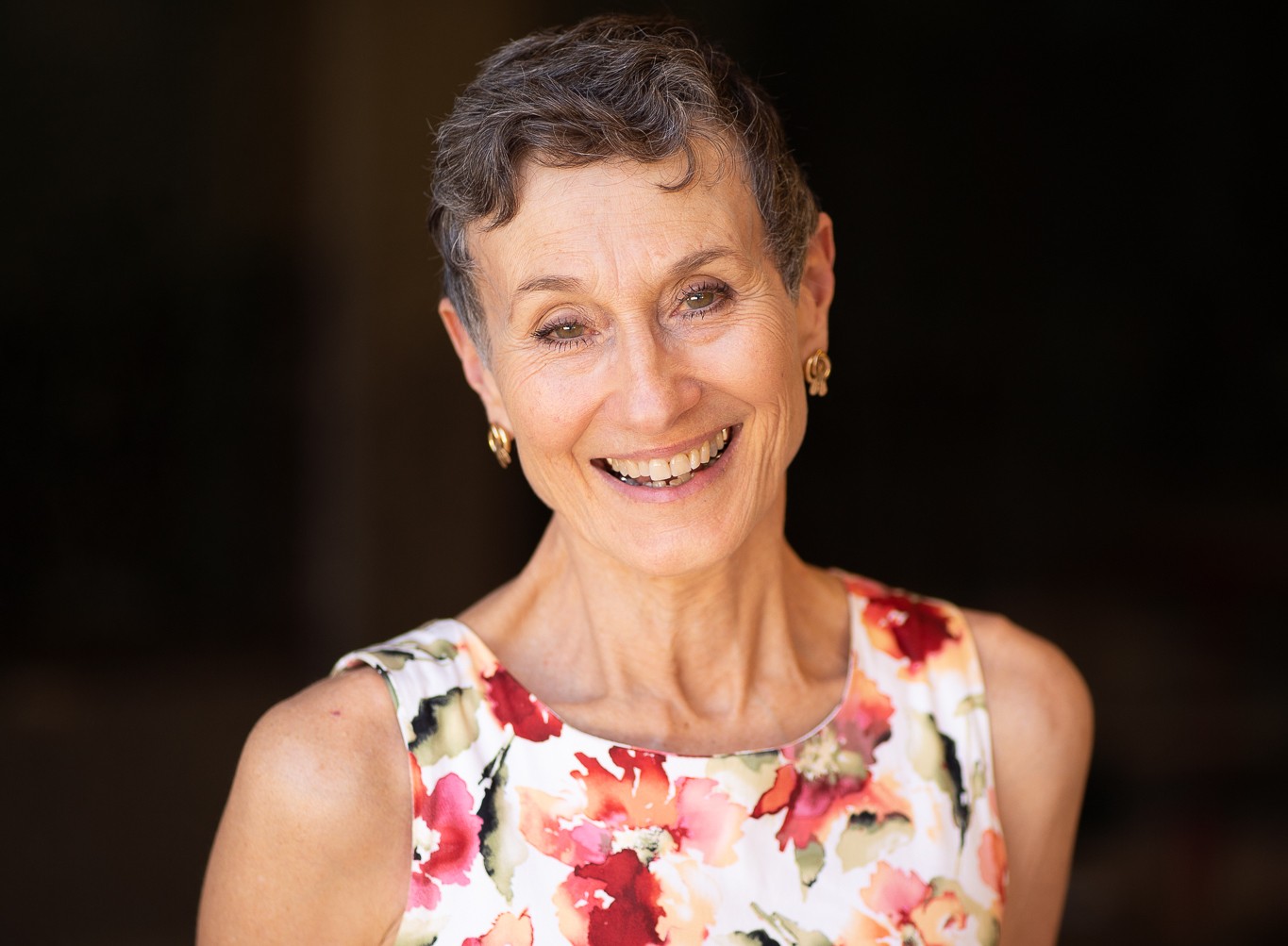
Associate Professor Nilson says the embedded STEM skills in classes help children realise how calculating weights, measurements and volumes are life skills with real-world applications.
“We have children who say ‘I come to school because of this program’ – and that lightens my heart.”
At the end of every cooking session the children take home the meal they’ve made to share with their families – enough to feed six people.
“Their sense of joy and pride to be taking home the meal they prepared from scratch to share with their family is a gift in itself,” she said.
“To see the children become totally engaged in the food preparation process and cooking is inspiring.”
Bedding down and no quick solutions
Nilson says what the data is showing is that health promotion and health education has got to be delivered and facilitated over a long period of time.
“Traditionally, health promotion models are a six-week course, one hour for each of the sessions and ‘well done, you know it all’.
“That is not the case. The case is all learning, like all literacies, has to be an ongoing exploration, an ongoing experience, so that these things become embedded – it takes time for us to see change towards knowledge implementation.”
What Nilson’s team of researchers has found, she says, is that after the program children are taking an active interest in reading food labels when they go shopping with their families and identifying foods and food values that are good or less healthy for them.
They are also understanding the difference between the body’s need for vegetables, fruit, vitamins, minerals, and the like, as opposed to the chemical additives found in discretionary foods.
“And so they speak about this. They speak about going with their parents or their carers and showing them,” she says.
For Nilson, what is really critical is always looking for the quantitative and qualitative results.
“The sense of engagement, the sense of confidence, the sense of being empowered because they are making a meal to contribute to family, but pride, and this is so important here.”
What they’re saying on the ground
Teachers have been glowing in their praise of the pilot.
“In a focus group with teachers, they all spoke about the excitement of the children on the day and the excitement of ‘I wonder what we’re cooking.’ Or, ‘look what I cooked and I didn’t like vegetables. But now I do’,” Nilson says.
“So not just that immediate response, but the transfer of that excitement to the rest of the day and the application to their learning for the rest of the day. I think that that was probably one of the most important.”
Natasha Upcott, principal at Mandurah Primary School where 20 per cent of the 300-student cohort are Indigenous, tells EducationHQ that her school has been part of the program for four years.
“… the impacts on students has been incredible in terms of building confidence and independence, developing essential life skills from food preparation, kitchen safety, meal planning, strengthening cultural pride and identity by incorporating traditional ingredients and First Nation recipes,” she says.
“They’re excited to come to school on those days.”
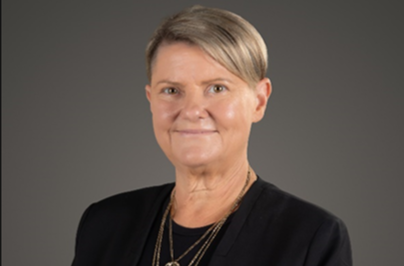
Mandurah Primary School principal Natasha Upcott says with investment, more facilitators can be trained, a scalable toolkit for schools can be developed, and stronger links with Elders, community leaders, and local food providers can be forged.
In terms of curriculum links, she says it has embedded STEM opportunities in maths, measuring, scaling, budgeting, food chemistry, biology of digestion, nutrition, and the list goes on – and it’s seamlessly woven in, so it affects understanding around their overall health around better dietary habits and making informed food choices.
Upcott says Nilson’s investment and passion are a key to the success of the program.
“Her motivation, her engagement, she’s incredible,” she says, “and having Indigenous people leading it as well is critical.”
“Our staff have loved the concept since the very beginning … we’ve rotated it through for all kids in my school, Indigenous and non-Indigenous – they’re cooking side by side.
“We’re sharing the concept and the benefit – and the kids love coming back to class and talking about it.”
Cooking with fire - mapping a way forward
In February, the Coolamon Centre and Food Futures Institute hosted a roundtable called Sustainable Healthy Foods and Futures, at the Food Innovation Precinct in Stakehill, WA, bringing together key stakeholders to review the program and plan its future.
Discussions focused on expanding to more schools, embedding it into the curriculum, and securing long-term government funding.
Earlier this month at a Deadly Koolinga Chefs Program Roundtable event held at the Food Innovation Precinct WA, local Aboriginal community organisations, government, industry and school principals convened and a panel discussed the importance of experiental cooking programs.
Out of the gathering the Peel Development Commission, a West Australian government group, said it wants to see how, working together, the program can start to be embedded into more schools.
“Our suggestion is probably region by region so that we can do it slowly and steadily, because I think if we try and hurry too much, these programs tend to fail,” Nilson says.
So many strategies and so many reports all come to the same conclusion, Nilson says, the need for multi-departmental government support to make sure that these programs are sustained.
“... unfortunately we still have very siloed portfolios,” she says.
“I’m trying to demonstrate that in this program alone we should be involving the Minister of Aboriginal Affairs, the Minister of Education, the Minister of Health, the Minister of Regional Development, the Minister of Youth – so five government departments – that could all collaborate and input into a program such as this to ensure its implementation and sustainability.”
Food and nutrition has been lost somewhere along the way, Nilson laments, yet it’s so central to all cultures and so critical particularly to Aboriginal culture.
“Everything that they did revolved around the seasons, and they moved from place to place, because during those seasons that was where the food was available and all of their connections and corroborees and ceremonies and festivals were all around food.
“Generally, Aboriginal people before colonisation were extremely healthy.”
Programs like the Deadly Koolinga Chefs Program are looking to ensure that is very much the case in the future.