Founded in 1896 and with a cohort of more than 1500 students, the college has long recognised the importance of sustainable practices.
Sustainability coordinator Andrew Feher has been at the school for roughly 35 years. A father of four, and now grandfather of three, he has overseen and participated in a remarkable transformation of the school since the early 1990s.
Feher, it seems, has always found opportunities to include the environment in the curriculum.
“It really started more than three decades ago with my outdoor ed students, where we went off and worked with the local council, weeding, planting and cleaning drains of built up rubbish,” he tells EducationHQ.
“That morphed into a sustainability curriculum audit, where we looked at every subject offered in the school and queried did it offer any ‘sustainability stewardship’ type content? If it didn’t, I’d suggest or offer resource materials for those teachers.
“So what has happened over the journey is now teachers are doing that, not as a discrete unit, but it’s embedded in maths, in science, in humanities, in religious studies – in a whole host of things there.”
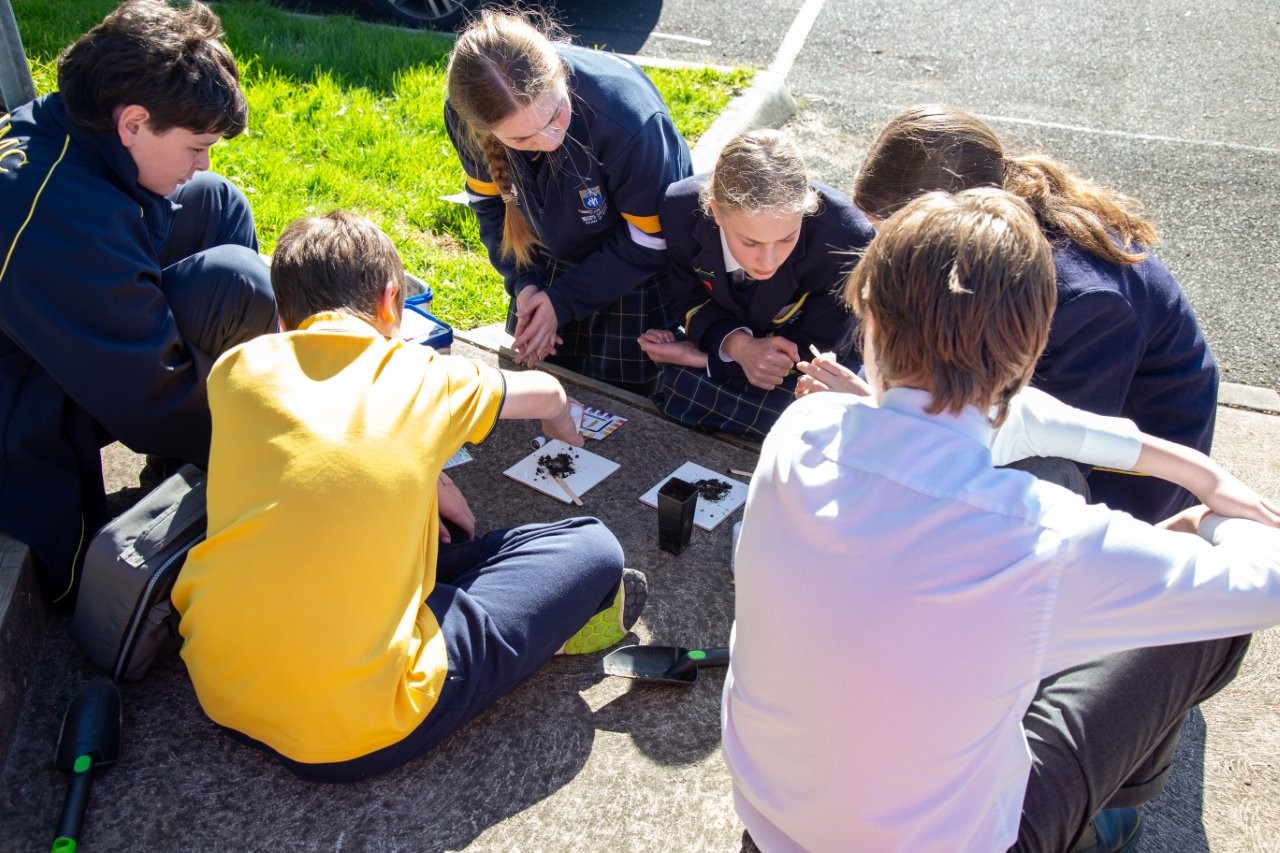
Teachers’ lessons plans actively incorporate the school’s many sustainability features – including a major waste recycling framework, the rehabilitation of an unused, degraded piece of land into an immersive outdoor classroom, its control of water quality and pollution, a water-saving infrastructure where water tanks supply toilets – and more.
A major component of the school’s pledge for green solutions and building an energy-conscious cohort has involved embracing solar technology, which has seen substantial cost and carbon emission savings since switching to solar and installing an Energy Management System (EMS).
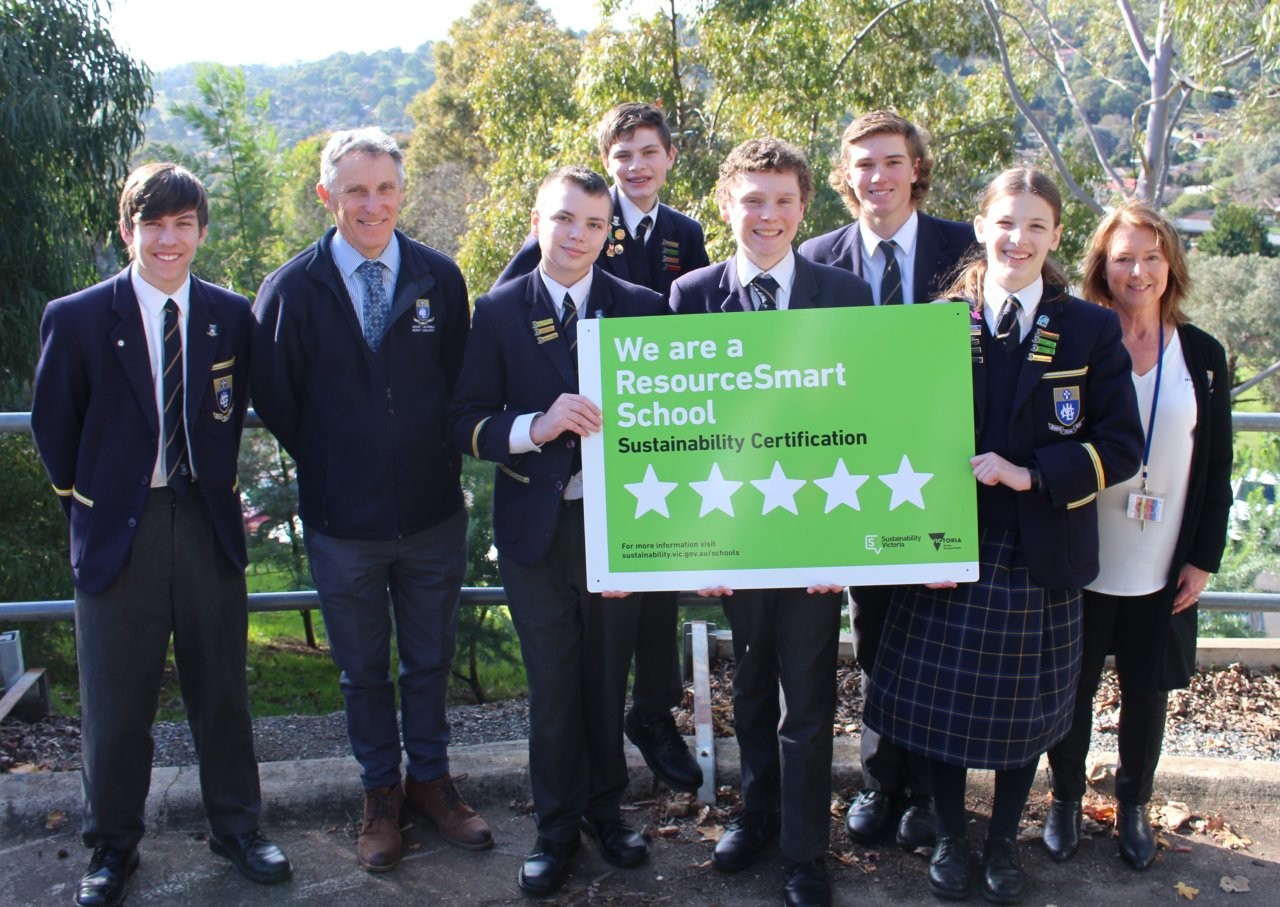
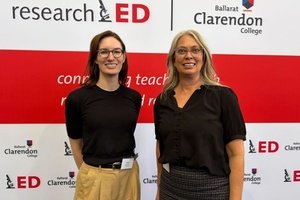
Andrew Feher, pictured above, second right, has a passion for the environment which stems from his upbringing. His parents were key role models who instilled in him the importance of caring for the land and living sustainably.
With 14 separate buildings comprising the campus, and wanting to bolster its capacity and explore options for upgrading, the school has recently installed an additional 167 solar panels, which has now provided an additional 75 kW of Solar PV, which will see the college achieve anticipated combined savings of $21,475 and 77 tonnes of CO2 in just the first year of use.
The EMS is the largest installation of its type in Australia, and the largest combined energy installation ever undertaken by provider Solahart, with 14 power metres installed on the site.
The system is allowing the college to explore ways to integrate the EMS into the school’s curriculum.
Students in science and mathematics classes are engaging with the EMS to monitor real-time solar energy production and usage – and the data has sparked valuable classroom discussions on energy efficiency, cost savings, and carbon emissions.
Students are empowered to identify inefficiencies and suggest improvements, turning learning into action.
MLMC’s assistant business manager, Cathy Pote, says incorporating the new technology provides students with first-hand experience of the benefits of renewable energy.
“As part of our ongoing commitment to sustainability, we are excited to engage students in learning about energy consumption strategies using the monthly energy management system reports,” Pote says.
“We also look forward to growing our energy efficiency potential with the installation of additional PV panels in the coming years.”
Feher says working in collaboration with Deakin University, MLMC’s science coordinator has told him students are now using live data from individual buildings to look at exactly how much solar is going into that building and how much grid power is being used.
“So we can use that and then say, ‘you’re probably using your data projector too long or you’re leaving it on during recess and lunchtime’. Or, ‘do you really need to have your heating on this this length of time?’,” he says.
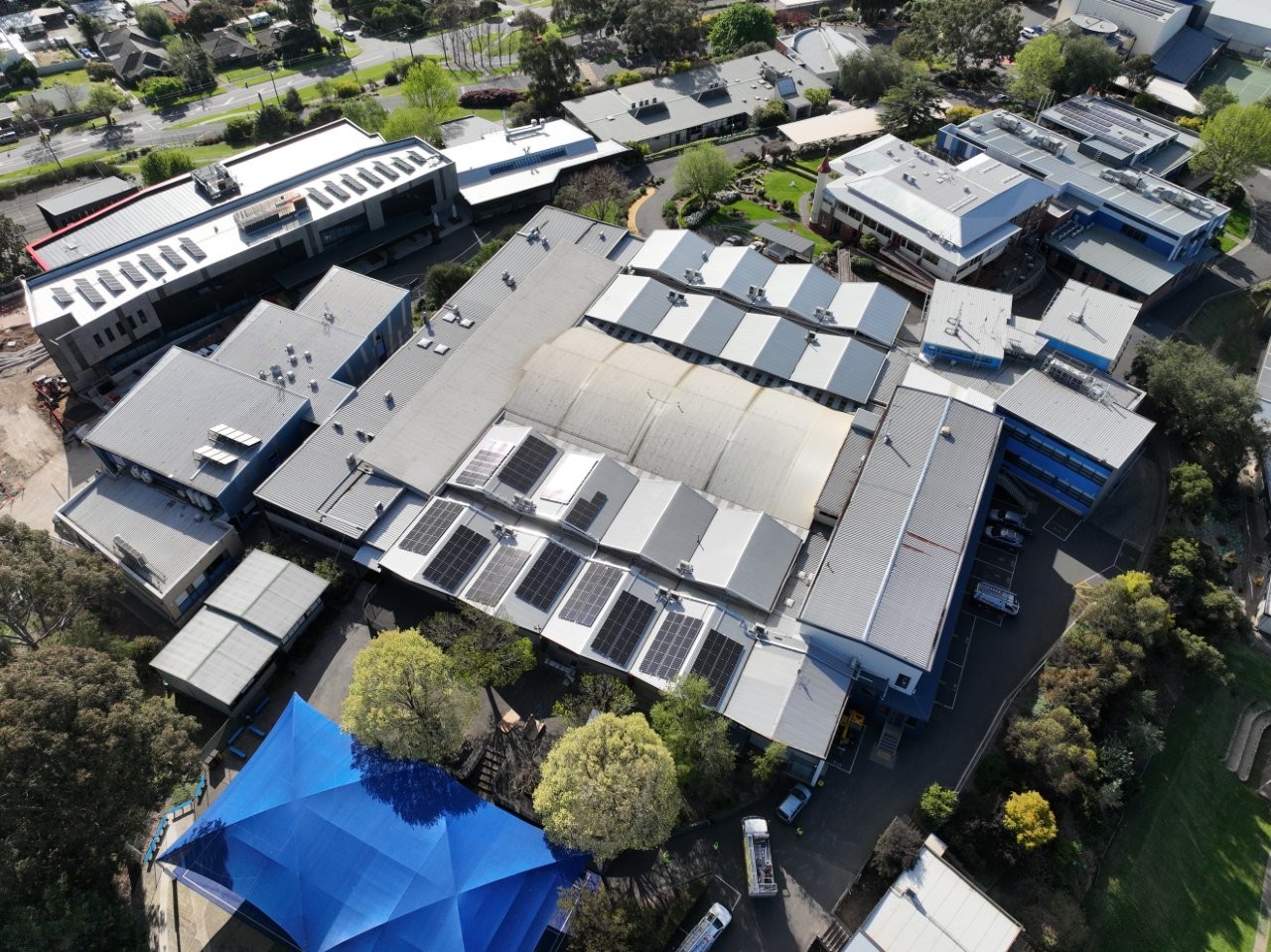
With 14 separate buildings comprising its campus, MLMC has recently installed an additional 167 solar panels, which will see the college achieve anticipated combined savings of $21,475 and 77 tonnes of CO2 just this year alone.
As a result of student and staff audits, the college has upgraded its infrastructure: installed LED lighting, smart sensors, energy-efficient appliances, and decommissioned outdated gas heating systems.
“It’s by no means name and shame, it’s an awareness program that allows our students to become almost the teachers, you know, they take on the adult role because they can then see that a particular group of people are using too much power in a particular room – and they then almost become the monitors of that, which is great. I’m loving that,” Feher says.
These initiatives, combined with increased solar panel capacity, have significantly reduced the school’s energy consumption and carbon footprint.
On top of its numerous sustainability initiatives, perhaps most telling about the school’s community approach is its keenness to provide leadership in sharing innovative sustainability practices and action on climate change with other schools.
The MLMC campus serves as a professional learning and events hub, where, for example, primary schools are invited to participate in the First Nations Immersion Day, where they learn how First Australians care for Country and use natural resources in a respectful and sustainable way.
The approach saw MLMC awarded Community Leadership School of the Year in the 2024 ResourceSmart Schools Awards, along with Feher winning Secondary Teacher of the Year and the school receiving a coveted 5-star school status.
Climate anxiety is a very real concern for students here and overseas, and a recent paper from the IPA claims that climate education is distressing children and should be scaled back or removed from Australian schools.
“Teaching children about global catastrophes in ways that they are not developmentally equipped to process is not education; it is fearmongering,” author Clare Rowe wrote in the paper.
Schools, like MLMC however, offer a valuable opportunity to ground information in facts, build community and emotional resilience, and provide constructive pathways forward.
Climate education at the school is delivered in an age-appropriate, balanced way that avoids fear-based messaging and instead of focusing on doom-and-gloom narratives, the school emphasises solutions, responsibility, with students introduced to emerging careers in climate adaptation and sustainability, helping them see their potential role in creating positive change, Feher explains.
“We’re on the fringes of suburbia, here, just on the boundary of the Yarra Valley,” he says.
“I’d say 50 to 60 per cent of our students come from a rural background, we have people that own land with cattle and cropping and vineyards and orchards, so they’re very much attuned to what’s happening out there. So I suppose they live and breathe that.
“We’re not presenting doom and gloom, we try to look at it in a proactive way, looking at technological advancements and what they can potentially do to mitigate the impacts of climate change.
“And also provide green career pathways for students to be actively pursuing future employment that nurtures and protects the planet, rather than actively participating in undermining its future.”