At St Philip’s College in Alice Springs however, a powerful 48-hour ‘solo’ exercise is working to build students’ capacity to turn inward and to get clear on their learning goals.
Run as part of the school’s flagship Aspire outdoor education program – which involves a carefully sequenced 10-day adventure through the MacDonnell Ranges just west of Alice Springs – students spend their last two days completely alone in the bush.
They have just a pen, a notebook and some guided prompts for company.
This sacred reflection time is a huge challenge, and deliberately so, the school’s Head of Outdoor Education Megan Butler says.
“The extended solo allows them to sit in silence, sit alone, sit with their thoughts.
“We do front-load them with reflection tasks, journaling is a big part of that, but also looking ahead – they’re looking at short-term goals, medium-term goals, and long-term goals.”
Students write themselves a letter during the ‘solo’ which they open when they start Year 12.
“That way they can remind themselves of the goals that they had for themselves. Those goals might have shifted or changed slightly, but it takes them back to that time where they weren’t influenced by peers or teachers or technology or any of those other loud noises that we have that are constant.
“They actually really think about ‘what do I want to get out of my final year of school?’ or beyond school, even.”
The absence of screens really sharpens the entire experience, Butler says.
“A lot of these students, most of them would never have been alone for 24 hours, let alone 48, but just that period of time where potentially they’re going to get bored…
“There’s really a lot of young people who wouldn’t have experienced boredom to a point of not being able to solve it with picking up a phone or some sort of technology.
“So, the deeper learning from that as they move forward is quite big as well.”
Leadership development is a focus of the program, as is building students’ communication skills and confidence in sharing their vulnerabilities in front of peers.
A series of ‘comms talks’ are designed to encourage students to reflect on formative experiences and to articulate their impact.
This is important prep for their final solo task, Butler notes.
“Comms talks are presentations, essentially, that the students will deliver to their peers – they’ll be given a theme or a topic [and they’re given time to reflect before] sharing parts of themselves...”
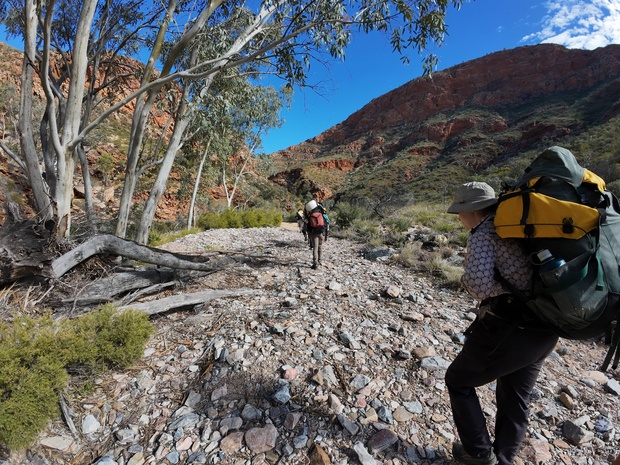
A rigorous physical journey in the great outdoors runs alongside the personal development focus, with outdoor education instructors showing students the ropes on day one and two of the program as they traverse a hiking trail.
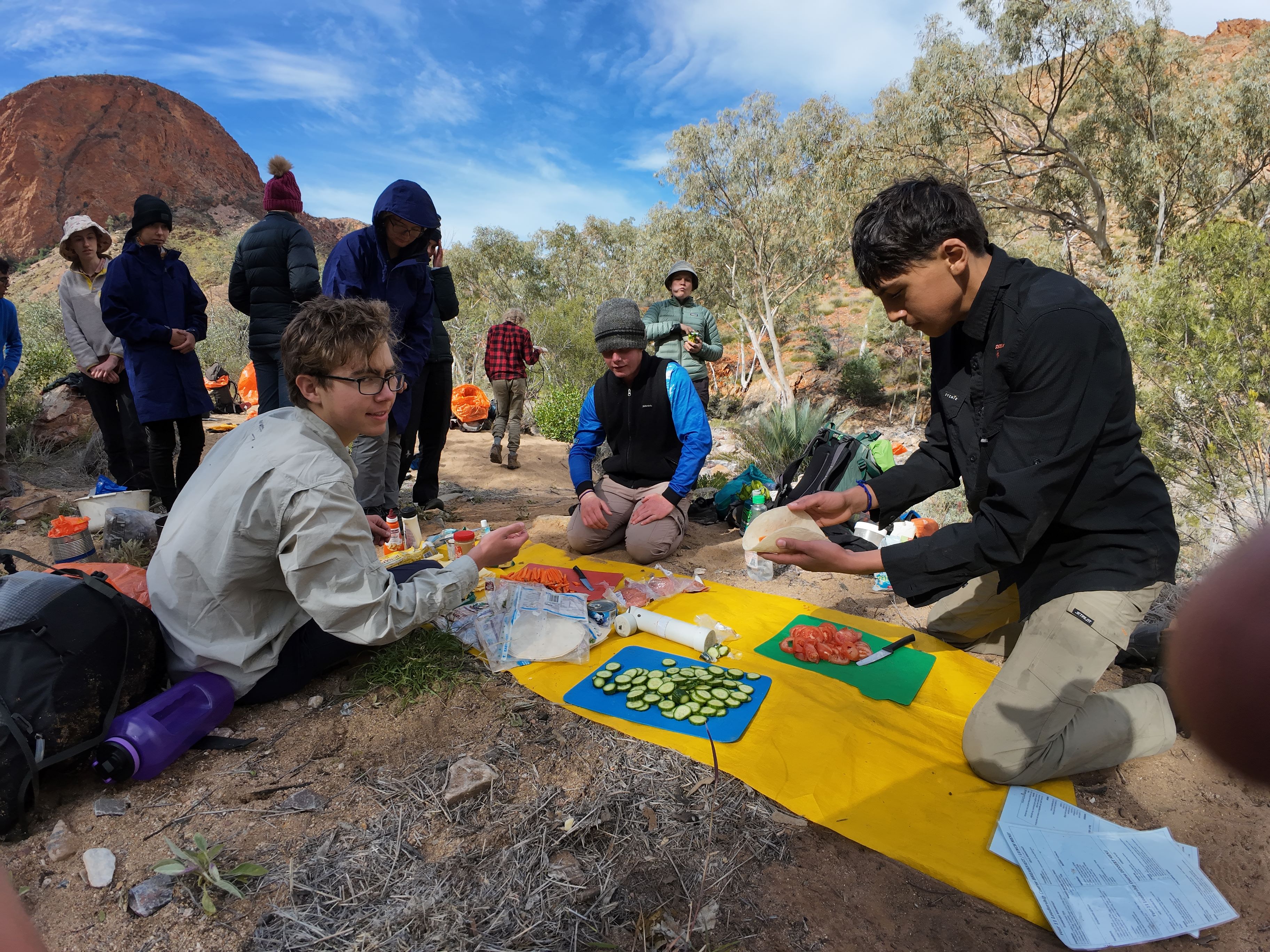
Then it’s time for the cohort to step up and lead the expedition, Butler explains.
“The students are actually retracing some of the steps that they took on their Year 9 journey – and after day two, the trail diverges and the Year 11s move into a more remote area.
“But during those first two days, especially the first day, they’re watching and learning from their adult leaders who are setting them up for success in terms of how to work with and manage a group, how to give detailed instructions, how to get tasks done, you know, working together as a team.
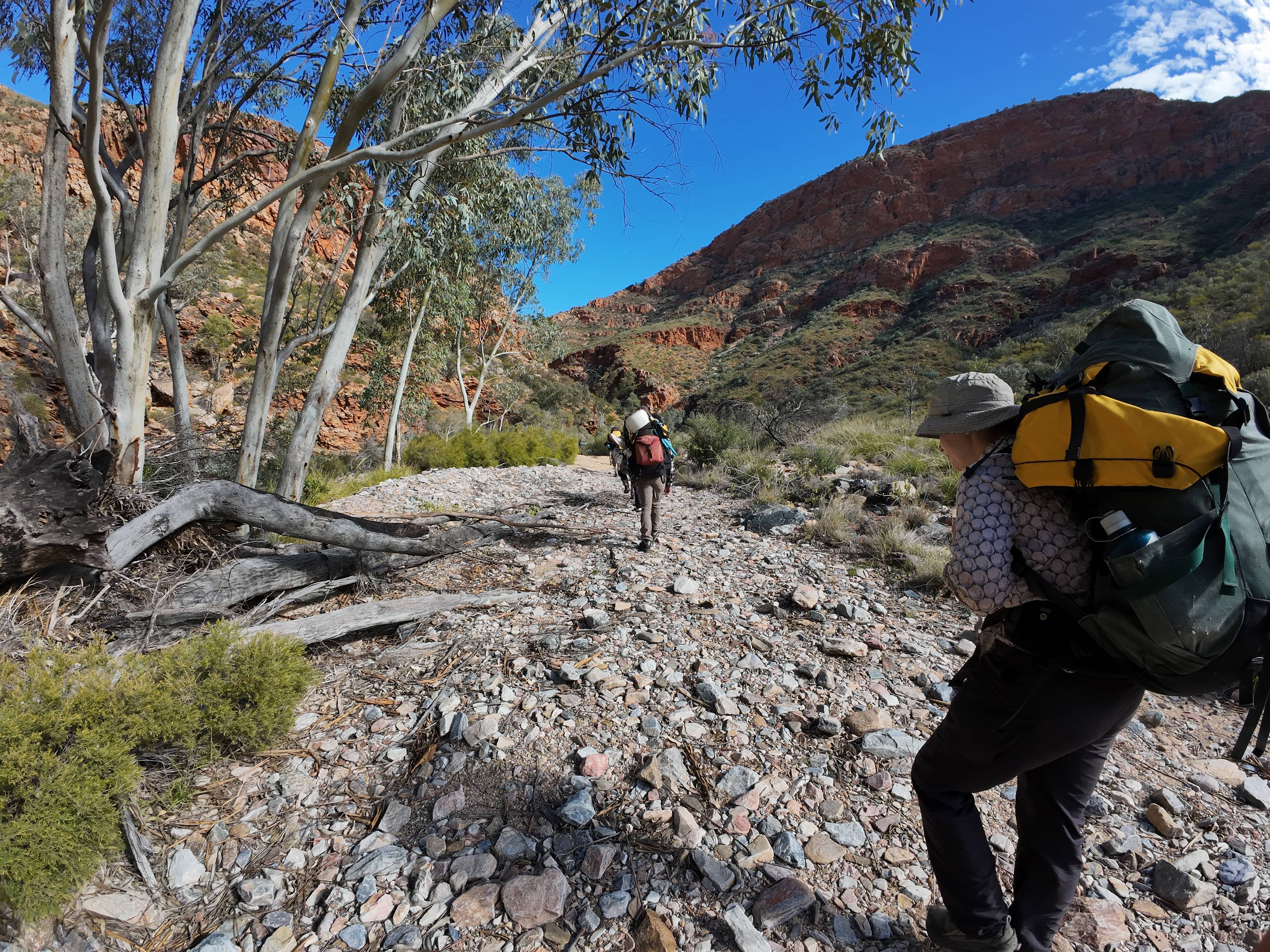
An epic gorge awaits the group on day three. Here bouts of hiking, baselining and liloing kick into gear. This is when students are called on to dig deep and apply their new knowledge and leadership skills.
“This is a really remote part of the range,” Butler says.
“In this section, there’s still some of the quiet time and time for reflection, and the opportunity for students to start delivering comms talks, but also the students are also stepping into a leadership role and having an opportunity to work in a small team.
“We call it the ‘M team’, the management team. And so each day students will rotate stepping into this role… [the group has to move] through several bodies of water to get out the other side.
“So it’s a physically challenging … and there’s an element of overcoming a fear with abseiling – but it’s known as one of the most beautiful parts of this program.”
Staff who participate say they witness profound changes in Aspire students, the educator adds.
But it’s the solo experience that brings it all together.
“It is a very powerful, powerful experience for them all. It’s also interesting because a lot of students go into it sort of questioning why we need to do this, like why we need to go and sit by ourselves, what’s the point?
“Even in all the preparation leading up to it, it doesn’t quite hit home as to the learning outcomes and the why, but post-experience, the the ‘aha’ moment happens and they go, ‘okay, I get it’.
“They come away from that experience with that deeper learning, which is really powerful.”
Aspire is an accredited SACE Stage 1 subject worth two units of study.
Whether they go on to assume a leadership role in Year 12 or not, students who go through Aspire build skills and attributes that allow them to flourish in their final year.
“They’re the students that are looked up to by younger year levels – communication and reflection are some of those core skills that these students get to develop,” Butler says.
“This program allows them an opportunity to really think about what they want to get out of their final year at school, and whether that is stepping into a leadership position in an official capacity or just focusing on what their individual goals are.”