

But what if the catch-cry was a little more reflective of the role teaching has come to entail?
Would ‘undertake a huge admin load’ and ‘juggle data collection and reporting duties out of hours’, entice people to pursue a career in the profession with quite the same zeal?
The teaching imaginary
In the context of extreme teaching shortages across the country, researchers from Monash University have highlighted this discrepancy, saying teachers are grappling with the changing nature of the job and fighting to reconcile their expectations with the (often unsatisfying) reality.
They propose the idea of a ‘teaching imaginary’ – when socialised expectations of teaching don’t match with the more administrative and managerial-sided role that the profession has become.
Lead researcher Professor Jo Lampert says the team closely shadowed teachers in six hard-to-staff schools, and, along with numerous interviews, found there was a clear discordance between what they envisaged they would do versus their actual day-to-day working life.
This could breed frustration, a sense of being torn in two directions, and for some it was enough to be a ‘walking point’.
“I mean, a lot of the teachers who were on the cusp of considering whether they would stay or they would go were talking about the fact that they had gotten into the profession because they really cared about kids and they really wanted to make a difference” Lampert tells EducationHQ.
“And now their work is mostly about compliance or data collection or reporting or going to meetings, and they found that discouraging.
“So that certainly is one of the things that came through…”
As one teacher shared in the study:
“I compare myself to someone trained as a dentist but who finds themselves working in administration. They would have been a great dentist, but didn’t realise the job actually meant office work.
“I wanted to be a teacher because I wanted to inspire, teach and help young people. If I’d known that most of my time would be spent on things like administration, data collection and reporting I would have chosen a different profession in the first place.”
A ‘trope’ that surfaced in many teachers’ accounts was that sometimes they didn’t feel like a teacher at all, but more, for example, ’like a babysitter’.
“The generally accepted premise is that whatever else is going on, teaching depends on a central moral purpose; rightly or wrongly, most participants believe that teaching is more than just a job but a vocational calling and that somehow this core purpose has been lost,” the researchers note.

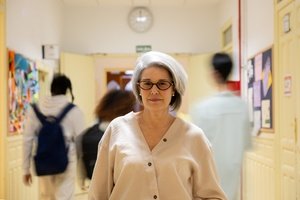
Professor Jo Lampert says ITE has not been 'selling a lie' to prospective students.
Are Australian teachers being prepared for an imaginary profession? Lampert suggests the discussion here is incredibly complex.
“I do not feel that ITE has been selling a lie and that we’ve been teaching new teachers incorrect information. I do not believe that to be the case,” she says.
It’s hard to know whether ITE should be preparing teachers for a ‘bureaucratic, unsatisfying workplace’ or not, Lampert says.
Indeed, some teachers wanted more practical training that was aligned with their actual work.
“On the one hand, some people were saying, ‘I was unprepared for what I would find when I got into the job, I thought I was going to be creative and planning all these lessons and helping kids who really needed it and then I found that in fact that’s not the nature of the job at all’.
But other teachers took a different view, she adds.
“There were quite a lot of teachers who were saying, ’would you really want ITE to be preparing teachers for not really what they saw as teaching, but to be administrators or to work, for instance, from worksheets?’.
“A lot of teachers were actually saying, ‘well, what in fact is the profession then?’”
Shifting career loyality
Clear differences emerged between young and older, more experienced teachers when it came to workplace loyalty, the study found.
Younger teachers often found it possible to stay in a challenging profession for the time being, precisely because they did not perceive it as a ‘life sentence’.
“In many ways, they are under no illusion that teaching will be easy. Several of the teachers interviewed were explicit in seeing a teaching career as temporary and, in some cases, unproblematically unsustainable,” researchers flag.
As one teacher explained:
“I think I came in to teaching with the idea that I would burn out. And I think I was OK with that. But I think the idea would be that I would go hard, then burn out, then go and do something else for a year or two, and then come back to it, and basically repeat that cycle.”
Lampert says we can no longer expect young people to have “that kind of loyalty with the Gold Watch at the end of their career”.
“It’s not like that.
“I think there is some general agreement that younger teachers don’t have that lifelong vocational commitment to staying in the school or being a teacher for the whole of their lives.
“Some older teachers find that kind of sad and depressing. But not all, some people say, ‘look, that’s just simply that the world of work has changed really drastically’... and that that’s an OK thing.”
School leadership are still adjusting to this shift, she adds.
“They’re starting to say, ‘OK, well, a younger teacher for two years is great’, knowing they may move on, and maybe that’s OK. It’s a really changing landscape.”
Govt ‘in a bind’ with teacher shortage
When it comes to national workforce recruitment campaigns, the message about what it means to be a teacher is a hard one to nail in the current climate, Lampert says.
“We are in the midst of a fairly dire teaching shortage, the OECD report that came out the other day [shows] our teaching shortage in Australia is worse than anywhere, and it is true.
“So I think the Government are in a bit of a bind in terms of needing bums on seats, if you like.
“We need teachers in front of kids, and we’re inviting them into teaching by promising better pay sometimes, and incentives, and opportunities – and there’s kind of no way around it in some ways because you do need those teachers in front of a classroom.
“But I think the risk is that they may stay in schools because they will get there and say, ‘I took the incentive and I thought teaching was for me, but actually teaching really isn’t for me, so I’m going to leave’.
The proof will be in the pudding, Lampert asserts.
“We’ll see whether all these new teachers who are coming into the profession will in fact stay or whether we’ll just be this ongoing cycle of attrition and recruitment.”